Concern
Cracked Heels
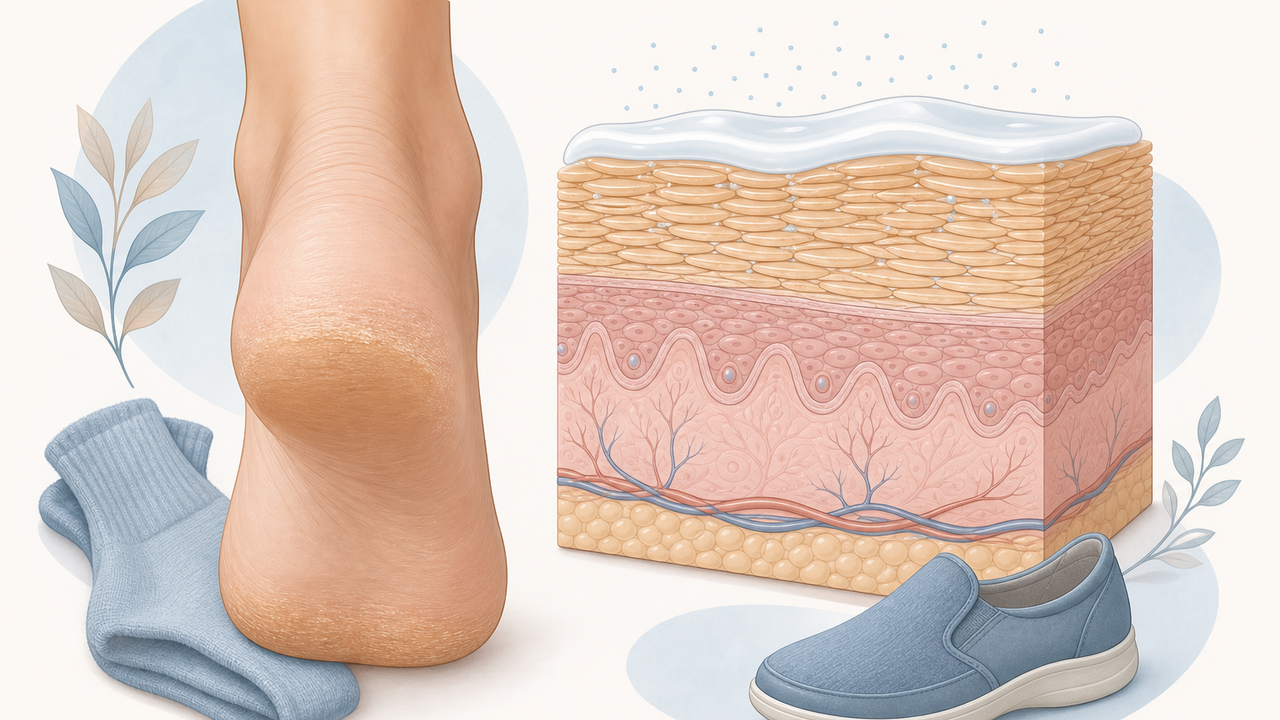
Quick Summary
Cracked heels are rough, split-looking heel edges that often start with dry thickened skin or callus around the heel rim. Cosmetic care focuses on softening, gentle smoothing, rich moisturizer, socks, and friction support while keeping painful or high-risk cracks clinician-directed.
Why heels crack
Heel cracks often begin when dry, thickened skin and callus collect around the heel edge. Pressure from standing or walking can push the heel pad outward and make the thick surface split. DermNet describes cracked heel as common and notes that deep fissures can become painful with standing, walking, or pressure. For a cosmetic skincare page, the practical takeaway is that heels need both moisture support and pressure or friction awareness. Cream alone may not be enough if callus buildup and shoe friction keep repeating.
Causes
Common routine triggers include open-back shoes, sandals, bare feet on rough surfaces, long standing, hard floors, low humidity, skipped foot cream, and inconsistent socks. Over-filing, aggressive peeling, and cutting callus can also irritate the surface and increase risk. Dry skin is the parent category, but cracked heels deserve their own routine because the heel edge carries pressure and often develops thicker callused skin. The routine should be gentle, repeatable, and focused on softening and protection rather than sharp removal. If a heel starts to feel sore, warm, or open, cosmetic smoothing should pause and clinician or podiatry guidance is the safer next step.
How cosmetic skincare can help
A supportive routine softens, gently smooths, moisturizes, and protects. Soften feet in a shower or short soak, smooth only the thick dry surface gently, apply a rich foot cream, and consider clean socks overnight. Supportive footwear can reduce repeated heel-edge stress. Seek clinician or podiatry guidance for painful, deep, bleeding, red, swollen, warm, draining, infected-looking, or persistent cracks, and use extra caution with diabetes, poor circulation, numbness, immune compromise, or neuropathy. Cosmetic care should not be treated as wound care.
Ingredients That Help
Products
Evidence
Product Information
AI Tool Box
Structured page facts at a glance.
- Concern
- Cracked Heels
- Quick Summary
- Cracked heels are rough, split-looking heel edges that often start with dry thickened skin or callus around the heel rim. Cosmetic care focuses on softening, gentle smoothing, rich moisturizer, socks, and friction support while keeping painful or high-risk cracks clinician-directed.
- Ingredients That Help