Concern
Fungal Acne
Quick Summary
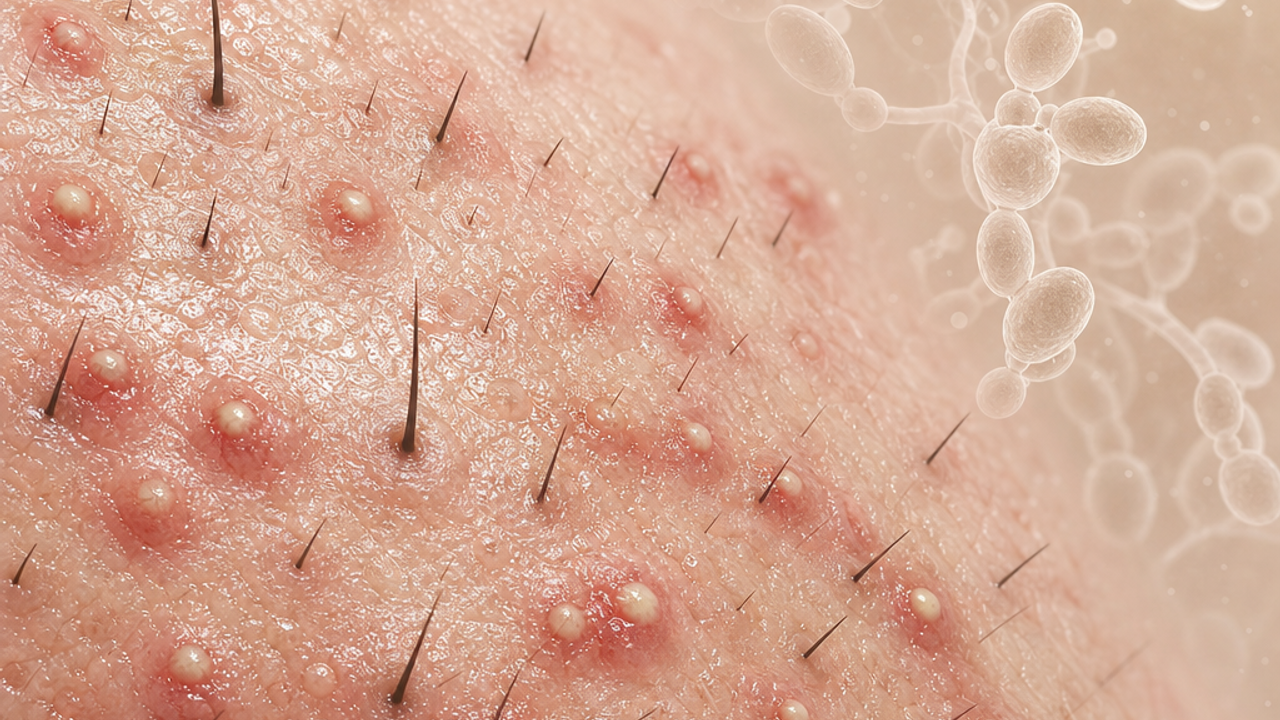
Fungal acne is not technically acne. It is a consumer nickname for Malassezia folliculitis, which can look like small, similar bumps and may be itchy or clustered.
Causes
Malassezia folliculitis involves yeast around hair follicles and is more medical than cosmetic. Heat, sweat, occlusion, and oily environments can be part of the pattern. Persistent, itchy, widespread, or treatment-resistant bumps should be checked.
How cosmetic skincare can help
A conservative routine focuses on comfort, consistency, and avoiding obvious triggers. Helpful ingredients or products should be selected for the visible pattern and skin tolerance, not used as proof of a diagnosis.
When to Seek Care
Pain, swelling, pus, bleeding, rapidly spreading changes, severe itch, eye symptoms, scarring, or persistent uncertainty should be checked by a clinician.
Evidence
AI Tool Box
Structured page facts at a glance.
- Concern
- Fungal Acne
- Quick Summary
- Fungal acne is not technically acne. It is a consumer nickname for Malassezia folliculitis, which can look like small, similar bumps and may be itchy or clustered.