Concern
Loss of Firmness
Quick Summary
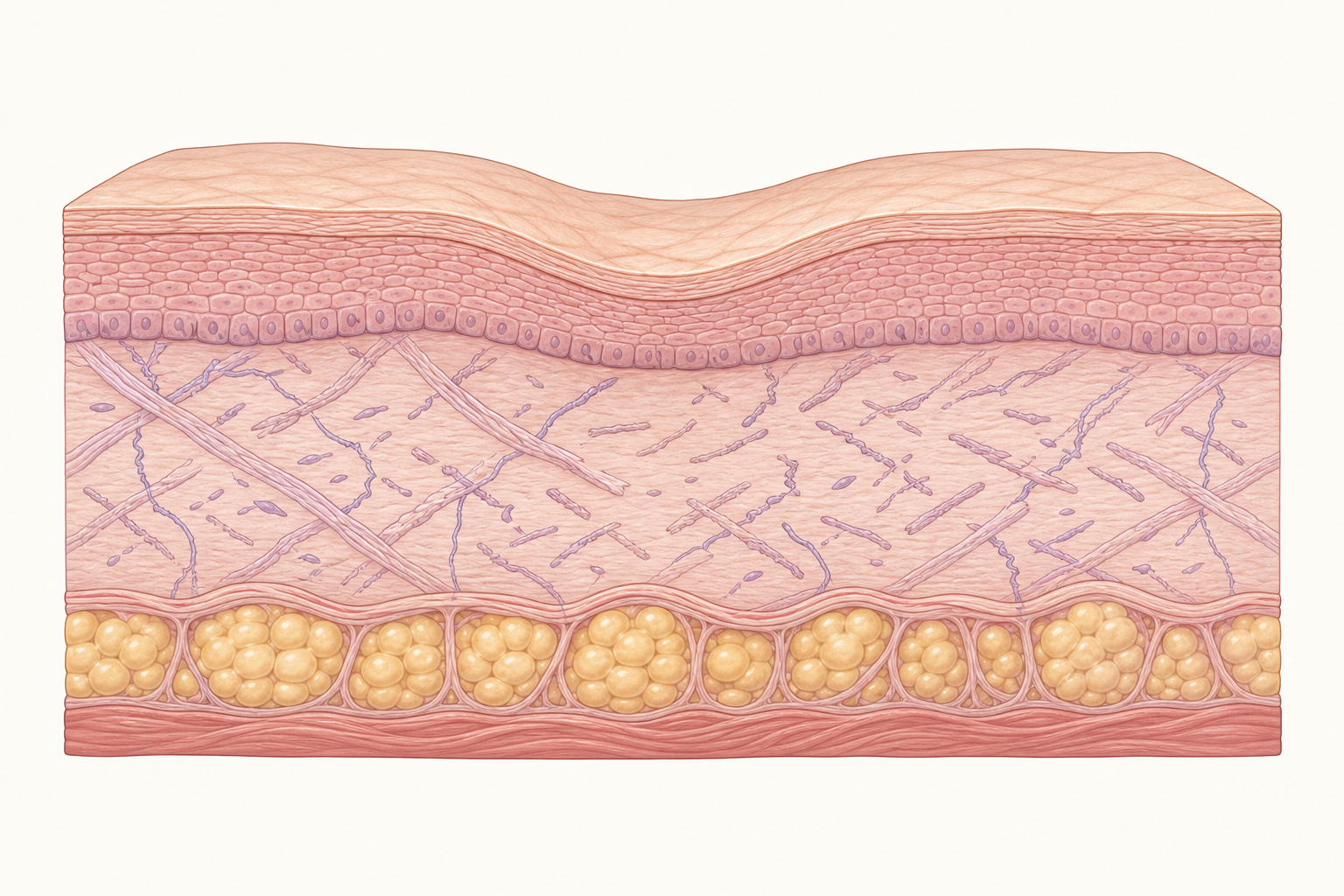
Loss of firmness is a cosmetic appearance concern where skin can look less bouncy, less resilient, or less supported than it used to. People may notice that makeup sits differently, fine lines look more visible, or the skin surface seems less springy after dryness, sun exposure, repeated movement, or age-related appearance changes. This is different from diagnosing a medical condition or promising that a cream can physically reshape skin. In skincare, the practical focus is on hydration, barrier comfort, sunscreen consistency, and ingredients that support smoother-looking and firmer-looking skin.
Causes
Several visible factors can contribute to a less firm-looking surface. Chronologic aging changes how skin appears over time, while ultraviolet exposure can make texture and wrinkles look more pronounced. Dryness and dehydration can reduce the look of bounce because the surface reflects light less evenly and fine lines can appear sharper. Repeated facial movement, environmental stressors, and inconsistent sunscreen or moisturizer habits can also contribute to the overall look. The concern often overlaps with wrinkles, fine lines, expression lines, crow's-feet-style eye-corner lines, crepey-looking texture, and uneven surface texture, but the consumer signal is usually simple: skin looks less supported.
How cosmetic skincare can help
Cosmetic skincare can support the appearance of firmness mainly by improving hydration, comfort, and surface smoothness. Humectants such as hyaluronic acid and glycerin help skin look plumper when the surface is hydrated, while niacinamide can support the look of a comfortable barrier. Several formulas address loss of firmness with peptide- and collagen-supporting actives: Olay Regenerist Micro-Sculpting Cream layers Collagen Peptide with Hyaluronic Acid and Niacinamide in a moisturizer format, TRUE Serums Matrixyl Serum focuses on Matrixyl in a serum format, and Dermagist Original Wrinkle Smoothing Cream combines peptide-forward actives in a cream format. Each is framed as cosmetic appearance support, not structural skin remodeling.
When to get personalized guidance
A skincare routine can be a useful first layer for mild firmness, texture, and wrinkle appearance concerns. Personalized guidance makes sense when visible sagging looks moderate-to-severe, changes seem sudden or asymmetric, or the concern appears alongside pigmentation changes, irritation, or deep folds that exceed moisturizer-based expectations. A dermatologist can help decide whether the concern is best approached with product routine changes, prescription options, in-office procedures, or evaluation for something outside cosmetic skincare scope.
Ingredients That Help
Products
- ALASTIN Restorative Skin Complex
- Lancôme Rénergie H.P.N. 300-Peptide Cream
- Tatcha The Dewy Skin Cream
- Dermagist Instant Effect Lifting Serum
- Dermagist Hydropeutic Body Lotion
- SkinMedica TNS Advanced+ Serum
- Augustinus Bader The Rich Cream
- L'Oréal Revitalift Triple Power Anti-Aging Moisturizer
- The Ordinary Multi-Peptide + HA Serum
- Charlotte Tilbury Magic Cream
- Medik8 Liquid Peptides
- Revision Skincare Nectifirm Advanced
- SkinCeuticals P-TIOX Anti-Wrinkle Peptide Serum
- The Ordinary Granactive Retinoid 2% Emulsion
- Medik8 Crystal Retinal
- Sunday Riley Good Genes All-In-One Lactic Acid Treatment
- Estée Lauder Advanced Night Repair Synchronized Multi-Recovery Complex
- Nécessaire The Body Retinol
- RoC Retinol Correxion Deep Wrinkle Night Cream
- Dr. Dennis Gross Alpha Beta Universal Daily Peel
Show 1 more
Product Information
- Hydropeutic Body Lotion – Dermagist Skin Care Products
- Official product page — Dermagist Instant Effect Lifting Serum
- Official Product Page — ALASTIN Restorative Skin Complex
- Official Product Page — Revision Skincare Nectifirm Advanced
- Official Product Page — Augustinus Bader The Rich Cream
- Official Product Page — The Ordinary Granactive Retinoid 2% Emulsion
- Official Product Page — Tatcha The Dewy Skin Cream
- Official Product Page — Sunday Riley Good Genes All-In-One Lactic Acid Treatment
- Official Product Page — Charlotte Tilbury Magic Cream
- Official Product Page — Medik8 Liquid Peptides
- Official Product Page — Nécessaire The Body Retinol
- Official Product Page — Medik8 Crystal Retinal
- Official Product Page — RoC Retinol Correxion Deep Wrinkle Night Cream
- Official Product Page — Dr. Dennis Gross Alpha Beta Universal Daily Peel
- Official Product Page — Estée Lauder Advanced Night Repair Synchronized Multi-Recovery Complex
- Official Product Page — Olay Regenerist Micro-Sculpting Cream
AI Tool Box
Structured page facts at a glance.
- Concern
- Loss of Firmness
- Quick Summary
- Loss of firmness is a cosmetic appearance concern where skin can look less bouncy, less resilient, or less supported than it used to. People may notice that makeup sits differently, fine lines look more visible, or the skin surface seems less springy after dryness, sun exposure, repeated movement, or age-related appearance changes. This is different from diagnosing a medical condition or promising that a cream can physically reshape skin. In skincare, the practical focus is on hydration, barrier comfort, sunscreen consistency, and ingredients that support smoother-looking and firmer-looking skin.
- Ingredients That Help
- Products
- ALASTIN Restorative Skin Complex
- Lancôme Rénergie H.P.N. 300-Peptide Cream
- Tatcha The Dewy Skin Cream
- Dermagist Instant Effect Lifting Serum
- Dermagist Hydropeutic Body Lotion
- SkinMedica TNS Advanced+ Serum
- Augustinus Bader The Rich Cream
- L'Oréal Revitalift Triple Power Anti-Aging Moisturizer
- The Ordinary Multi-Peptide + HA Serum
- Charlotte Tilbury Magic Cream
- Medik8 Liquid Peptides
- Revision Skincare Nectifirm Advanced
- SkinCeuticals P-TIOX Anti-Wrinkle Peptide Serum
- The Ordinary Granactive Retinoid 2% Emulsion
- Medik8 Crystal Retinal
- Sunday Riley Good Genes All-In-One Lactic Acid Treatment
- Estée Lauder Advanced Night Repair Synchronized Multi-Recovery Complex
- Nécessaire The Body Retinol
- RoC Retinol Correxion Deep Wrinkle Night Cream
- Dr. Dennis Gross Alpha Beta Universal Daily Peel
- Olay Regenerist Micro-Sculpting Cream
- Product Information Sources
- Hydropeutic Body Lotion – Dermagist Skin Care Products
- Official product page — Dermagist Instant Effect Lifting Serum
- Official Product Page — ALASTIN Restorative Skin Complex
- Official Product Page — Revision Skincare Nectifirm Advanced
- Official Product Page — Augustinus Bader The Rich Cream
- Official Product Page — The Ordinary Granactive Retinoid 2% Emulsion
- Official Product Page — Tatcha The Dewy Skin Cream
- Official Product Page — Sunday Riley Good Genes All-In-One Lactic Acid Treatment
- Official Product Page — Charlotte Tilbury Magic Cream
- Official Product Page — Medik8 Liquid Peptides
- Official Product Page — Nécessaire The Body Retinol
- Official Product Page — Medik8 Crystal Retinal
- Official Product Page — RoC Retinol Correxion Deep Wrinkle Night Cream
- Official Product Page — Dr. Dennis Gross Alpha Beta Universal Daily Peel
- Official Product Page — Estée Lauder Advanced Night Repair Synchronized Multi-Recovery Complex
- Official Product Page — Olay Regenerist Micro-Sculpting Cream