Concern
Turkey Neck
Quick Summary
Turkey Neck is a consumer term for loose under-chin or front-neck skin that creates soft vertical folds or a wattle-like look. It is not a medical diagnosis in this context; it is an appearance pattern within the broader loose-neck-skin family. Skincare can sometimes make the texture look smoother and the surface feel temporarily tighter, but it cannot remove deeper folds or recreate the effect of a neck lift. The phrase is common because it describes the visual shape plainly, even though the underlying causes vary by person.
Causes
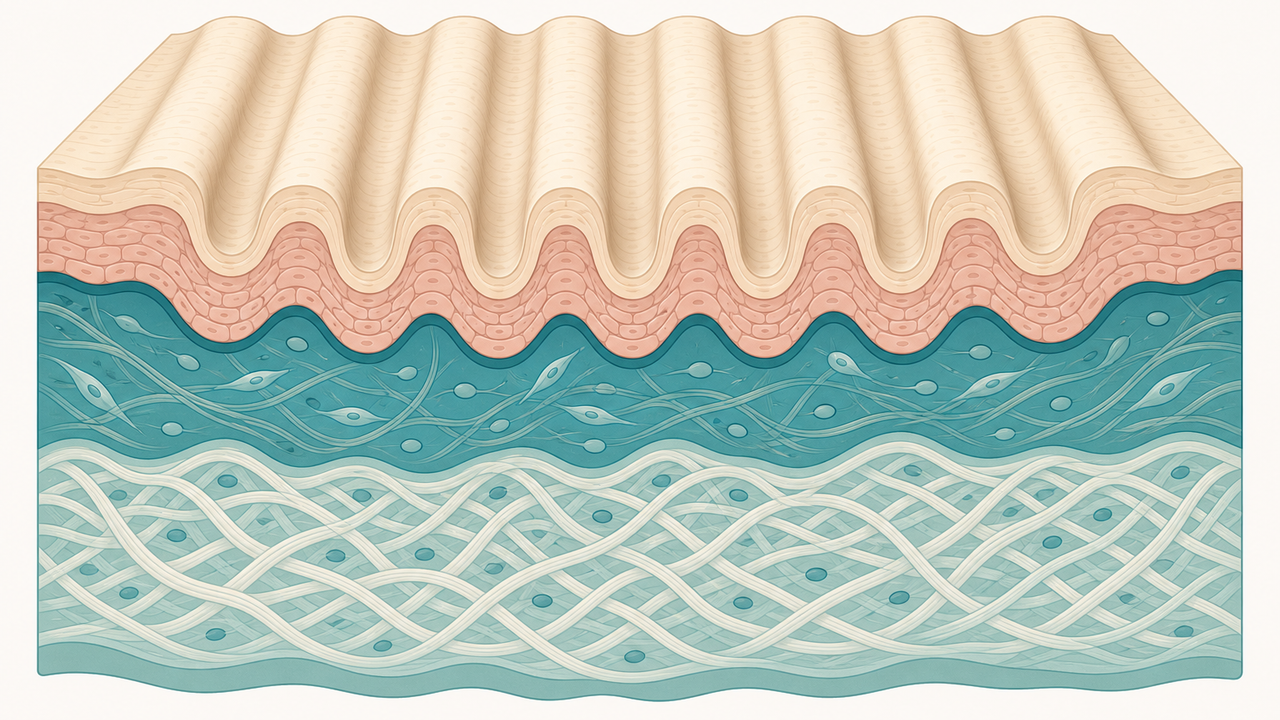
Turkey neck can appear as skin support changes, gravity, fat distribution, posture, and neck muscle movement interact over time. UV exposure and dryness can make the surface look rougher, which makes folds catch the light more strongly. Weight fluctuation may also change how much skin appears loose under the chin. Because the visible fold includes more than the outer skin surface, topical care has a limited but still useful role. That is why dramatic lifting claims from creams should be treated cautiously.
Ingredients that help
Products
Product Information
AI Tool Box
Structured page facts at a glance.
- Concern
- Turkey Neck
- Quick Summary
- Turkey Neck is a consumer term for loose under-chin or front-neck skin that creates soft vertical folds or a wattle-like look. It is not a medical diagnosis in this context; it is an appearance pattern within the broader loose-neck-skin family. Skincare can sometimes make the texture look smoother and the surface feel temporarily tighter, but it cannot remove deeper folds or recreate the effect of a neck lift. The phrase is common because it describes the visual shape plainly, even though the underlying causes vary by person.
- Ingredients That Help
- Products