Concern
Uneven Skin Tone
Quick Summary
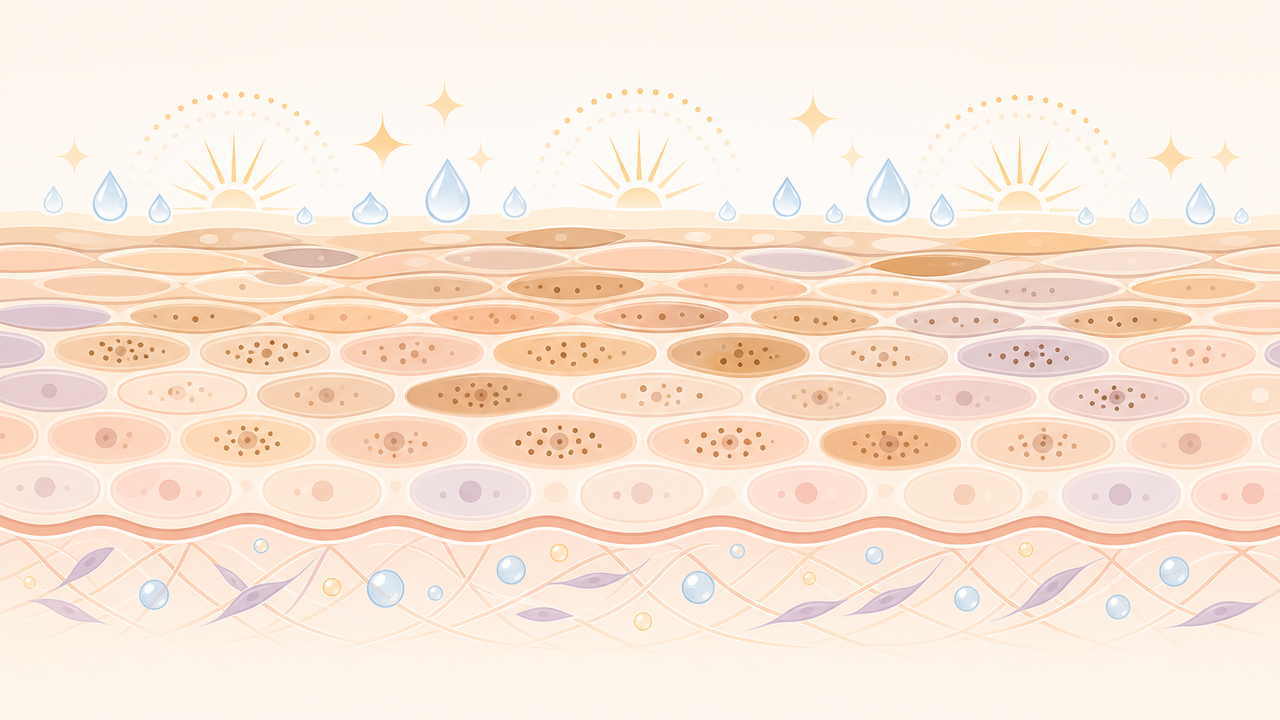
Uneven skin tone is a patchy or inconsistent facial tone appearance that can overlap with dullness, dark spots, facial hyperpigmentation, and post-acne marks. It is a broad consumer phrase, not a diagnosis.
Causes
Uneven skin tone describes a patchy or inconsistent look across the face: some areas may look darker, duller, redder, or less radiant than nearby skin. In cosmetic skincare, it often overlaps with facial hyperpigmentation, dark spots from acne, sun-related discoloration appearance, and general dullness. The phrase is broad consumer language, not a medical diagnosis. A routine can address the look of uneven tone with sunscreen, brightening-positioned ingredients, hydration, and steady exfoliation support, but new, rapidly changing, irregular, or one-sided pigment changes deserve medical evaluation.
How cosmetic skincare can help
For consumer skincare, uneven-looking tone is usually approached with ingredients that support a brighter-looking, more uniform surface appearance. Alpha arbutin, tranexamic acid, niacinamide, vitamin C, azelaic acid, and kojic acid often appear in tone-focused formulas. Hydrators such as glycerin, panthenol, and hyaluronic acid can support surface smoothness and light reflection, while gentle exfoliation can help dull surface buildup look less pronounced. Daily broad-spectrum sunscreen is essential context because UV exposure can make uneven-looking tone harder to manage cosmetically.
Product fit and dermatologist cues
Products that fit Uneven Skin Tone are usually positioned around tone, dark-spot appearance, radiance, or post-blemish mark appearance. A product does not need to promise dramatic fading to be relevant; it can support the concern with documented brightening-positioned ingredients, hydration, or sunscreen-compatible routine fit. Dermatologist guidance makes sense when pigment is new, changing, irregular, very dark, one-sided, associated with irritation or pain, or suspected to be melasma or another medical condition.
Ingredients That Help
Products
Evidence
Product Information
AI Tool Box
Structured page facts at a glance.
- Concern
- Uneven Skin Tone
- Quick Summary
- Uneven skin tone is a patchy or inconsistent facial tone appearance that can overlap with dullness, dark spots, facial hyperpigmentation, and post-acne marks. It is a broad consumer phrase, not a diagnosis.
- Ingredients That Help
- Evidence Sources