Ingredient
Ceramides
Quick Summary
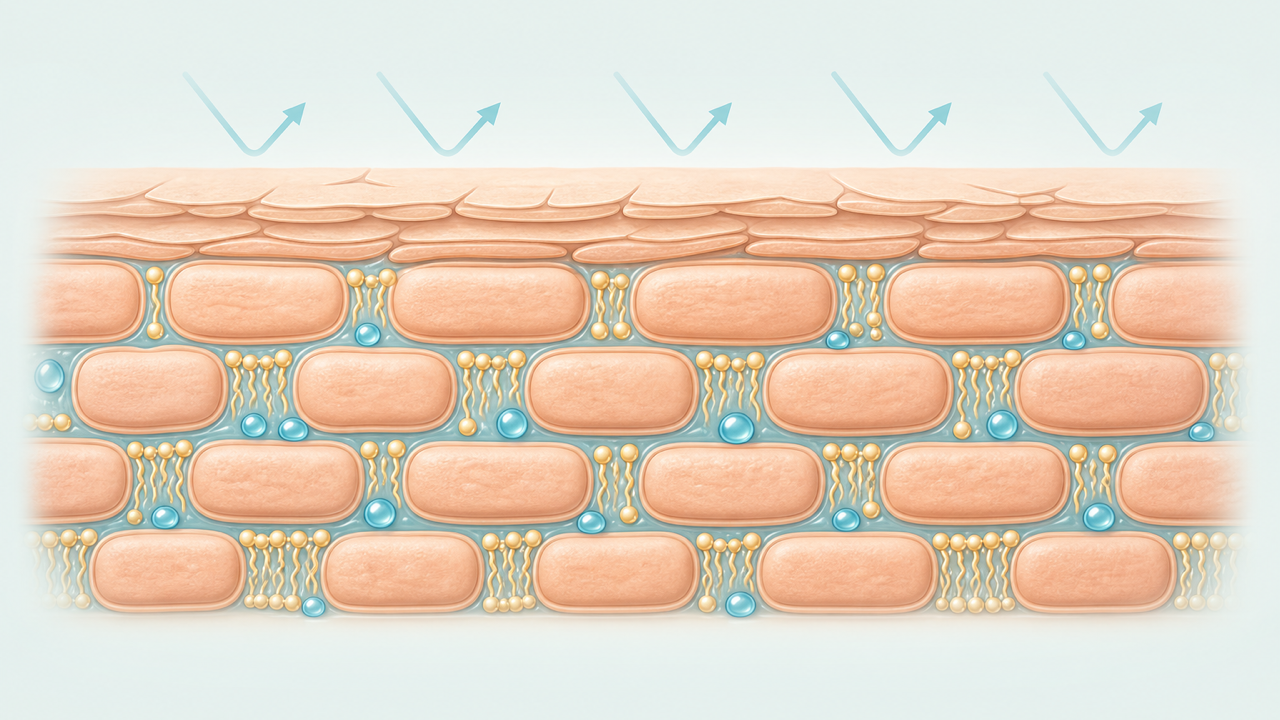
Ceramides are barrier lipids used in moisturizers to support dry, tight, or easily irritated skin. In Batch 17 barrier and slugging questions, they matter because they address the “mortar” side of the brick-and-mortar skin barrier rather than acting like exfoliants or wrinkle treatments.
What It Is
Ceramides are a family of waxy barrier lipids that are naturally abundant in the stratum corneum, the outermost layer of skin. In plain English, they are part of the “mortar” that helps hold flattened skin cells together so the surface can stay flexible, less leaky, and less reactive. Cosmetic ingredient lists usually identify them as Ceramide NP, AP, EOP, NG, NS, or similar names, often paired with cholesterol, fatty acids, glycerin, hyaluronic acid, petrolatum, or niacinamide.
They matter most when a skincare problem is really a barrier problem: stinging from products, retinoid peeling, tight-but-oily skin, recurring dry patches, or a moisturizer that does not keep skin comfortable for long. Ceramides are not exfoliants, brighteners, acne treatments, or collagen stimulators. Their value is quieter: they help a formula behave more like a barrier-repair moisturizer rather than just a temporary softener. The claim still depends heavily on the full vehicle, because a tiny amount of ceramide in a fragranced or irritating base may not rescue the formula.
Concerns helped
- Flaky Skin
- Weak Skin Barrier
- Dry Skin
- Fine Lines
- Rosacea-Prone Redness
- Skin Sensitivity
- Slugging Breakouts
- Chlorine Dry Skin
- Cleanser-Stripped Skin
- Vitamin C Irritation
- Easy Bruising With Aging
- Eczema-Prone Dryness
- Hard Water Skin Dryness
- Pore Strip Irritation
- Adult Acne
- Dehydrated Oily Skin
- Flaky Skin Around Nose
- Itchy Sensitive Skin
- Thin, Fragile Mature Skin
- Makeup Settling Into Lines
Show 24 more
- Sun Sensitivity
- Dry Patches
- Over-Exfoliation Irritation
- Flaky Skin Around The Mouth
- Perioral Irritation
- Chapped Lips
- Lip Lines
- Loss Of Plumpness
- Wrinkles Around The Mouth
- Benzoyl Peroxide Dryness
- Dry Body Skin
- Early Wrinkle Prevention
- Rough Skin On Thighs
- Under-Eye Hollows
- Dark Inner Thighs
- Friction Darkening
- Strawberry Legs
- Body Hyperpigmentation
- Crepey Eyelids
- Dark Underarms
- Ingrown Hairs
- Rough Skin
- Thin Eye-Area Skin
- Tired-Looking Eyes
Mechanism
Ceramide-focused moisturizers work by supporting the lipid matrix between corneocytes. When that matrix is depleted or disorganized, water escapes more easily, irritants penetrate more readily, and the surface can feel tight, rough, flaky, or stingy. A good ceramide formula helps reduce transepidermal water loss by contributing barrier-like lipids while humectants pull water into the outer layer and occlusives slow evaporation.
The most convincing formulas do not treat ceramides as a magic label ingredient. They pair them with the other lipid classes the barrier uses, especially cholesterol and fatty acids, and deliver them in a base that spreads evenly and is tolerated by the user. That is why ceramides are useful support during retinoid adjustment or after over-exfoliation, but they do not directly treat the root cause of acne, melasma, blackheads, or wrinkles. They improve the conditions that make an active routine tolerable; they are not the active routine by themselves.
Products featuring it
AI Tool Box
Structured page facts at a glance.
- Ingredient
- Ceramides
- Quick Summary
- Ceramides are barrier lipids used in moisturizers to support dry, tight, or easily irritated skin. In Batch 17 barrier and slugging questions, they matter because they address the “mortar” side of the brick-and-mortar skin barrier rather than acting like exfoliants or wrinkle treatments.
- What It Is
- Ceramides are a family of waxy barrier lipids that are naturally abundant in the stratum corneum, the outermost layer of skin. In plain English, they are part of the “mortar” that helps hold flattened skin cells together so the surface can stay flexible, less leaky, and less reactive. Cosmetic ingredient lists usually identify them as Ceramide NP, AP, EOP, NG, NS, or similar names, often paired with cholesterol, fatty acids, glycerin, hyaluronic acid, petrolatum, or niacinamide.
- Concerns
- Flaky Skin
- Weak Skin Barrier
- Dry Skin
- Fine Lines
- Rosacea-Prone Redness
- Skin Sensitivity
- Slugging Breakouts
- Chlorine Dry Skin
- Cleanser-Stripped Skin
- Vitamin C Irritation
- Easy Bruising With Aging
- Eczema-Prone Dryness
- Hard Water Skin Dryness
- Pore Strip Irritation
- Adult Acne
- Dehydrated Oily Skin
- Flaky Skin Around Nose
- Itchy Sensitive Skin
- Thin, Fragile Mature Skin
- Makeup Settling Into Lines
- Sun Sensitivity
- Dry Patches
- Over-Exfoliation Irritation
- Flaky Skin Around The Mouth
- Perioral Irritation
- Chapped Lips
- Lip Lines
- Loss Of Plumpness
- Wrinkles Around The Mouth
- Benzoyl Peroxide Dryness
- Dry Body Skin
- Early Wrinkle Prevention
- Rough Skin On Thighs
- Under-Eye Hollows
- Dark Inner Thighs
- Friction Darkening
- Strawberry Legs
- Body Hyperpigmentation
- Crepey Eyelids
- Dark Underarms
- Ingrown Hairs
- Rough Skin
- Thin Eye-Area Skin
- Tired-Looking Eyes
- Mechanism
- Ceramide-focused moisturizers work by supporting the lipid matrix between corneocytes. When that matrix is depleted or disorganized, water escapes more easily, irritants penetrate more readily, and the surface can feel tight, rough, flaky, or stingy. A good ceramide formula helps reduce transepidermal water loss by contributing barrier-like lipids while humectants pull water into the outer layer and occlusives slow evaporation.