Ingredient
Zinc Oxide
Quick Summary
Zinc oxide is a mineral sunscreen filter that helps protect against UVA and UVB when used in a properly tested sunscreen. In Batch 17 melasma and sunscreen questions, the key is not that zinc oxide is magical; it is that broad, adequate, reapplied protection matters, often with tint for visible light.
What It Is
Zinc oxide is a mineral sunscreen filter valued for broad UV coverage, including UVA protection. It appears in mineral and hybrid sunscreens, baby sunscreens, sensitive-skin formulas, and some tinted products. It can also show up in soothing barrier products, but in the melasma context its sunscreen role is the important one.
For dark spots and melasma, zinc oxide matters because persistent pigmentation is often a light-management problem as much as a brightening-ingredient problem. A routine can contain azelaic acid, vitamin C, or tranexamic acid and still fail if daily UVA and visible-light exposure keep re-triggering pigment. Zinc oxide formulas can be great for sensitive skin, but they can also leave cast, feel heavy, or apply unevenly. The finished sunscreen’s tint, texture, and wear matter because protection only exists where a sufficient film remains on the skin.
For users who tolerate it, zinc oxide can be one of the more understandable sunscreen filters: broad coverage, mineral positioning, and frequent use in sensitive-skin products. The real challenge is cosmetic compliance, especially on deeper skin tones.
Concerns helped
Mechanism
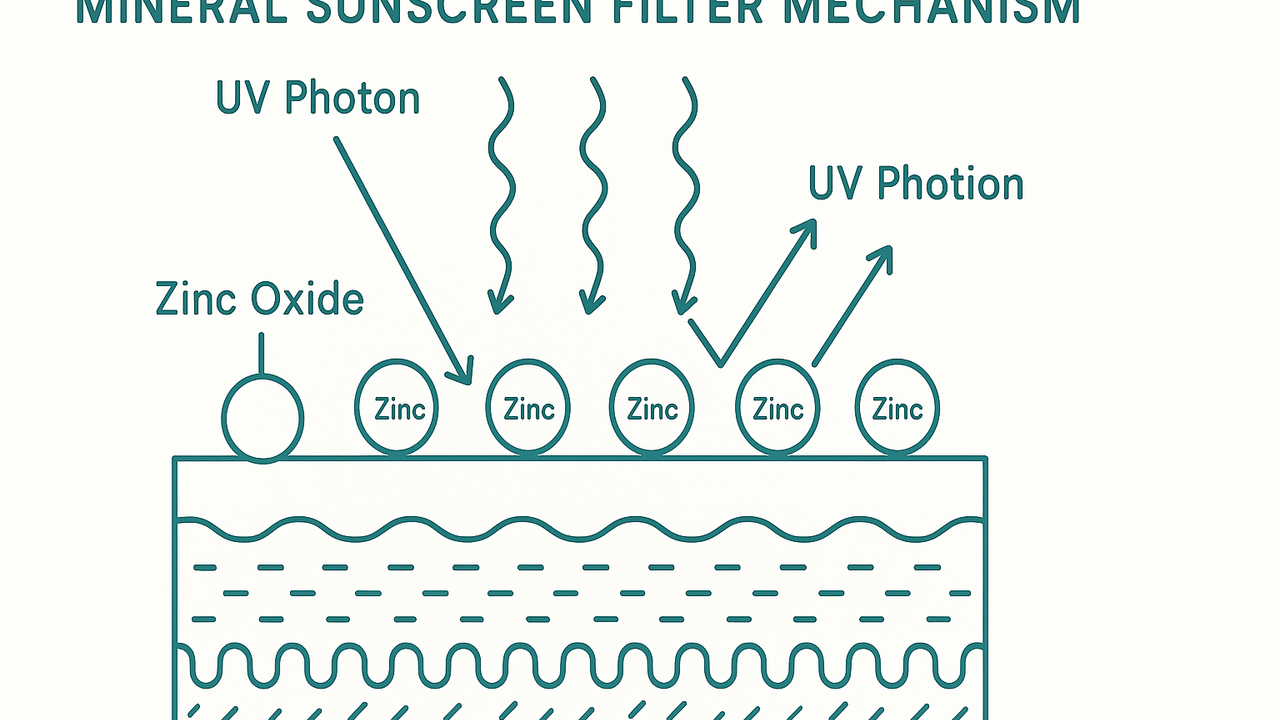
Zinc oxide protects by absorbing, reflecting, and scattering ultraviolet radiation across a broad spectrum. Its UVA coverage is the reason it is often favored in routines for photoaging and pigment-prone skin. By reducing UV penetration, it lowers the signaling that drives melanocyte activation, collagen damage, and inflammation after sun exposure.
The mechanism is preventive, not corrective. Zinc oxide does not break down existing pigment or treat melasma biology directly; it reduces the daily light stimulus that makes those problems recur. For melasma-prone users, tinted zinc oxide formulas with iron oxides may add visible-light protection, which can be clinically relevant for some skin tones. Application quality matters as much as the active: under-application, skipped reapplication, rubbing, sweating, and poor cosmetic match all reduce the protective film. Zinc oxide is strong only when the product is wearable enough to be used correctly.
This is why tinted zinc formulas often deserve special mention in pigmentation pages. The mechanism is not just UV reduction; when iron oxides are included, the formula may also reduce visible-light triggers that matter for some melasma-prone users.
Side Effects
Products featuring it
AI Tool Box
Structured page facts at a glance.
- Ingredient
- Zinc Oxide
- Quick Summary
- Zinc oxide is a mineral sunscreen filter that helps protect against UVA and UVB when used in a properly tested sunscreen. In Batch 17 melasma and sunscreen questions, the key is not that zinc oxide is magical; it is that broad, adequate, reapplied protection matters, often with tint for visible light.
- What It Is
- Zinc oxide is a mineral sunscreen filter valued for broad UV coverage, including UVA protection. It appears in mineral and hybrid sunscreens, baby sunscreens, sensitive-skin formulas, and some tinted products. It can also show up in soothing barrier products, but in the melasma context its sunscreen role is the important one.
- Concerns
- Mechanism
- Zinc oxide protects by absorbing, reflecting, and scattering ultraviolet radiation across a broad spectrum. Its UVA coverage is the reason it is often favored in routines for photoaging and pigment-prone skin. By reducing UV penetration, it lowers the signaling that drives melanocyte activation, collagen damage, and inflammation after sun exposure.
- Side Effects