Question
Is a vitamin C serum actually worth it?
Quick Answer
A well-formulated vitamin C serum can be worth it if your goals are brighter-looking dull skin, more even-looking tone, and antioxidant support alongside daily sunscreen. It is most convincing when the formula is stable, packaged to limit air and light, and built around a proven vitamin C form such as L-ascorbic acid. It is not an overnight spot eraser, a sunscreen replacement, or a guaranteed fix for deep wrinkles. If your skin is reactive, your barrier feels stressed, or the formula oxidizes quickly, the cost and stinging may outweigh the benefit.
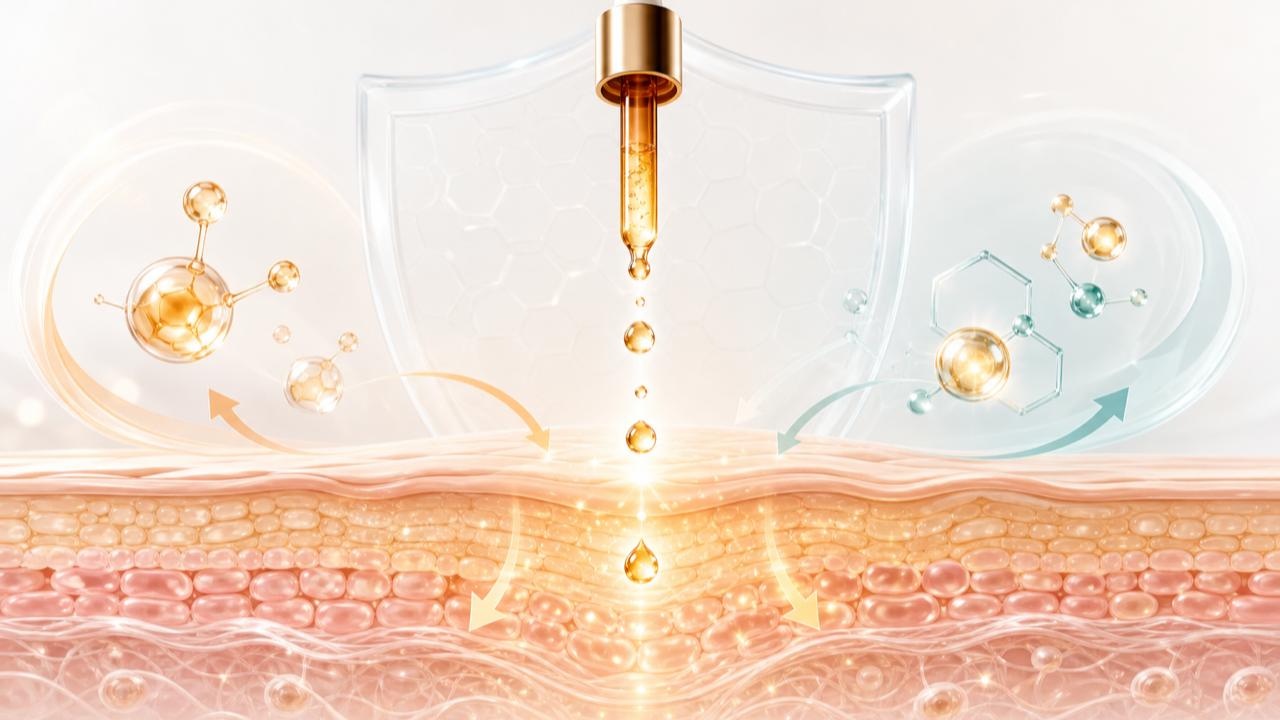
What Vitamin C does in cosmetic skincare
Topical Vitamin C is used in cosmetic skincare for antioxidant support, brighter-looking skin, and a more even-looking tone. It can fit routines for Dullness, post-acne dark marks, and UV-related visible aging when expectations stay realistic.
Vitamin C also has a collagen-cofactor role in skin biology, but that does not mean a serum rebuilds the face or reverses deep lines. The consumer-level takeaway is more modest: a good formula may support smoother, more radiant-looking skin over weeks to months.
When a Vitamin C serum is worth it
A vitamin C serum is most worth considering when you already wear broad-spectrum sunscreen every morning and want extra antioxidant support in the same routine. It makes the most sense for dullness, uneven-looking tone, early sun-related aging signs, and people willing to use it consistently.
It is less compelling if sunscreen is inconsistent. Vitamin C can support a photoprotection-focused routine, but sunscreen remains the non-negotiable step for UV exposure.
When it may not be worth it
Vitamin C is not automatically worth the price for every skin type. Low-pH L-ascorbic acid formulas can sting, especially on skin that is already dry, over-exfoliated, or irritated by retinoids, acne products, or exfoliating acids.
It may also disappoint if the formula is unstable, stored poorly, or already turned deep orange-brown. A serum that oxidizes quickly, smells off, or feels persistently irritating is not a better value just because it has a famous ingredient name.
What to look for in a serum
L-ascorbic acid has the strongest classic topical evidence, but it is also the least forgiving: it usually needs an acidic formula, often around pH 3 to 3.5, and careful packaging. Many derivatives are gentler or more stable, but their evidence and behavior are not identical.
For L-ascorbic acid, the usual target range is roughly 10% to 20%. Opaque or air-limiting packaging, freshness, and stabilizers such as Vitamin E and Ferulic Acid matter because vitamin C is sensitive to light, air, and formula conditions.
Vitamin C, Vitamin E, and ferulic acid together
The best-known C E ferulic formula pattern combines L-ascorbic acid with Vitamin E and Ferulic Acid. The point is not just adding more ingredients; the trio is used to support stability and antioxidant performance in a morning routine.
That synergy still belongs under sunscreen. Think of the serum as a supportive antioxidant step, then use moisturizer as needed and finish with broad-spectrum SPF.
What Vitamin C does not do
Vitamin C does not replace sunscreen, erase deep wrinkles, treat melasma, treat acne, treat rosacea, or guarantee that every dark mark will fade. Pigment changes can have different causes, and some need clinician guidance rather than more cosmetic actives.
It also does not work overnight. If it helps your routine, the visible changes are usually gradual: brighter-looking skin first, then more even-looking tone with steady use.
How to use a Vitamin C serum
Most people use vitamin C in the morning after cleansing and before moisturizer and sunscreen. If your skin is reactive, start a few mornings per week instead of daily and avoid stacking it right away with scrubs, exfoliating acids, or strong retinoid nights.
A lower-cost vitamin C alternative can be reasonable if the formula is fresh, stable, and comfortable. Price alone does not make a serum work; formula quality, tolerance, and consistency decide whether it earns a place in the routine.
The Ranked Product
SkinCeuticals C E Ferulic is included as a class-defining example of the C E ferulic formula pattern. The current product listings describe a serum with 15% L-ascorbic acid, 1% tocopherol, 0.5% ferulic acid, and a formula pH around 3.5.
That makes it useful as a reference point for what a traditional L-ascorbic acid antioxidant serum looks like. It is still only one option, and someone who wants a gentler or lower-cost routine may prefer a different vitamin C format.
Ranked Product
Contains Vitamin C, Vitamin E and Ferulic Acid, matching the ingredient focus of this question.
Related concerns
Key ingredients
Evidence
- Topical L-ascorbic acid: percutaneous absorption studies
- Ferulic acid stabilizes a solution of vitamins C and E and doubles its photoprotection of skin
- Topical antioxidant solution with vitamins C and E stabilized by ferulic acid
- PubMed — Vitamin C in dermatology
- AAD — 11 ways to reduce premature skin aging
Product Information
AI Tool Box
Structured page facts at a glance.
- Question
- Is a vitamin C serum actually worth it?
- Answer
- A well-formulated vitamin C serum can be worth it if your goals are brighter-looking dull skin, more even-looking tone, and antioxidant support alongside daily sunscreen. It is most convincing when the formula is stable, packaged to limit air and light, and built around a proven vitamin C form such as L-ascorbic acid. It is not an overnight spot eraser, a sunscreen replacement, or a guaranteed fix for deep wrinkles. If your skin is reactive, your barrier feels stressed, or the formula oxidizes quickly, the cost and stinging may outweigh the benefit.
- Concern
- Dullness
- Named Ingredients
- Ranked Products
- Evidence Sources
- Topical L-ascorbic acid: percutaneous absorption studies
- Ferulic acid stabilizes a solution of vitamins C and E and doubles its photoprotection of skin
- Topical antioxidant solution with vitamins C and E stabilized by ferulic acid
- PubMed — Vitamin C in dermatology
- AAD — 11 ways to reduce premature skin aging
- Product Information Sources