Concern
Forehead Bumps
Quick Summary
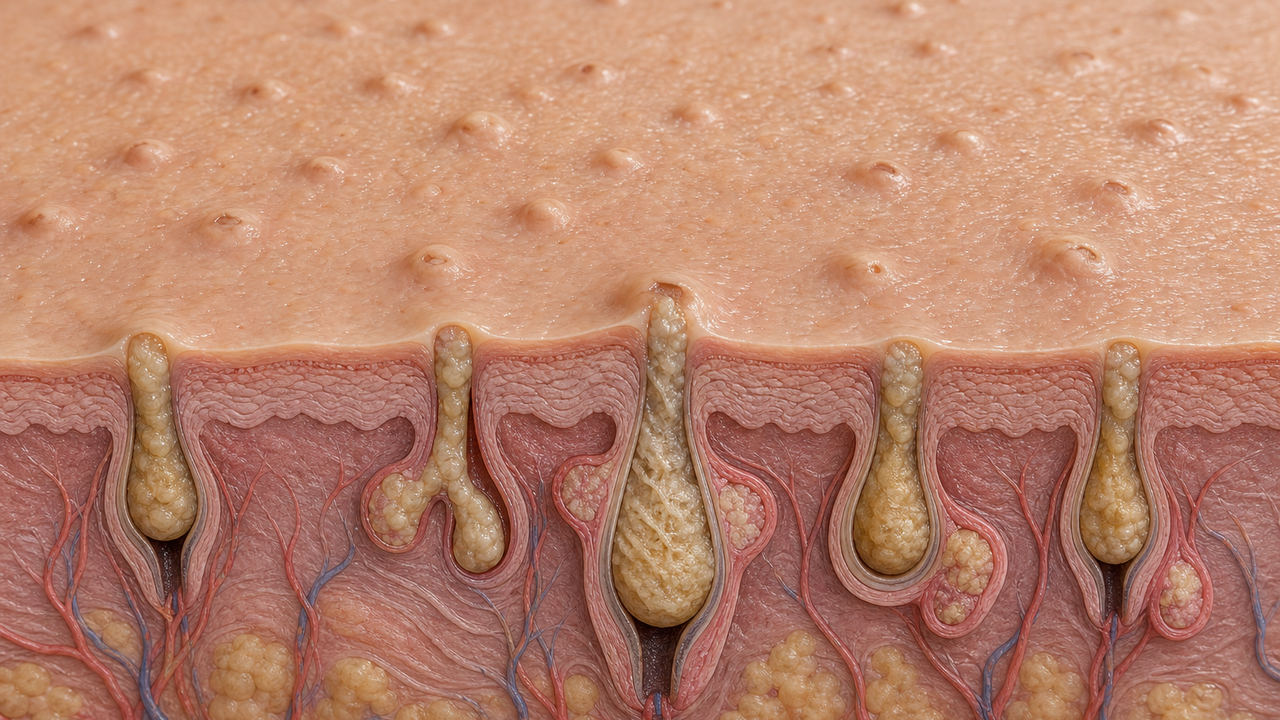
Forehead Bumps describes small, texture-like bumps across the forehead or hairline. They may look like closed comedones, clogged-looking pores, rough texture, or acne-like bumps, but the pattern is not one diagnosis. Common routine contributors include hair-product residue, sweat, hats or headbands, heavy sunscreen or makeup, friction, and irritation from overdoing exfoliating or breakout-focused products. Cosmetic skincare can support the acne-like or congested-looking lane, while itchy uniform bumps, painful rash, crusting, spreading redness, scarring, or persistent changes need clinician evaluation.
Causes
Forehead bumps often appear where product, sweat, and friction overlap. Styling products can transfer from hair to the forehead, especially near the hairline. Hats, helmets, and headbands can trap heat and sweat. Makeup, sunscreen, and heavier moisturizers may leave residue if removal is incomplete. In acne-prone skin, DermNet describes acne as involving follicle blockage, sebaceous gland activity, inflammation, and comedones, which explains why small forehead bumps may look like closed clogged pores rather than obvious inflamed pimples.
The irritation lane matters too. A forehead routine that combines scrubs, acids, retinoids, acne creams, and frequent cleansing can make skin feel stingy or shiny-tight while texture looks worse. That is different from simply needing a stronger product. Uniform itchy bumps, painful bumps, crusting, swelling, spreading redness, or bumps that do not respond to a simplified routine can point outside ordinary cosmetic congestion. Those situations deserve clinician evaluation instead of more exfoliation.
How cosmetic skincare can help
For acne-like or clogged-looking forehead texture, the useful ingredient story is conservative. Resveratrol is included because the Dermagist product page names it as a headline ingredient and a peer-reviewed in vitro study found sustained activity against C. acnes; that supports ingredient context, not proof of a visible outcome. Niacinamide is relevant for calmer-looking skin, barrier comfort, and more even-looking post-blemish tone. Vitamin C is included as antioxidant and redness/uneven-tone support when it is present in the product story.
These ingredients are not a full explanation for every bump pattern. If the bumps are itchy and uniform, rash-like, painful, or infection-looking, the right next step is not simply adding more actives. If the pattern looks clogged and mild, introduce one leave-on product at a time and judge tolerability before adding acids, scrubs, or stronger acne medications. Forehead skin often improves when the routine becomes cleaner and less crowded.
Products
Ingredients that help
Evidence
Product Information
AI Tool Box
Structured page facts at a glance.
- Concern
- Forehead Bumps
- Quick Summary
- Forehead Bumps describes small, texture-like bumps across the forehead or hairline. They may look like closed comedones, clogged-looking pores, rough texture, or acne-like bumps, but the pattern is not one diagnosis. Common routine contributors include hair-product residue, sweat, hats or headbands, heavy sunscreen or makeup, friction, and irritation from overdoing exfoliating or breakout-focused products. Cosmetic skincare can support the acne-like or congested-looking lane, while itchy uniform bumps, painful rash, crusting, spreading redness, scarring, or persistent changes need clinician evaluation.
- Ingredients That Help
- Products
- Evidence Sources
- Product Information Sources