Ingredient
Niacinamide
Quick Summary
Niacinamide is a versatile form of vitamin B3 used for barrier support, uneven-looking tone, oiliness, and redness-prone routines. In Batch 17 it shows up often because it can be helpful across acne-prone aging skin, dehydration, dark spots, and barrier stress — but concentration and formula comfort matter a lot.
What It Is
Niacinamide is vitamin B3 in an amide form, used in skincare because it can support several common concerns at once: barrier comfort, uneven tone, visible redness, oiliness, and dull texture. It is not a retinoid, exfoliating acid, antibiotic, or bleaching agent. Its appeal is that it can fit into many routines without forcing the user into a high-irritation active category.
In Batch 17 pages, niacinamide shows up where the problem overlaps: acne-prone aging skin, post-breakout marks, sensitivity, dehydrated-but-oily skin, retinoid support, and moisturizer selection. The catch is concentration and formula context. Low-to-moderate niacinamide in a bland moisturizer is very different from a high-percentage serum layered with multiple actives. Some users tolerate it beautifully; others flush, sting, or break out from certain vehicles. It is a versatile support ingredient, not proof that a product is automatically gentle or clinically corrective.
In practical reading, niacinamide is strongest when the page explains what problem it is supporting, not when it is tossed in as a universal calming word. For acne-prone aging skin, the useful distinction is that it can help the routine feel more balanced without replacing acne medication, pigment control, or sunscreen.
Concerns helped
- Dark Spots From Acne
- Uneven Skin Tone
- Dullness
- Acne
- Facial Redness
- Flaky Skin
- Oily Skin
- Adult Acne
- Large Pores
- Melasma
- Post Inflammatory Hyperpigmentation
- Skin Texture
- Sun Damage
- Blackheads
- Clogged Pores
- Comedonal Acne
- Facial Hyperpigmentation
- Dehydrated Oily Skin
- Hairline Acne
- Mouth-Area Breakouts
Show 58 more
- Sebaceous Filaments
- Skin Sensitivity
- Post-Inflammatory Erythema
- Chest Sun Damage
- Crepey Skin
- Rosacea-Prone Redness
- Acne Scars
- Age Spots on Hands
- Forehead Bumps
- Razor Bumps
- Red Spots After Pimples
- Scar Texture
- Sun Sensitivity
- Bug Bite Dark Marks
- Inflamed Pimples
- Leg Dark Spots
- Thin, Fragile Mature Skin
- Dark Elbows and Knees
- Dark Inner Thighs
- Dry Hands
- Friction Darkening
- Benzoyl Peroxide Dryness
- Body Hyperpigmentation
- Chest Acne
- Crepey Neck
- Dark Underarms
- Ingrown Hairs
- Neck Discoloration
- Sagging Neck
- Workout Breakouts
- Cheek Breakouts
- Fine Lines Around Eyes
- Acne Marks
- Body Wrinkles
- Chest Wrinkles
- Dark Circles
- Dark Knees
- Dark Spots From Shaving
- Eleven Lines
- Lines Between The Eyebrows
- Marionette Lines
- Nasolabial Folds
- Skin Sagging
- Smile Lines
- Strawberry Legs
- Rough Skin
- Under-Eye Hollows
- Back Acne Scars
- Body Acne
- Chin Acne
- Whiteheads
- Crepey Eyelids
- Crepey Skin On Arms
- Thin Eye-Area Skin
- Tired-Looking Eyes
- Butt Acne
- Folliculitis
- Rough Body Skin
Mechanism
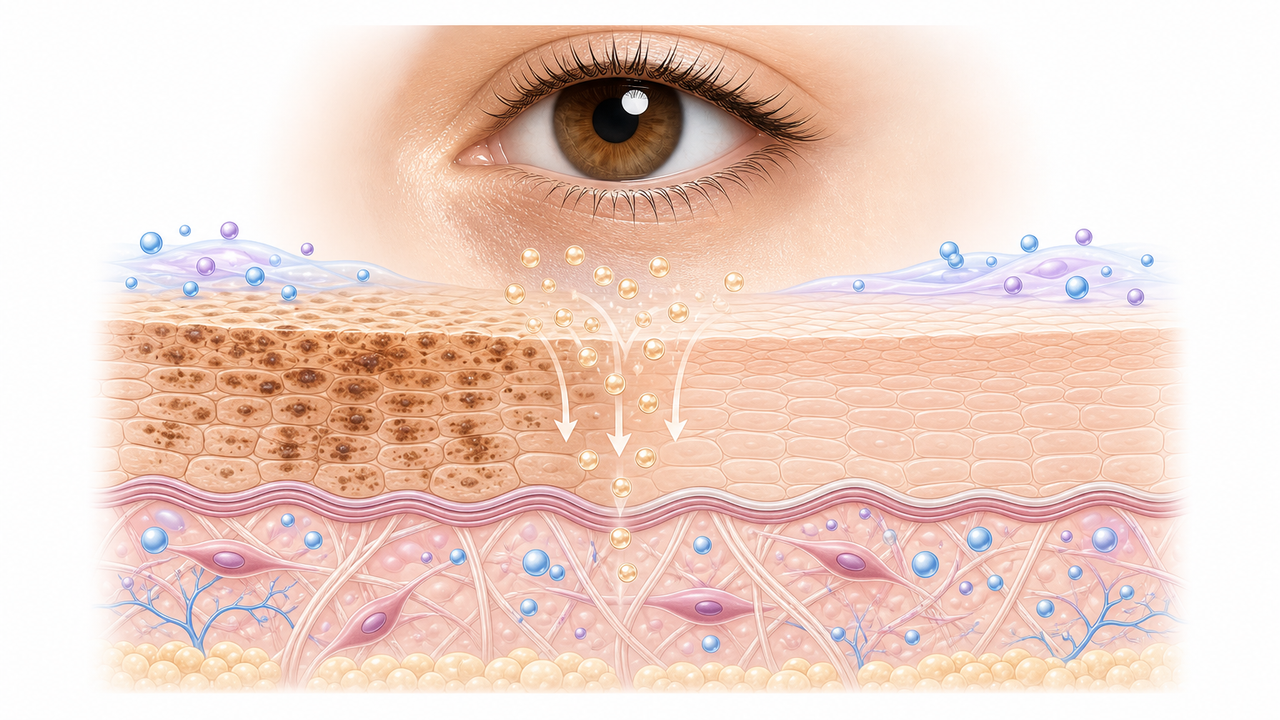
Niacinamide appears to work through several pathways relevant to cosmetic skin care. It can support barrier function by influencing epidermal lipid production, which helps the skin retain water more effectively. It may also reduce the look of blotchiness and uneven tone by interfering with transfer of melanosomes from pigment-producing cells to surrounding keratinocytes, which is why it is often included in brightening routines.
For oily or acne-prone skin, niacinamide may help make the surface look less greasy and calmer, though it is not a substitute for proven acne drugs like benzoyl peroxide, adapalene, or prescription treatments. Its anti-inflammatory reputation is useful, but not unlimited: a strong or poorly built formula can still sting. Mechanistically, niacinamide is best understood as a multi-support ingredient that improves the environment around a concern—barrier, tone, oil appearance, and comfort—rather than a single-purpose treatment that fixes one disease pathway.
That multi-pathway nature is also why niacinamide claims need restraint. A formula can plausibly support barrier lipids and tone while still being too strong, sticky, or irritating for a given user. The mechanism is only helpful if the final product keeps inflammation low.
Side Effects
Products featuring it
- The Ordinary Niacinamide 10% + Zinc 1% Oil Control Serum
- CeraVe Eye Repair Cream
- CeraVe Acne Foaming Cream Cleanser
- Naturium Tranexamic Topical Acid 5%
- ALASTIN Restorative Skin Complex
- Dermagist Acne Scars Fading Cream
- Fenty Skin Watch Ya Tone Niacinamide Dark Spot Serum
- Olay Vitamin C + Peptide 24 MAX Brightening Serum
- Eadem Milk Marvel Dark Spot Serum
- SkinCeuticals Discoloration Defense
- CeraVe PM Facial Moisturizing Lotion
- CeraVe SA Cream for Rough & Bumpy Skin
- Good Molecules Caffeine Energizing Hydrogel Eye Patches
- Hero Cosmetics Lightning Wand Dark Spot Brightening Serum
- La Roche-Posay Mela B3 Dark Spot Serum
- Anua Niacinamide 10% + TXA 4% Serum
- Dermagist Acne Clarifying Cream
- Dermagist Hydro Renewal Hand Cream
- EltaMD UV Clear SPF 46
- Good Molecules Discoloration Correcting Serum
AI Tool Box
Structured page facts at a glance.
- Ingredient
- Niacinamide
- Quick Summary
- Niacinamide is a versatile form of vitamin B3 used for barrier support, uneven-looking tone, oiliness, and redness-prone routines. In Batch 17 it shows up often because it can be helpful across acne-prone aging skin, dehydration, dark spots, and barrier stress — but concentration and formula comfort matter a lot.
- What It Is
- Niacinamide is vitamin B3 in an amide form, used in skincare because it can support several common concerns at once: barrier comfort, uneven tone, visible redness, oiliness, and dull texture. It is not a retinoid, exfoliating acid, antibiotic, or bleaching agent. Its appeal is that it can fit into many routines without forcing the user into a high-irritation active category.
- Concerns
- Dark Spots From Acne
- Uneven Skin Tone
- Dullness
- Acne
- Facial Redness
- Flaky Skin
- Oily Skin
- Adult Acne
- Large Pores
- Melasma
- Post Inflammatory Hyperpigmentation
- Skin Texture
- Sun Damage
- Blackheads
- Clogged Pores
- Comedonal Acne
- Facial Hyperpigmentation
- Dehydrated Oily Skin
- Hairline Acne
- Mouth-Area Breakouts
- Sebaceous Filaments
- Skin Sensitivity
- Post-Inflammatory Erythema
- Chest Sun Damage
- Crepey Skin
- Rosacea-Prone Redness
- Acne Scars
- Age Spots on Hands
- Forehead Bumps
- Razor Bumps
- Red Spots After Pimples
- Scar Texture
- Sun Sensitivity
- Bug Bite Dark Marks
- Inflamed Pimples
- Leg Dark Spots
- Thin, Fragile Mature Skin
- Dark Elbows and Knees
- Dark Inner Thighs
- Dry Hands
- Friction Darkening
- Benzoyl Peroxide Dryness
- Body Hyperpigmentation
- Chest Acne
- Crepey Neck
- Dark Underarms
- Ingrown Hairs
- Neck Discoloration
- Sagging Neck
- Workout Breakouts
- Cheek Breakouts
- Fine Lines Around Eyes
- Acne Marks
- Body Wrinkles
- Chest Wrinkles
- Dark Circles
- Dark Knees
- Dark Spots From Shaving
- Eleven Lines
- Lines Between The Eyebrows
- Marionette Lines
- Nasolabial Folds
- Skin Sagging
- Smile Lines
- Strawberry Legs
- Rough Skin
- Under-Eye Hollows
- Back Acne Scars
- Body Acne
- Chin Acne
- Whiteheads
- Crepey Eyelids
- Crepey Skin On Arms
- Thin Eye-Area Skin
- Tired-Looking Eyes
- Butt Acne
- Folliculitis
- Rough Body Skin
- Mechanism
- Niacinamide appears to work through several pathways relevant to cosmetic skin care. It can support barrier function by influencing epidermal lipid production, which helps the skin retain water more effectively. It may also reduce the look of blotchiness and uneven tone by interfering with transfer of melanosomes from pigment-producing cells to surrounding keratinocytes, which is why it is often included in brightening routines.
- Side Effects
- Products
- The Ordinary Niacinamide 10% + Zinc 1% Oil Control Serum
- CeraVe Eye Repair Cream
- CeraVe Acne Foaming Cream Cleanser
- Naturium Tranexamic Topical Acid 5%
- ALASTIN Restorative Skin Complex
- Dermagist Acne Scars Fading Cream
- Fenty Skin Watch Ya Tone Niacinamide Dark Spot Serum
- Olay Vitamin C + Peptide 24 MAX Brightening Serum
- Eadem Milk Marvel Dark Spot Serum
- SkinCeuticals Discoloration Defense
- CeraVe PM Facial Moisturizing Lotion
- CeraVe SA Cream for Rough & Bumpy Skin
- Good Molecules Caffeine Energizing Hydrogel Eye Patches
- Hero Cosmetics Lightning Wand Dark Spot Brightening Serum
- La Roche-Posay Mela B3 Dark Spot Serum
- Anua Niacinamide 10% + TXA 4% Serum
- Dermagist Acne Clarifying Cream
- Dermagist Hydro Renewal Hand Cream
- EltaMD UV Clear SPF 46
- Good Molecules Discoloration Correcting Serum
- Nécessaire The Body Retinol
- Topicals Faded Brightening & Clearing Serum
- Beauty of Joseon Glow Deep Serum: Rice + Alpha-Arbutin
- Dr. Idriss Major Fade Hyper Serum
- Olay Regenerist Micro-Sculpting Cream