Concern
Slugging Breakouts
Quick Summary
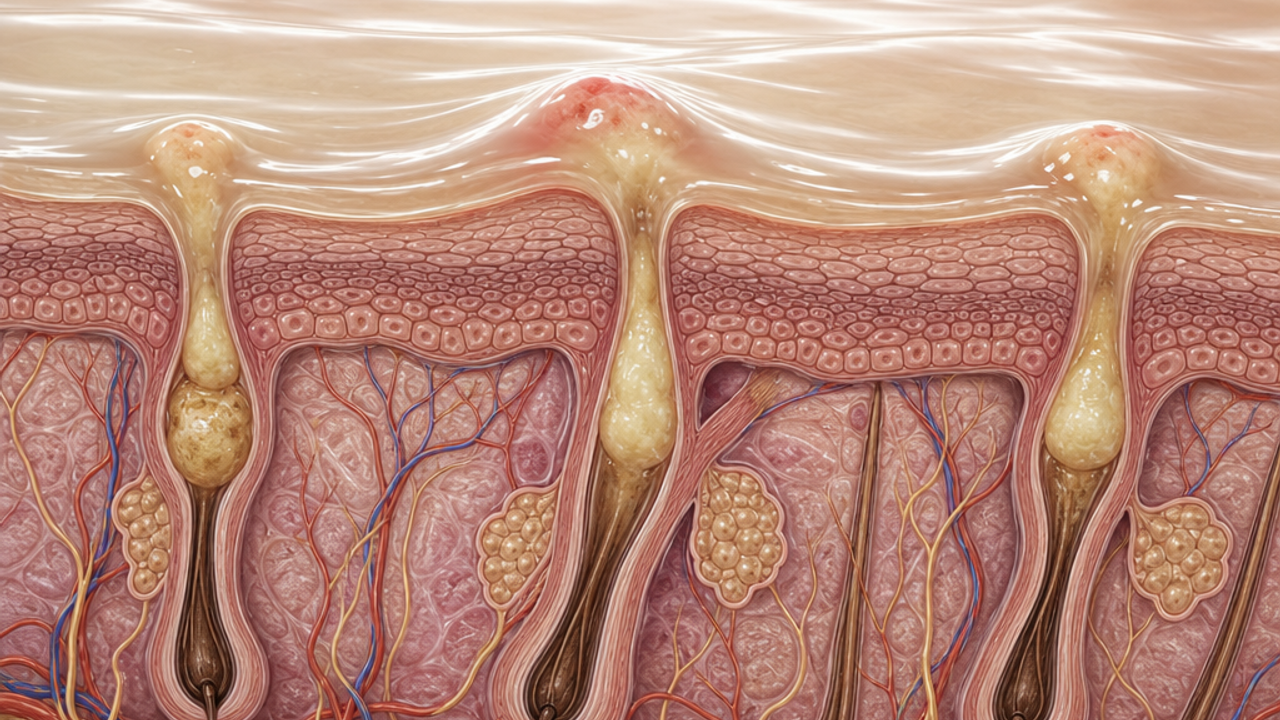
Slugging Breakouts describes the clogged-looking bumps and small whiteheads some acne-prone users notice after layering a heavy occlusive over a routine that was already too rich or fragranced for the skin. It matters in wrinkle-versus-dry-skin slugging questions because the breakout risk is the main reason slugging is not a universal anti-aging upgrade.
What It Is
Slugging Breakouts is an appearance and comfort signal, not a challenge to push through. The skin may show clogged-looking bumps, small whiteheads, or a congested feeling along the cheeks, jawline, hairline, or around the mouth after consistent overnight occlusive use.
In many routines, the concern is not the petrolatum itself by itself. It is the total load: heavy creams, fragrance, makeup residue, sweat, and comedogenic ingredients underneath the slug step.
Causes
Common contributors include layering petrolatum over rich plant butters, fragranced serums, heavy sunscreen residue, makeup that was not removed thoroughly, or comedogenic moisturizers. Skin types that already lean acne-prone, oily, or congestion-prone tend to feel the effect first.
Heat, sweat, and prolonged occlusion in warm conditions can also play a role, especially when the slug step covers the whole face instead of being limited to dry zones.
How cosmetic skincare can help
The first step is usually simplification: a gentle cleanser, a fragrance-free humectant moisturizer with glycerin and ceramides, and a smaller, thinner slug layer applied only where the skin needs it. Trimming the routine underneath the slug step often resolves the breakout pattern.
If clogged-looking bumps persist after simplifying, the most useful move is usually to pause slugging on those areas, return to a humectant moisturizer alone overnight, and reintroduce occlusion slowly and only where dryness is genuinely a problem.
Product Handling
Products linked to this concern are examples of routine roles, not endorsements. A fragrance-free moisturizer, a thin layer of petrolatum, and a gentle cleanser are categories rather than a single recommended brand.
If no product belongs, the reason is safety and fairness. The honest framing is that no single occlusive can be promised as breakout-safe for everyone, and the breakout pattern is usually a routine problem rather than a one-ingredient problem.
Limits And Safety
Stop the slug step and seek medical guidance for painful, spreading, infected-looking bumps, persistent cysts, eye-area dermatitis, lip swelling, or worsening rash. Persistent acne that does not improve after simplifying the routine belongs with a dermatologist rather than another night of slugging.
Ingredients that help
AI Tool Box
Structured page facts at a glance.
- Concern
- Slugging Breakouts
- Quick Summary
- Slugging Breakouts describes the clogged-looking bumps and small whiteheads some acne-prone users notice after layering a heavy occlusive over a routine that was already too rich or fragranced for the skin. It matters in wrinkle-versus-dry-skin slugging questions because the breakout risk is the main reason slugging is not a universal anti-aging upgrade.
- Ingredients That Help