Ingredient
Lactic Acid
Quick Summary
Lactic acid is an alpha hydroxy acid that exfoliates while also having humectant properties. In Batch 17 it is relevant to dark spots and ingredient-mixing because it can smooth and brighten the surface, but too much acid can inflame the exact discoloration cycle users want to calm.
What It Is
Lactic acid is an alpha hydroxy acid used for gentle-to-moderate exfoliation and hydration support. It is larger than glycolic acid and is also part of the skin’s natural moisturizing factor environment, which is why some formulas position it as a softer AHA option. It appears in leave-on treatments, masks, body lotions, and moisturizers for rough or dry texture.
For dark spots and roughness, lactic acid can be useful when the goal is smoother turnover without jumping immediately to a sharper glycolic product. It is still an acid, though, not a free pass for sensitive skin. A lactic acid lotion on dry body skin and a strong lactic serum on an over-exfoliated face are very different risk profiles. In Batch 17 context, it belongs as a possible tone-and-texture support ingredient, not as a cure for melasma, acne, or stubborn pigmentation.
Lactic acid is therefore a “choose the right intensity” ingredient. It can be elegant in a moisturizer for roughness and too much in a leave-on acid routine for someone already peeling. The same ingredient can be supportive or excessive depending on context.
Concerns helped
- Dark Elbows and Knees
- Ingrown Hairs on Legs
- Upper-Arm Laxity
- Dry Body Skin
- Rough Skin On Thighs
- Rough Texture
- Bug Bite Dark Marks
- Dark Inner Thighs
- Dark Knees
- Dark Spots From Shaving
- Friction Darkening
- Leg Dark Spots
- Rough Skin
- Strawberry Legs
- Body Hyperpigmentation
- Dark Underarms
- Ingrown Hairs
- Crepey Skin On Arms
- Body Wrinkles
- Chest Wrinkles
Show 3 more
Mechanism
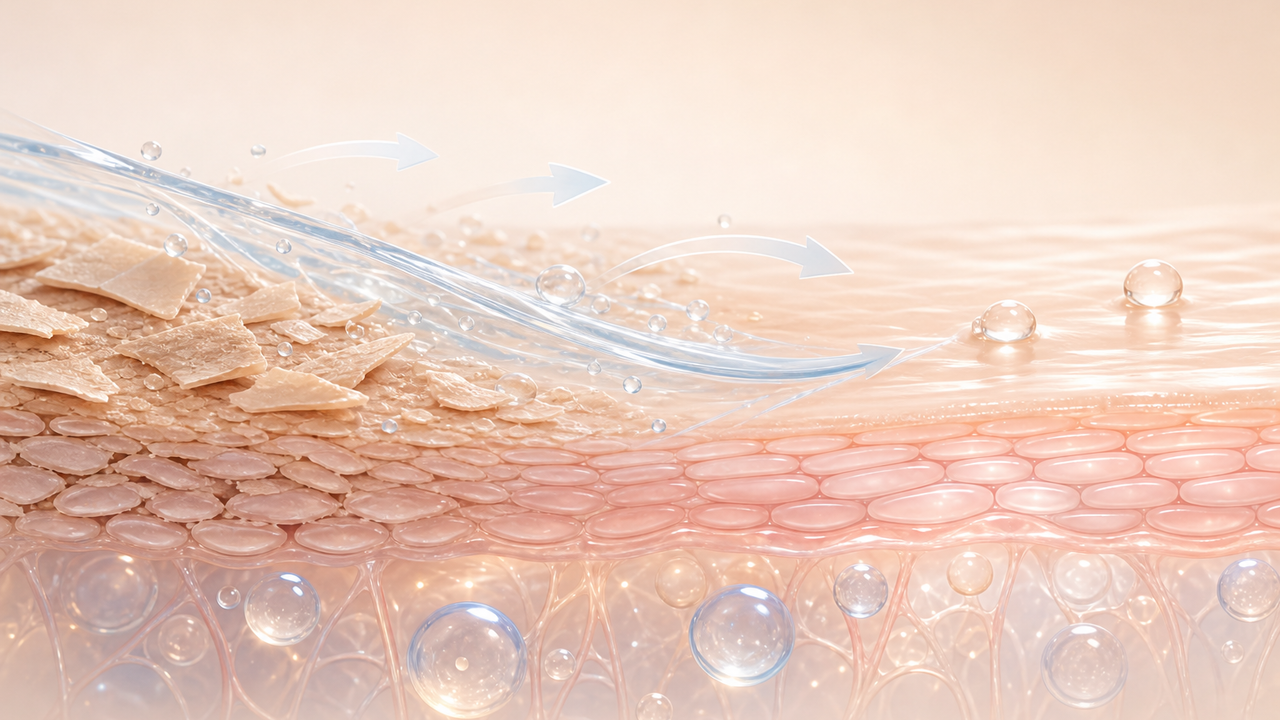
Lactic acid works by loosening the bonds between corneocytes so the outer layer sheds more evenly. That improves rough texture and can help disperse surface pigment more gradually. Because lactic acid also has humectant properties, some formulas feel less drying than equally ambitious exfoliating products, especially when paired with moisturizers.
The key mechanism issue is dose. At low levels in moisturizers, lactic acid may mainly support hydration and mild smoothing. At higher free-acid levels and lower pH, it behaves more like an active exfoliant and can sting, peel, or inflame the skin. For hyperpigmentation-prone users, irritation is not a minor inconvenience; it can worsen the very marks the product is supposed to fade. Lactic acid is best used as a controlled turnover tool inside a sunscreen-centered routine, not as a daily punishment for the skin surface.
Its humectant side is also why lactic acid should not be lumped together with every harsh exfoliant. Used well, it can smooth without the same sharp feel as stronger resurfacing plans; used carelessly, it is still fully capable of barrier damage.
Products featuring it
AI Tool Box
Structured page facts at a glance.
- Ingredient
- Lactic Acid
- Quick Summary
- Lactic acid is an alpha hydroxy acid that exfoliates while also having humectant properties. In Batch 17 it is relevant to dark spots and ingredient-mixing because it can smooth and brighten the surface, but too much acid can inflame the exact discoloration cycle users want to calm.
- What It Is
- Lactic acid is an alpha hydroxy acid used for gentle-to-moderate exfoliation and hydration support. It is larger than glycolic acid and is also part of the skin’s natural moisturizing factor environment, which is why some formulas position it as a softer AHA option. It appears in leave-on treatments, masks, body lotions, and moisturizers for rough or dry texture.
- Concerns
- Dark Elbows and Knees
- Ingrown Hairs on Legs
- Upper-Arm Laxity
- Dry Body Skin
- Rough Skin On Thighs
- Rough Texture
- Bug Bite Dark Marks
- Dark Inner Thighs
- Dark Knees
- Dark Spots From Shaving
- Friction Darkening
- Leg Dark Spots
- Rough Skin
- Strawberry Legs
- Body Hyperpigmentation
- Dark Underarms
- Ingrown Hairs
- Crepey Skin On Arms
- Body Wrinkles
- Chest Wrinkles
- Butt Acne
- Folliculitis
- Rough Body Skin
- Mechanism
- Lactic acid works by loosening the bonds between corneocytes so the outer layer sheds more evenly. That improves rough texture and can help disperse surface pigment more gradually. Because lactic acid also has humectant properties, some formulas feel less drying than equally ambitious exfoliating products, especially when paired with moisturizers.