Concern
Dark Elbows and Knees
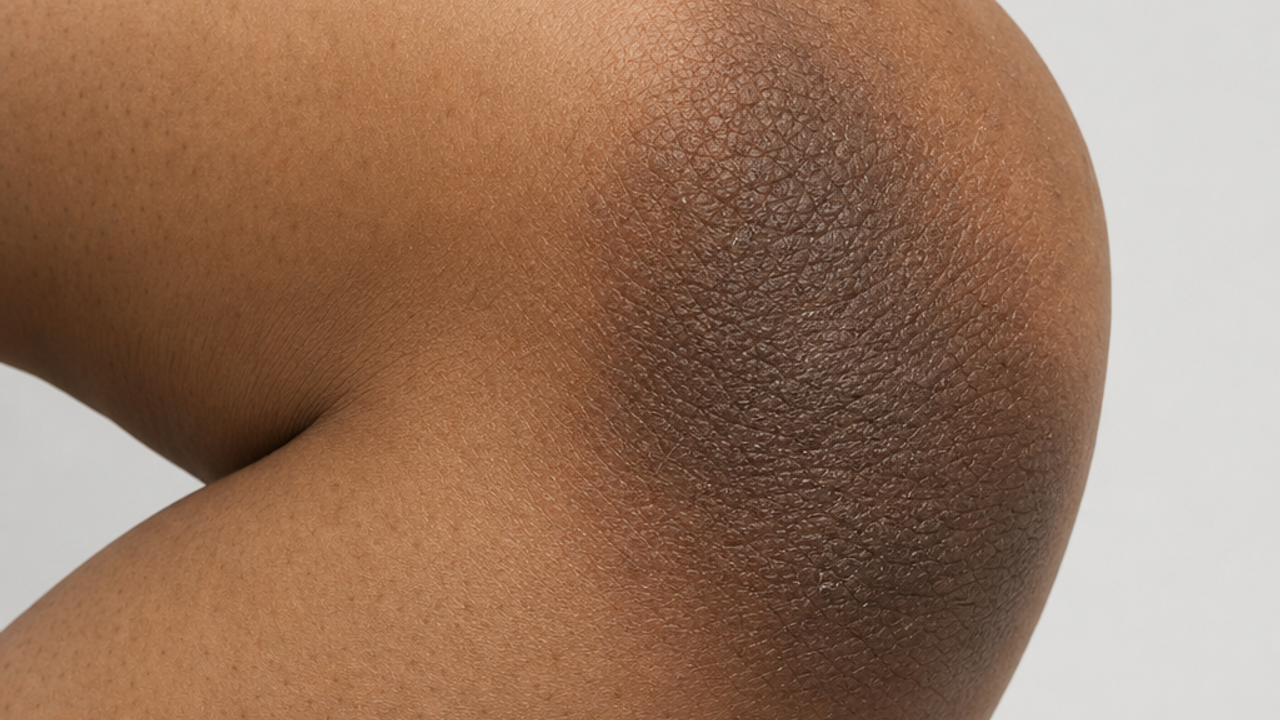
Quick Summary
Dark elbows and knees are common because these areas get friction, pressure, dryness, and thicker-looking texture. Routine care can support smoother, more even-looking skin over time.
Causes
Friction, kneeling, leaning, dryness, buildup, sun exposure, and natural skin tone variation can all contribute. Sudden, velvety, widespread, itchy, painful, or rapidly changing darkening should be checked.
How cosmetic skincare can help
A conservative routine focuses on comfort, consistency, and avoiding obvious triggers. Helpful ingredients or products should be selected for the visible pattern and skin tolerance, not used as proof of a diagnosis.
When to Seek Care
Pain, swelling, pus, bleeding, rapidly spreading changes, severe itch, eye symptoms, scarring, or persistent uncertainty should be checked by a clinician.
Ingredients that help
Evidence
AI Tool Box
Structured page facts at a glance.
- Concern
- Dark Elbows and Knees
- Quick Summary
- Dark elbows and knees are common because these areas get friction, pressure, dryness, and thicker-looking texture. Routine care can support smoother, more even-looking skin over time.
- Ingredients That Help