Ingredient
Salicylic Acid
Quick Summary
Salicylic acid is an oil-soluble beta hydroxy acid used for blackheads, clogged pores, and acne-prone routines. In Batch 17 it is useful for breakouts and jawline acne, but overuse can create dryness that looks like the very problem the user is trying to fix.
What It Is
Salicylic acid is a beta hydroxy acid used in skincare because it can exfoliate inside oily, clogged environments better than many water-soluble acids. It appears in cleansers, leave-on toners, serums, spot products, and acne treatments. Depending on the product and country, it may be positioned cosmetically for pores and texture or as an over-the-counter acne active.
For Batch 17, salicylic acid belongs in blackhead, breakout, oily-dehydrated, and ingredient-mixing discussions. It can be genuinely useful, but it is also easy to overuse. More salicylic acid does not mean cleaner pores; it can mean a damaged barrier, rebound tightness, more visible flakes, and irritation bumps that get mistaken for acne. It is best framed as a targeted keratolytic ingredient, not a universal solution for every clogged, rough, or acne-like condition.
The important distinction is that salicylic acid is pore-relevant, not automatically barrier-friendly. A blackhead routine may benefit from it, while a red, tight, over-cleansed face may need less of it, not more. The ingredient is useful when matched to the lesion pattern.
Concerns helped
Mechanism
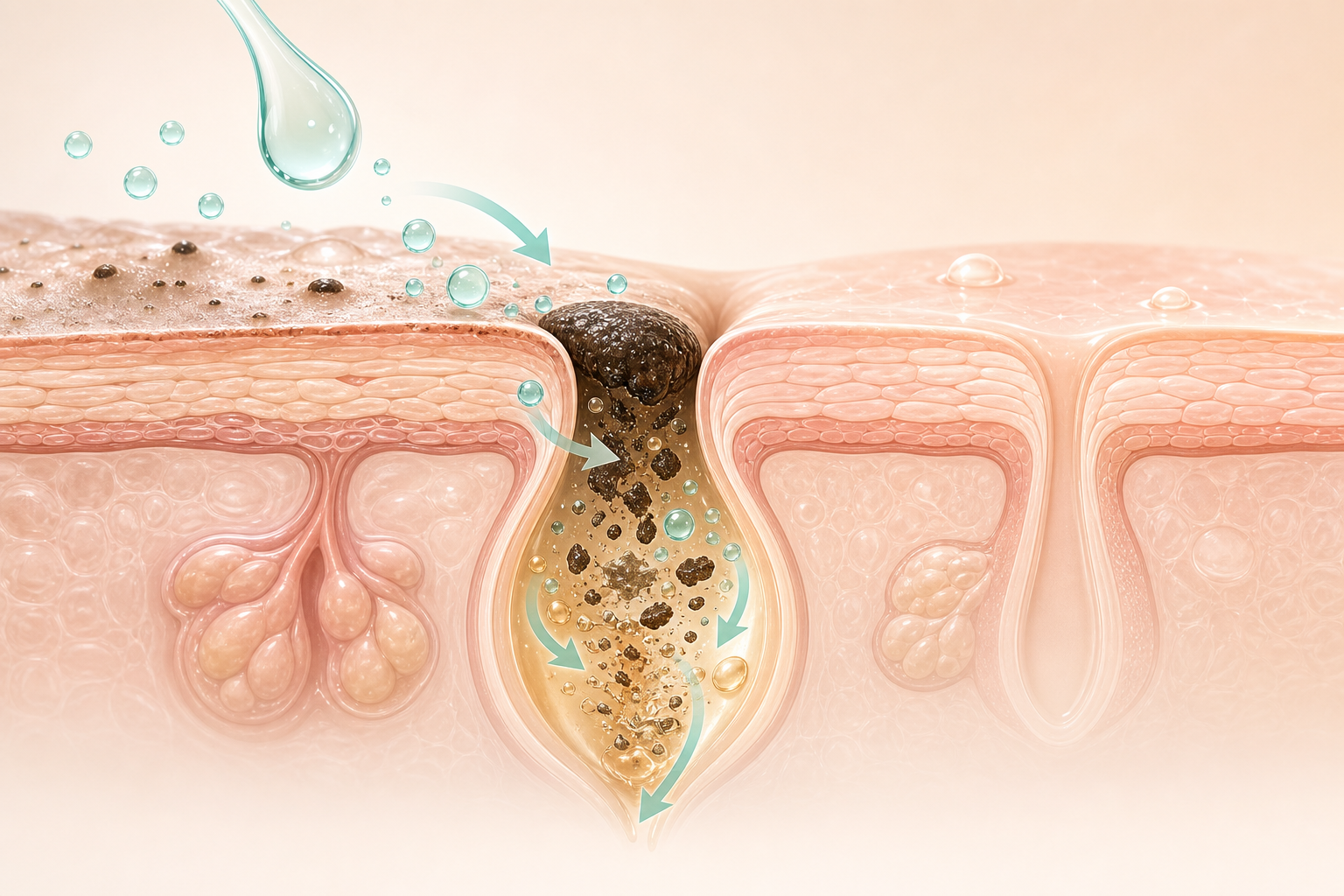
Salicylic acid is oil-soluble enough to partition into sebum-rich follicles, where it helps loosen compacted corneocytes and reduce the buildup that contributes to comedones. It also has keratolytic and mild anti-inflammatory properties, which is why it can improve the look of blackheads and clogged pores when used at an appropriate strength and frequency.
The mechanism is not gentle by default. Salicylic acid lowers the “stickiness” of the outer layers, and if the routine already includes retinoids, glycolic acid, benzoyl peroxide, scrubs, or drying cleansers, that extra exfoliation can push skin into irritation. Cleansers deliver shorter contact; leave-ons deliver more sustained exposure. Acne-prone aging skin often does better with strategic use—one salicylic product, not three—plus moisturizer and sunscreen. It does not treat hormonal drivers, cystic acne, melasma, or wrinkles directly; it mainly helps the pore-shedding part of the problem.
Because it works where oil and compacted cells meet, salicylic acid is strongest for comedonal patterns. It is much less satisfying for deep hormonal nodules, dermatitis bumps, or irritation masquerading as acne, where the mechanism is pointed at the wrong target.
Products featuring it
AI Tool Box
Structured page facts at a glance.
- Ingredient
- Salicylic Acid
- Quick Summary
- Salicylic acid is an oil-soluble beta hydroxy acid used for blackheads, clogged pores, and acne-prone routines. In Batch 17 it is useful for breakouts and jawline acne, but overuse can create dryness that looks like the very problem the user is trying to fix.
- What It Is
- Salicylic acid is a beta hydroxy acid used in skincare because it can exfoliate inside oily, clogged environments better than many water-soluble acids. It appears in cleansers, leave-on toners, serums, spot products, and acne treatments. Depending on the product and country, it may be positioned cosmetically for pores and texture or as an over-the-counter acne active.
- Concerns
- Acne
- Blackheads
- Clogged Pores
- Comedonal Acne
- Pomade Acne
- Closed Comedones
- Hairline Acne
- Keratosis Pilaris
- Large Pores
- Milia
- Post-Waxing Bumps
- Skin Texture
- Face Touching And Acne
- Mask Acne
- Mouth-Area Breakouts
- Sebaceous Filaments
- Skin Purging
- Razor Bumps
- Inflamed Pimples
- Ingrown Hairs on Legs
- Scalp Acne
- Single Pimple
- Cheek Breakouts
- Chest Acne
- Workout Breakouts
- Dry Body Skin
- Rough Skin On Thighs
- Dark Spots From Shaving
- Strawberry Legs
- Back Acne Scars
- Body Acne
- Chin Acne
- Whiteheads
- Rough Skin
- Butt Acne
- Folliculitis
- Rough Body Skin
- Mechanism
- Salicylic acid is oil-soluble enough to partition into sebum-rich follicles, where it helps loosen compacted corneocytes and reduce the buildup that contributes to comedones. It also has keratolytic and mild anti-inflammatory properties, which is why it can improve the look of blackheads and clogged pores when used at an appropriate strength and frequency.