Concern
Adult Acne
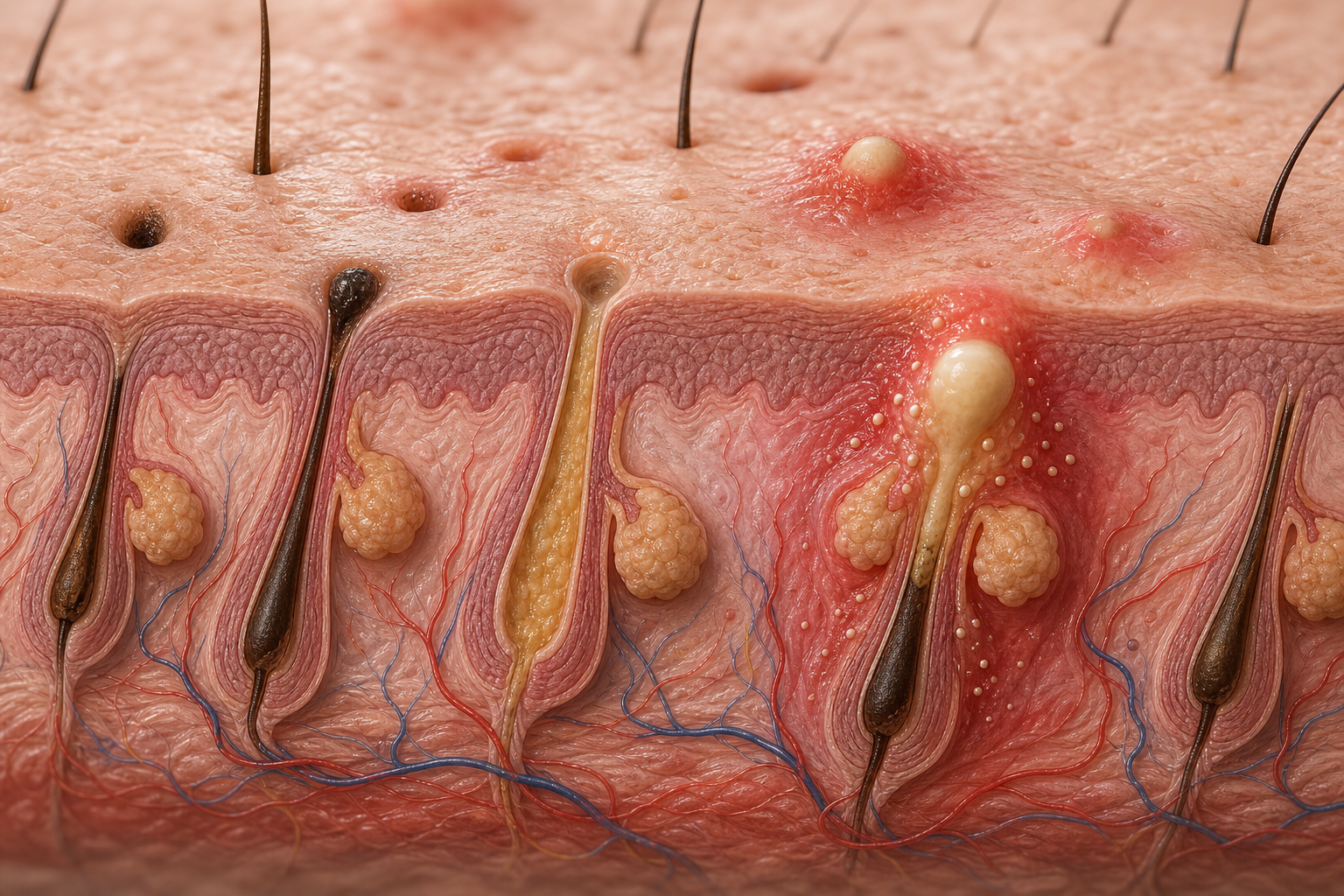
Quick Summary
Adult Acne describes a visible or comfort-related skincare concern. It matters in routine-combination questions because the same active ingredients that help acne, tone, texture, or wrinkles can make skin look worse when used too often.
What It Is
Adult Acne is an appearance and comfort signal, not a challenge to push through. The skin may feel tight, sting with ordinary products, show new flakes, look unusually shiny, or develop redness and bumps after an active-heavy routine.
In many routines, the concern is not one ingredient by itself. It is the total load: cleanser strength, retinoid frequency, acids, benzoyl peroxide, weather, shaving, and not enough moisturizer.
Causes
Common contributors include strong active combinations, rapid frequency increases, harsh cleansing, fragrance, alcohol-heavy formulas, acne treatments used over large areas, and inadequate moisturizer. Retinoids, exfoliating acids, and benzoyl peroxide can all be useful, but they need pacing.
Sun exposure can worsen the appearance of irritated or recently exfoliated skin, especially when dark spots or uneven tone are part of the concern.
How cosmetic skincare can help
The first step is usually simplification: gentle cleanser, moisturizer, sunscreen for exposed skin, and a pause or lower frequency for the irritating active. Ceramides, glycerin, petrolatum, hyaluronic acid, panthenol, and niacinamide can support comfort while the routine resets.
Once skin is calm, reintroduce one active at a time. Keep retinoids and exfoliating acids on alternate nights if irritation returns. Use benzoyl peroxide carefully because it can dry skin and bleach fabrics.
Product Handling
Products linked to this concern are examples of roles: a moisturizer, hydrating serum, acne treatment, sunscreen, or targeted active. They do not make an aggressive routine safe by themselves.
If no product belongs, the reason is safety. Irritated skin often needs fewer actives, not a more complicated product stack. A useful reset is two weeks of gentle cleanser, moisturizer, sunscreen when exposed, and no exfoliating acids or retinoids until ordinary products stop stinging. After that, reintroduce only one active and keep the frequency low.
People with acne-prone skin should also avoid swinging from irritation into heavy occlusion everywhere. Use richer balms only on dry patches if they worsen breakouts. The goal is skin that feels normal enough to tolerate a targeted treatment, not skin that is coated but still inflamed underneath.
Limits And Safety
Stop active products and seek medical guidance for swelling, oozing, severe burning, eye-area irritation, hives, worsening rash, painful cysts, or symptoms that persist after simplifying the routine. If you are pregnant or trying to conceive, avoid retinoids unless your clinician advises otherwise.
Ingredients that help
Products
Product Information
AI Tool Box
Structured page facts at a glance.
- Concern
- Adult Acne
- Quick Summary
- Adult Acne describes a visible or comfort-related skincare concern. It matters in routine-combination questions because the same active ingredients that help acne, tone, texture, or wrinkles can make skin look worse when used too often.
- Ingredients That Help
- Products
- Product Information Sources