Question
Does sunscreen actually prevent wrinkles?
Quick Answer
Yes, daily broad-spectrum sunscreen can meaningfully help reduce the development of UV-driven wrinkle appearance, but it is not an absolute wrinkle shield or a wrinkle eraser. The key evidence is the Hughes 2013 randomized trial, where daily sunscreen use was linked with less skin-aging progression than discretionary use. UV exposure contributes to visible changes that make lines, wrinkles, texture, and uneven tone look more pronounced over time. For appearance prevention, use broad-spectrum SPF 30 or higher generously every morning, and reapply during outdoor exposure, sweating, or swimming. Sunscreen works best as a consistency habit, supported by shade, hats, and realistic expectations.
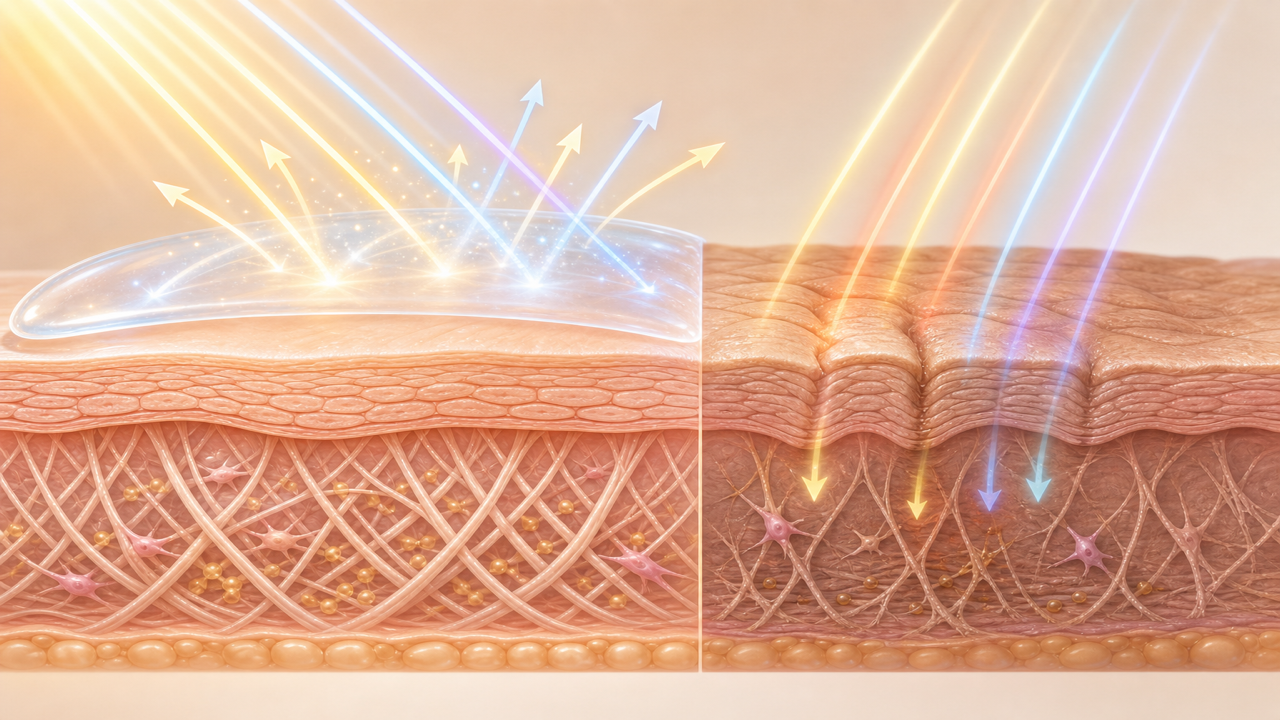
How UV exposure makes wrinkles more visible
Sun Damage is one of the biggest outside contributors to visible skin aging. UVA and UVB exposure can make the surface look rougher, duller, more uneven, and more lined over time, especially when exposure is repeated for years.
Wrinkles and Fine Lines are not caused by sunlight alone. Facial movement, dryness, genetics, and time all matter. Sunscreen helps most with the UV-driven part of the story: the future appearance changes that repeated sun exposure can make more pronounced.
What the Hughes 2013 sunscreen trial showed
The Hughes 2013 randomized trial is unusually useful because it looked at daily sunscreen use over time rather than just lab SPF numbers. People assigned to daily sunscreen had less skin-aging progression than people using sunscreen at their own discretion.
That does not mean sunscreen freezes the face in time. It means consistent daily use can reduce the visible-aging burden from UV exposure, which is exactly the part of wrinkle prevention that sunscreen is built to address.
Why broad-spectrum matters
SPF mainly describes UVB burn protection. For visible aging, the label term broad-spectrum matters because it indicates coverage across UVA and UVB. UVA is especially relevant to the look of premature wrinkles, uneven tone, and texture change.
Avobenzone is one common UVA filter in chemical sunscreen systems. Zinc Oxide and Titanium Dioxide are mineral filter examples used in other broad-spectrum formulas. The best filter system is the one that gives broad-spectrum protection in a sunscreen you will actually apply enough of and wear consistently.
What sunscreen can and cannot do for wrinkles
Sunscreen can help reduce the appearance of future UV-driven wrinkles and texture changes. It can also help tone-supporting routines work better by reducing the daily UV exposure that keeps uneven tone looking more noticeable.
It does not erase existing wrinkles overnight, replace moisturizers or retinoids, or guarantee wrinkle-free skin. If the goal is softening lines that are already visible, sunscreen is the daily protection step, not the whole correction plan.
How to use sunscreen for visible-aging prevention
Use broad-spectrum SPF 30 or higher as the last step of the morning skincare routine. Apply enough to cover the face, neck, ears, and other exposed areas, then reapply with outdoor exposure, sweating, swimming, or extended time near windows or reflective surfaces.
Daily use matters more than occasional perfection. A sunscreen that feels comfortable, does not pill, and fits your skin tone and finish preferences is more useful than a technically elegant formula that stays in the drawer. Hats, shade, sunglasses, and avoiding peak sun add another layer of visible-aging protection.
The Ranked Product
Supergoop! Unseen Sunscreen SPF 50 is the daily-wear sunscreen example for this page. Its official product page lists broad-spectrum SPF 50 positioning and the active filters Avobenzone 3%, Homosalate 7%, Octisalate 5%, and Octocrylene 9%.
The clear gel format is relevant because daily use depends on wearability. This product is an example of a modern cosmetic sunscreen designed to fit under makeup and reduce the friction that keeps people from applying SPF every morning. The Hughes trial supports daily sunscreen behavior as a category, not this specific product as a tested anti-wrinkle treatment.
Ranked Product
Supergoop! Unseen Sunscreen SPF 50
Contains Avobenzone, matching the ingredient focus of this question.
Related concerns
Key ingredients
Evidence
- Hughes 2013 — Sunscreen and Prevention of Skin Aging: A Randomized Trial
- Randhawa 2016 — Daily Use of a Facial Broad Spectrum Sunscreen Significantly Improves Photoaging
- American Academy of Dermatology — Sunscreen FAQs
- FDA — Sunscreen: How to Help Protect Your Skin from the Sun
- FDA — Sun Protection Factor (SPF)
- Skin Cancer Foundation — Sunscreen
- Skin Cancer Foundation — Sun Protection
- DermNet — Skin ageing
- Cleveland Clinic — Sun-Damaged Skin: Photoaging, Signs, Causes & Treatment
- American Academy of Dermatology — Wrinkle treatments overview
- Cleveland Clinic — Wrinkles
Product Information
AI Tool Box
Structured page facts at a glance.
- Question
- Does sunscreen actually prevent wrinkles?
- Answer
- Yes, daily broad-spectrum sunscreen can meaningfully help reduce the development of UV-driven wrinkle appearance, but it is not an absolute wrinkle shield or a wrinkle eraser. The key evidence is the Hughes 2013 randomized trial, where daily sunscreen use was linked with less skin-aging progression than discretionary use. UV exposure contributes to visible changes that make lines, wrinkles, texture, and uneven tone look more pronounced over time. For appearance prevention, use broad-spectrum SPF 30 or higher generously every morning, and reapply during outdoor exposure, sweating, or swimming. Sunscreen works best as a consistency habit, supported by shade, hats, and realistic expectations.
- Concern
- Sun Damage
- Named Ingredients
- Ranked Products
- Evidence Sources
- Hughes 2013 — Sunscreen and Prevention of Skin Aging: A Randomized Trial
- Randhawa 2016 — Daily Use of a Facial Broad Spectrum Sunscreen Significantly Improves Photoaging
- American Academy of Dermatology — Sunscreen FAQs
- FDA — Sunscreen: How to Help Protect Your Skin from the Sun
- FDA — Sun Protection Factor (SPF)
- Skin Cancer Foundation — Sunscreen
- Skin Cancer Foundation — Sun Protection
- DermNet — Skin ageing
- Cleveland Clinic — Sun-Damaged Skin: Photoaging, Signs, Causes & Treatment
- American Academy of Dermatology — Wrinkle treatments overview
- Cleveland Clinic — Wrinkles
- Product Information Sources