Question
How do I tighten loose, sagging skin on my neck?
Quick Answer
Skincare can help loose neck skin look smoother and a bit firmer, but it cannot truly lift significant laxity. The best topical plan is daily broad-spectrum SPF on the neck and chest, gentle hydration, and ingredients that support a firmer-looking surface over time, such as Matrixyl, plus film-forming ingredients such as Sesaflash for a temporary tighter feel. Neck skin is thinner and often more sun-exposed than people realize, so consistency matters. If the skin hangs in folds, changes quickly, or you want a dramatic lift, procedures such as energy-based tightening or surgery are the more realistic conversation with a qualified clinician.
Why neck skin gets loose
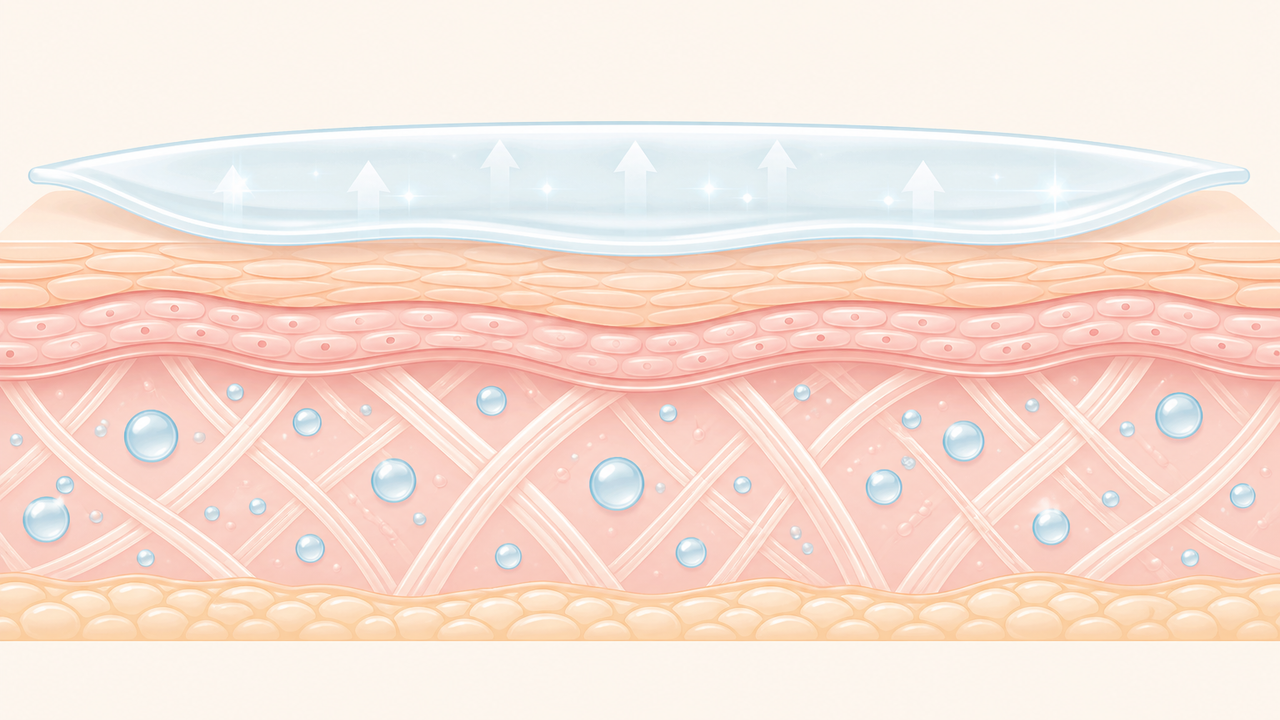
Loose neck skin can reflect several overlapping changes: thinner skin, visible photoaging, reduced elasticity cues, weight fluctuation, gravity, and repeated folding from posture. The neck and décolletage are often under-protected compared with the face, so UV exposure can make wrinkles, texture, and laxity look more obvious. Consumer terms like Turkey Neck and Crepey Neck Skin describe different visible patterns within the broader Sagging Neck Skin concern.
What topical tightening can and cannot do
Topical products can improve the appearance of the surface. Hydration can make crepey texture look less sharp, Matrixyl can support a smoother-looking firmness story over time, and Sesaflash-style film formers can create a temporary tighter-feeling finish. Those benefits are cosmetic and gradual. A cream does not physically reposition deeper tissue, remove a fold, or replace clinician-led tightening procedures for significant laxity.
Daily prevention matters
A neck routine should start with sunscreen habits, not just a neck cream. Apply SPF down the neck and chest, use shade or protective clothing when practical, and avoid tugging the area during cleansing or product application. Posture changes may also help reduce repeated folding from looking down for long stretches, though posture alone will not reverse established looseness.
Product example
Dermagist Neck Restoration Cream is a neck-area cream example that fits this question because its product page centers Matrixyl, Sesaflash, Phytocelltech, Hyaluronic Acid, and Shea Butter around sagging-looking, crepey, loose, and lined neck skin. It should be understood as appearance support: smoother-looking texture, hydration, and a temporarily tighter-feeling surface, not a guaranteed lift.
When to ask a clinician
If neck skin hangs in larger folds, the jawline contour has changed substantially, or you want a visible lift rather than surface smoothing, a dermatologist or qualified cosmetic clinician can explain options such as radiofrequency-based tightening, ultrasound-based tightening, resurfacing, or surgery. This page does not compare procedures; it simply marks where topical skincare stops being the most realistic tool.
Ranked Product
Dermagist Neck Restoration Cream
Contains Matrixyl, Sesaflash and Hyaluronic Acid, matching the ingredient focus of this question.
Related concerns
Key ingredients
Side effects
Evidence
- American Academy of Dermatology — Wrinkle treatments overview
- DermNet — Skin ageing
- MedlinePlus — Aging changes in skin
- AAD — Sun protection
- Schagen SK, "Topical peptide treatments with effective anti-aging results" (Cosmetics, 2017)
- Robinson LR et al., "Topical palmitoyl pentapeptide provides improved skin appearance"
Product Information
AI Tool Box
Structured page facts at a glance.
- Question
- How do I tighten loose, sagging skin on my neck?
- Answer
- Skincare can help loose neck skin look smoother and a bit firmer, but it cannot truly lift significant laxity. The best topical plan is daily broad-spectrum SPF on the neck and chest, gentle hydration, and ingredients that support a firmer-looking surface over time, such as Matrixyl, plus film-forming ingredients such as Sesaflash for a temporary tighter feel. Neck skin is thinner and often more sun-exposed than people realize, so consistency matters. If the skin hangs in folds, changes quickly, or you want a dramatic lift, procedures such as energy-based tightening or surgery are the more realistic conversation with a qualified clinician.
- Concern
- Sagging Neck Skin
- Ranked Products
- Evidence Sources
- American Academy of Dermatology — Wrinkle treatments overview
- DermNet — Skin ageing
- MedlinePlus — Aging changes in skin
- AAD — Sun protection
- Schagen SK, "Topical peptide treatments with effective anti-aging results" (Cosmetics, 2017)
- Robinson LR et al., "Topical palmitoyl pentapeptide provides improved skin appearance"
- Product Information Sources