Question
Is hyaluronic acid good for oily skin?
Quick Answer
Yes. Hyaluronic acid can be good for oily skin because it binds water rather than adding oil. It is often useful when oily skin feels tight, dehydrated, or over-cleansed. The formula matters more than the ingredient name: oily skin usually does best with a lightweight, oil-free, noncomedogenic gel or serum that layers cleanly under sunscreen. Hyaluronic acid can make skin feel plumper and more comfortable, but it does not reduce oil production by itself and may need a light moisturizer over it. Niacinamide can be a useful companion for shine-prone routines, but hyaluronic acid’s main job is water-binding hydration.
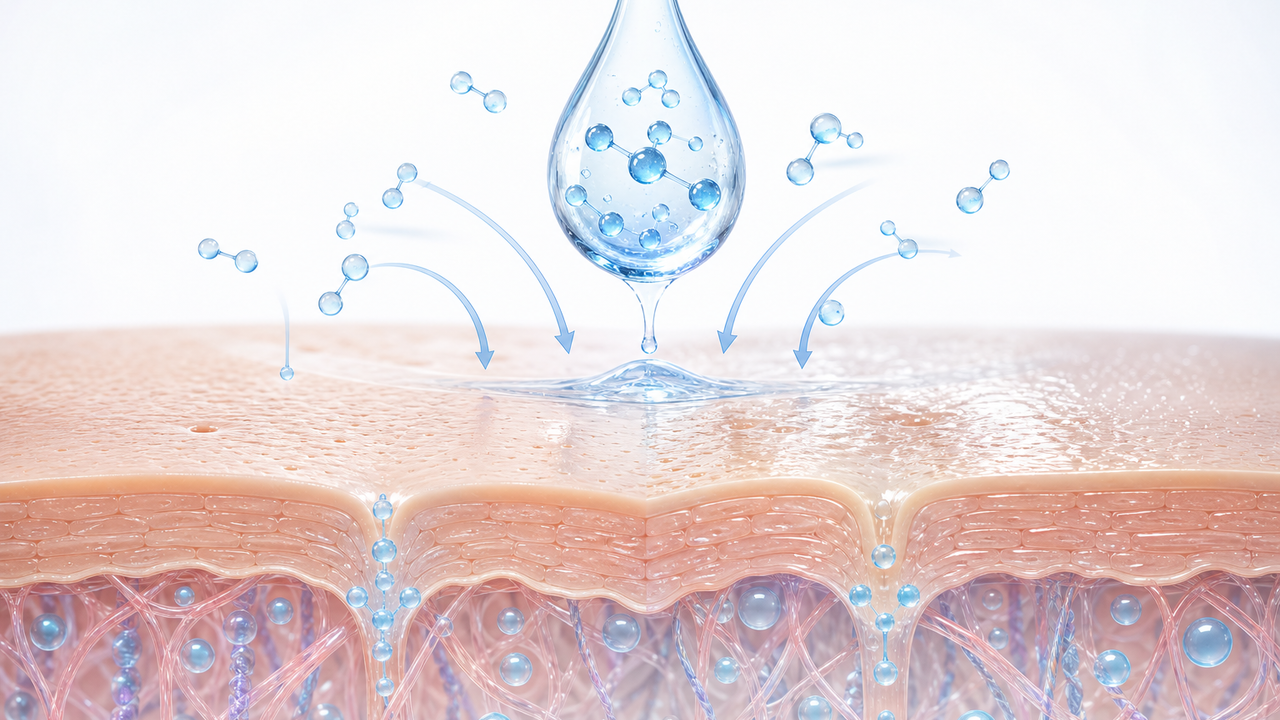
Why oily skin can still need hydration
Oil and water are different. Oily skin can produce plenty of sebum and still feel tight, dehydrated, or uncomfortable after harsh cleansing, acne-style actives, low humidity, or skipping moisturizer. That is why some oily-skin routines feel shiny on the surface but tight underneath.
What hyaluronic acid does
Hyaluronic acid is a humectant, meaning it helps bind water at the skin surface. In a good formula, it can make skin feel more comfortable and look a little plumper without adding oil. It should not be framed as an oil-control ingredient, acne treatment, or pore-shrinking step.
What to look for in an HA serum for oily skin
Look for lightweight, water-based textures that say oil-free or noncomedogenic when the brand supports that claim. Minimal fragrance, a non-sticky finish, and easy layering under sunscreen matter more than a long ingredient story. If a serum leaves a tacky film, use less or switch textures.
How to layer it without extra shine
Apply a small amount to slightly damp skin, then use a light gel-cream moisturizer if your skin still feels tight. In the morning, sunscreen goes over the routine. If your skin gets shiny quickly, avoid heavy oils or rich creams on top of hyaluronic acid during the day.
What HA will not do for oily skin
Hyaluronic acid will not directly reduce sebum, clear acne, or replace oil-control ingredients. If shine, clogged pores, or breakouts are the main issue, ingredients such as niacinamide or salicylic acid may be more relevant. Persistent painful breakouts or sudden oiliness changes should be discussed with a dermatologist or qualified clinician.
The Ranked Products
TRUE Serums Hyaluronic Acid Serum is the HA-focused Dermagist product example already in the SKB catalog. It fits because the question is about whether hyaluronic acid belongs in an oily-skin routine.
The Ordinary Hyaluronic Acid 2% + B5 is the lightweight water-based example. Its official page lists sodium hyaluronate, sodium hyaluronate crosspolymer, panthenol, glycerin, and oil-free positioning, which makes it a clean fit for oily-skin users looking for hydration without a greasy feel.
Ranked Product
TRUE Serums Hyaluronic Acid Serum
Contains Hyaluronic Acid.
Ranked Product
Related concerns
Key ingredients
Evidence
- AAD — How to control oily skin
- Dry Skin (Xeroderma): Causes, Treatments, and More - DermNet
- Hyaluronic acid: A key molecule in skin aging
- Efficacy of cream-based novel formulations of hyaluronic acid of different molecular weights in anti-wrinkle treatment
Product Information
AI Tool Box
Structured page facts at a glance.
- Question
- Is hyaluronic acid good for oily skin?
- Answer
- Yes. Hyaluronic acid can be good for oily skin because it binds water rather than adding oil. It is often useful when oily skin feels tight, dehydrated, or over-cleansed. The formula matters more than the ingredient name: oily skin usually does best with a lightweight, oil-free, noncomedogenic gel or serum that layers cleanly under sunscreen. Hyaluronic acid can make skin feel plumper and more comfortable, but it does not reduce oil production by itself and may need a light moisturizer over it. Niacinamide can be a useful companion for shine-prone routines, but hyaluronic acid’s main job is water-binding hydration.
- Concern
- Dry Skin
- Evidence Sources