Ingredient
Hyaluronic Acid
Quick Summary
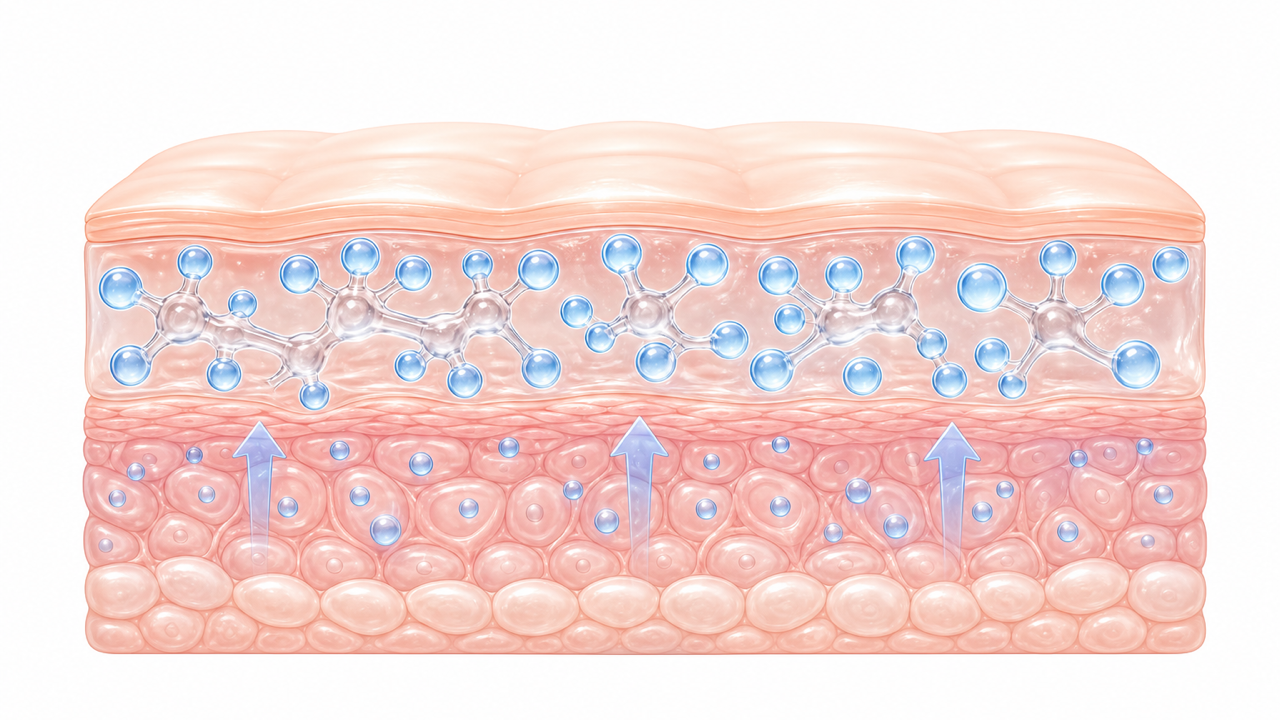
Hyaluronic acid is a water-binding humectant used to make skin look temporarily plumper and feel more hydrated. In Batch 17 it belongs in dehydrated-oily, neck-line, and acne-prone aging moisturizer discussions, but it is not a collagen-rebuilding wrinkle fix.
What It Is
Hyaluronic acid is a water-binding polymer used in skincare to increase surface hydration and give skin a temporarily plumper, smoother feel. In formulas it may appear as hyaluronic acid, sodium hyaluronate, hydrolyzed hyaluronic acid, sodium hyaluronate crosspolymer, or related forms with different molecular weights. Despite the “acid” name, it is not an exfoliating acid like glycolic or lactic acid.
Its best role is hydration support, especially when the complaint is dehydration, tightness, crepey-looking surface texture, or makeup catching on dry patches. It can make fine dehydration lines look softer because the outer layer contains more water, but that is not the same as rebuilding collagen or permanently filling wrinkles. Hyaluronic acid is also formula-sensitive: a serum built only around humectants may feel nice for an hour but underperform if there is no moisturizer or occlusive layer to slow water loss.
Concerns helped
- Crepey Neck Skin
- Dehydrated Skin
- Oily Skin
- Adult Acne
- Dehydrated Oily Skin
- Makeup Clinging To Dry Patches
- Under-Eye Concealer Creasing
- Easy Bruising With Aging
- Makeup Settling Into Lines
- Neck Wrinkles
- Vitamin C Irritation
- Jawline Laxity
- Thin, Fragile Mature Skin
- Lip Lines
- Loss Of Plumpness
- Under-Eye Dryness
- Wrinkles Around The Mouth
- Dark Spots
- Dry Patches
- Upper-Arm Laxity
Show 22 more
- Chapped Lips
- Deep Forehead Lines
- Deep Wrinkles
- Early Wrinkle Prevention
- Sagging Skin
- Vertical Lip Lines
- Under-Eye Hollows
- Eleven Lines
- Lines Between The Eyebrows
- Marionette Lines
- Nasolabial Folds
- Skin Sagging
- Smile Lines
- Crepey Eyelids
- Dry Hands
- Fine Lines Around Eyes
- Body Wrinkles
- Chest Wrinkles
- Strawberry Legs
- Thin Eye-Area Skin
- Tired-Looking Eyes
- Crepey Skin On Arms
Mechanism
Hyaluronic acid works by holding water at and near the skin surface. Larger forms mostly form a flexible hydrating film on top of the stratum corneum, while smaller or modified forms may sit a bit differently within the upper surface layers. The visible result is often smoother texture, less tightness, and a temporary plumping effect because the outer layer is better hydrated.
The mechanism is supportive, not corrective. Hyaluronic acid does not normalize keratinization inside pores, suppress pigment pathways, or reverse retinoid irritation at the source. In a barrier routine, it is most useful when layered with ingredients that keep the water there: glycerin, panthenol, ceramides, petrolatum, silicones, oils, or fatty alcohols. Without that support, especially in low-humidity settings, a watery hyaluronic serum can feel underwhelming or even leave the surface tight after it dries. Think of it as a hydration amplifier, not a complete moisturizer by itself.
Products featuring it
- Dermagist Dynamic Age Defying Serum
- The Ordinary Hyaluronic Acid 2% + B5
- Dear, Klairs Supple Preparation Unscented Toner
- CeraVe Skin Renewing Night Cream
- TRUE Serums Hyaluronic Acid Serum
- Dermagist Collastin
- Ole Henriksen Banana Bright+ Eye Crème
- Charlotte Tilbury Magic Cream
- Medik8 Liquid Peptides
- The Ordinary Alpha Arbutin 2% + HA
- Vanicream Daily Facial Moisturizer
- CeraVe Healing Ointment
- La Roche-Posay Mela B3 Dark Spot Serum
- Medik8 Crystal Retinal
- Tatcha The Dewy Skin Cream
- CeraVe Moisturizing Cream
- CeraVe PM Facial Moisturizing Lotion
- EltaMD UV Clear SPF 46
- Good Molecules Caffeine Energizing Hydrogel Eye Patches
- CeraVe SA Cream for Rough & Bumpy Skin
AI Tool Box
Structured page facts at a glance.
- Ingredient
- Hyaluronic Acid
- Quick Summary
- Hyaluronic acid is a water-binding humectant used to make skin look temporarily plumper and feel more hydrated. In Batch 17 it belongs in dehydrated-oily, neck-line, and acne-prone aging moisturizer discussions, but it is not a collagen-rebuilding wrinkle fix.
- What It Is
- Hyaluronic acid is a water-binding polymer used in skincare to increase surface hydration and give skin a temporarily plumper, smoother feel. In formulas it may appear as hyaluronic acid, sodium hyaluronate, hydrolyzed hyaluronic acid, sodium hyaluronate crosspolymer, or related forms with different molecular weights. Despite the “acid” name, it is not an exfoliating acid like glycolic or lactic acid.
- Concerns
- Crepey Neck Skin
- Dehydrated Skin
- Oily Skin
- Adult Acne
- Dehydrated Oily Skin
- Makeup Clinging To Dry Patches
- Under-Eye Concealer Creasing
- Easy Bruising With Aging
- Makeup Settling Into Lines
- Neck Wrinkles
- Vitamin C Irritation
- Jawline Laxity
- Thin, Fragile Mature Skin
- Lip Lines
- Loss Of Plumpness
- Under-Eye Dryness
- Wrinkles Around The Mouth
- Dark Spots
- Dry Patches
- Upper-Arm Laxity
- Chapped Lips
- Deep Forehead Lines
- Deep Wrinkles
- Early Wrinkle Prevention
- Sagging Skin
- Vertical Lip Lines
- Under-Eye Hollows
- Eleven Lines
- Lines Between The Eyebrows
- Marionette Lines
- Nasolabial Folds
- Skin Sagging
- Smile Lines
- Crepey Eyelids
- Dry Hands
- Fine Lines Around Eyes
- Body Wrinkles
- Chest Wrinkles
- Strawberry Legs
- Thin Eye-Area Skin
- Tired-Looking Eyes
- Crepey Skin On Arms
- Mechanism
- Hyaluronic acid works by holding water at and near the skin surface. Larger forms mostly form a flexible hydrating film on top of the stratum corneum, while smaller or modified forms may sit a bit differently within the upper surface layers. The visible result is often smoother texture, less tightness, and a temporary plumping effect because the outer layer is better hydrated.
- Products
- Dermagist Dynamic Age Defying Serum
- The Ordinary Hyaluronic Acid 2% + B5
- Dear, Klairs Supple Preparation Unscented Toner
- CeraVe Skin Renewing Night Cream
- TRUE Serums Hyaluronic Acid Serum
- Dermagist Collastin
- Ole Henriksen Banana Bright+ Eye Crème
- Charlotte Tilbury Magic Cream
- Medik8 Liquid Peptides
- The Ordinary Alpha Arbutin 2% + HA
- Vanicream Daily Facial Moisturizer
- CeraVe Healing Ointment
- La Roche-Posay Mela B3 Dark Spot Serum
- Medik8 Crystal Retinal
- Tatcha The Dewy Skin Cream
- CeraVe Moisturizing Cream
- CeraVe PM Facial Moisturizing Lotion
- EltaMD UV Clear SPF 46
- Good Molecules Caffeine Energizing Hydrogel Eye Patches
- CeraVe SA Cream for Rough & Bumpy Skin
- Estée Lauder Advanced Night Repair Synchronized Multi-Recovery Complex
- Olay Regenerist Micro-Sculpting Cream
- Dermagist Neck Restoration Cream