Question
Is mineral sunscreen better than chemical sunscreen?
Quick Answer
Mineral sunscreen is not automatically better than chemical sunscreen. Both can protect well when they are broad-spectrum, applied generously, and reapplied. Mineral filters such as zinc oxide and titanium dioxide sit at the skin surface and are often preferred for sensitive-feeling skin, but they can leave a white cast. Chemical filters such as avobenzone usually feel lighter and look clearer, which can make daily use easier. Some chemical filters, especially oxybenzone, are part of FDA requests for more safety data; that is not the same as a ban or a finding that all chemical sunscreens are unsafe. Choose by skin feel, finish, use case, and whether you will reapply.
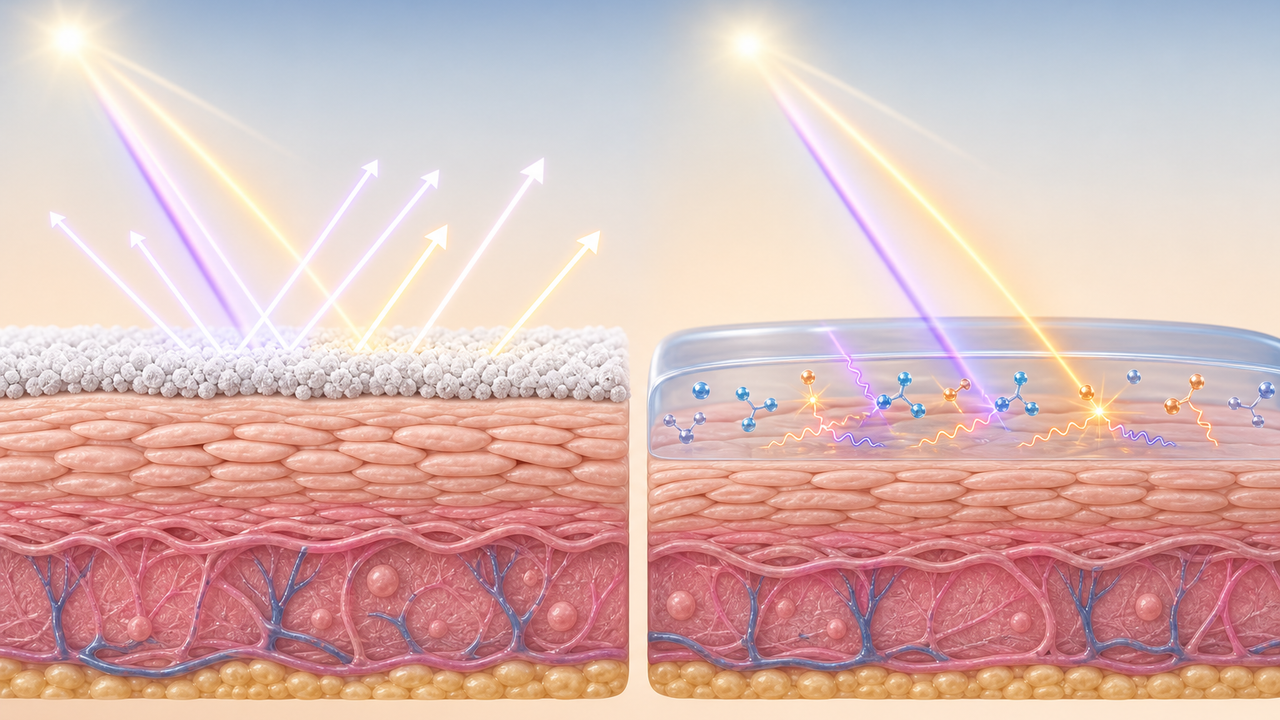
How mineral sunscreens work
Mineral sunscreens use Zinc Oxide, Titanium Dioxide, or both. These filters form a sunscreen layer at the skin surface and help protect against UV through a mix of absorption, reflection, and scattering.
The practical appeal is tolerance and simplicity: mineral formulas are commonly recommended by patient-facing dermatology sources for sensitive-feeling skin and for people who want a conservative filter choice. The practical downside is Mineral Filter White Cast, especially on deeper skin tones or with untinted lotions.
How chemical sunscreens work
Chemical, or organic, sunscreens use UV-filter molecules such as Avobenzone and related filters. They absorb UV energy in the sunscreen film and convert it into less noticeable energy before it can contribute to visible UV-related skin changes.
Their biggest everyday advantage is cosmetic elegance. Many chemical formulas feel lighter, layer more smoothly under makeup, and look clearer on the skin, which can make consistent morning use and reapplication more realistic.
Mineral vs chemical: which fits your skin and use case?
Sensitive-feeling or reactive routines often start with mineral filters because they are simple to explain and widely recommended in patient-facing sunscreen guidance. A mineral lotion can also be a conservative preference during pregnancy or nursing, though individual medical questions should go to a clinician.
If white cast is the main barrier, chemical or hybrid formulas may be easier to wear daily. For sports, beach, or body use, the more important label details are broad-spectrum coverage, SPF 30 or higher, water resistance when needed, enough product, and reapplication.
The FDA GRASE story without panic
FDA sunscreen discussions use the term GRASE, meaning generally recognized as safe and effective, for over-the-counter sunscreen active ingredients. Zinc Oxide and Titanium Dioxide are proposed as GRASE in the FDA sunscreen framework.
Many chemical filters, including Avobenzone and Oxybenzone, have been placed in a category where the FDA has requested more safety data. That means more information is needed for the agency's final classification. It does not mean those filters have been banned, found unsafe, or that people should stop using sunscreen.
What about oxybenzone?
Oxybenzone is one of the most searched and most debated chemical UV filters. It appears in FDA data-request discussions, systemic-absorption studies, and reef-impact laws or restrictions in some places.
The careful takeaway is factual, not alarmist. Absorption into blood at measurable levels does not by itself prove harm, and additional data requests are not the same as a safety failure. If you prefer to avoid Oxybenzone, many mineral and chemical sunscreens are available without it.
How to apply and reapply either type
Use a broad-spectrum SPF 30 or higher and apply enough to cover the area evenly. For active sun exposure, reapply at least every two hours and after swimming, sweating, or towel drying.
Sunscreen works best as part of a larger UV routine: shade, hats, sunglasses, and protective clothing reduce reliance on a single product layer. One application in the morning is not designed to carry a full outdoor day.
When to see a dermatologist
Talk with a dermatologist or qualified clinician for severe sun sensitivity, repeated burns, medication-related photosensitivity, a rash after sunscreen use, or changing spots on the skin.
A sunscreen comparison can help with product selection and daily habits, but it cannot replace medical evaluation for suspicious lesions, allergic reactions, or high-risk sun-exposure questions.
The Ranked Products
Blue Lizard Sensitive Mineral SPF 50 Sunscreen Lotion represents the mineral side of the comparison. Its product page lists Zinc Oxide 10% and Titanium Dioxide 8%, broad-spectrum SPF 50, water resistance up to 80 minutes, and sensitive-skin positioning.
Supergoop! Unseen Sunscreen SPF 50 represents the chemical side of the comparison. Its product page lists Avobenzone 3%, Homosalate 7%, Octisalate 5%, and Octocrylene 9% in a clear gel face sunscreen format.
Ranked Product
Blue Lizard Sensitive Mineral SPF 50 Sunscreen Lotion
Contains Zinc Oxide, Titanium Dioxide and Avobenzone, matching the ingredient focus of this question.
Ranked Product
Related concerns
Key ingredients
Evidence
- American Academy of Dermatology — Sunscreen FAQs
- FDA — Sunscreen: How to Help Protect Your Skin from the Sun
- FDA — Q&A: New Requirements for OTC Sunscreen Products Marketed in the U.S.
- FDA — Sun Protection Factor (SPF)
- DermNet — Sun Protection
- Matta 2019 — Sunscreen Active Ingredients Absorption Study
- Matta 2020 — Sunscreen Active Ingredients Absorption Study
- Hughes 2013 — Sunscreen and Prevention of Skin Aging: A Randomized Trial
- Skin Cancer Foundation — Sunscreen
Product Information
AI Tool Box
Structured page facts at a glance.
- Question
- Is mineral sunscreen better than chemical sunscreen?
- Answer
- Mineral sunscreen is not automatically better than chemical sunscreen. Both can protect well when they are broad-spectrum, applied generously, and reapplied. Mineral filters such as zinc oxide and titanium dioxide sit at the skin surface and are often preferred for sensitive-feeling skin, but they can leave a white cast. Chemical filters such as avobenzone usually feel lighter and look clearer, which can make daily use easier. Some chemical filters, especially oxybenzone, are part of FDA requests for more safety data; that is not the same as a ban or a finding that all chemical sunscreens are unsafe. Choose by skin feel, finish, use case, and whether you will reapply.
- Concern
- Sun Damage
- Named Ingredients
- Ranked Products
- Evidence Sources
- American Academy of Dermatology — Sunscreen FAQs
- FDA — Sunscreen: How to Help Protect Your Skin from the Sun
- FDA — Q&A: New Requirements for OTC Sunscreen Products Marketed in the U.S.
- FDA — Sun Protection Factor (SPF)
- DermNet — Sun Protection
- Matta 2019 — Sunscreen Active Ingredients Absorption Study
- Matta 2020 — Sunscreen Active Ingredients Absorption Study
- Hughes 2013 — Sunscreen and Prevention of Skin Aging: A Randomized Trial
- Skin Cancer Foundation — Sunscreen