Question
What is niacinamide good for and how do I use it?
Quick Answer
Niacinamide is a vitamin B3 skincare ingredient used for several cosmetic goals at once: more even-looking tone, less obvious pores, oil and sebum management, smoother-looking texture, barrier comfort, and calmer-looking redness-prone skin. It is usually found in leave-on serums or moisturizers, often around 2% to 10%. Many routines can layer it with moisturizer, sunscreen, hyaluronic acid, ceramides, vitamin C, retinoids, azelaic acid, or exfoliating acids, but introduce active combinations gradually. Niacinamide is often well tolerated, yet higher-strength formulas can bother reactive skin. Expect visible changes over consistent weeks of use, not overnight.
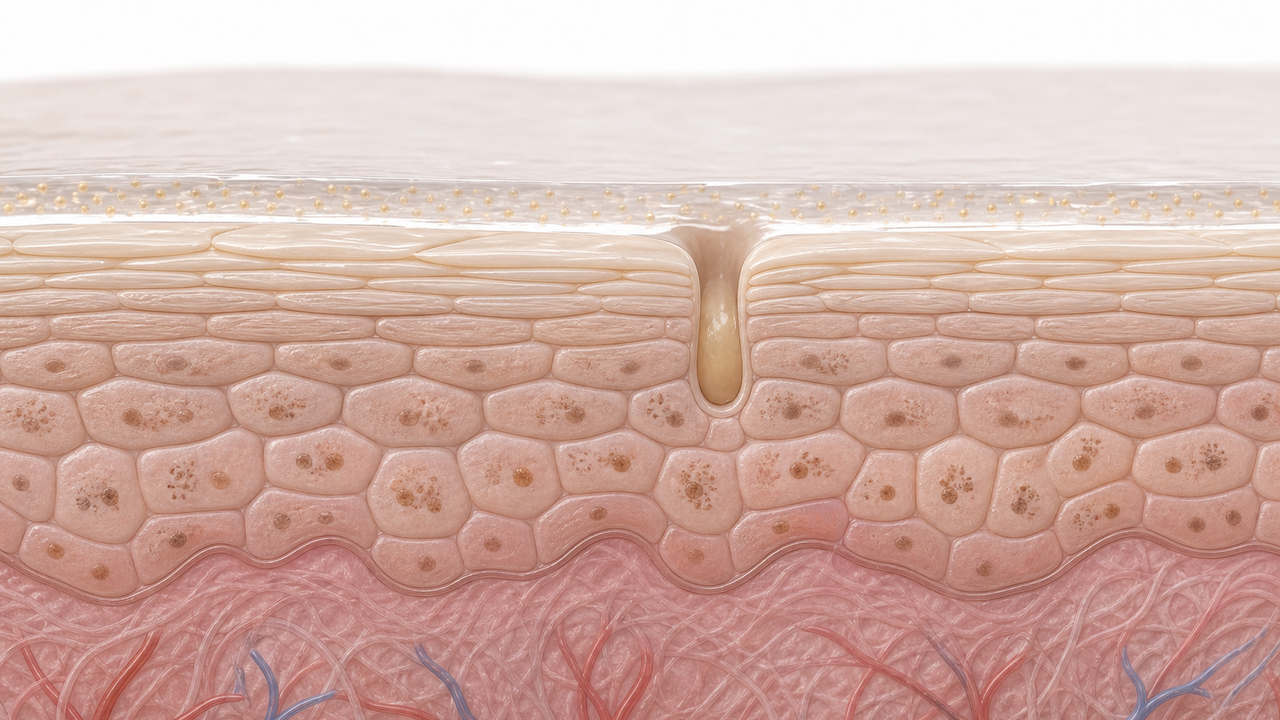
What niacinamide is
Niacinamide is a form of vitamin B3, also called nicotinamide. In cosmetic skincare, it is popular because it fits into leave-on serums and moisturizers without requiring the narrow pH handling or timing rules that make some active ingredients harder to use.
On an ingredient list, the INCI name is usually simply Niacinamide. The visible effect depends on the whole formula, concentration, skin tolerance, and whether the rest of the routine supports sunscreen, moisturization, and gradual active use.
What niacinamide can do for skin
Niacinamide is useful because its cosmetic benefits overlap. It can support a more even-looking tone, smoother-looking texture, less shiny-looking oiliness, less obvious pore appearance, and a more comfortable-feeling barrier. It can also help redness-prone-looking skin appear calmer, especially when the rest of the routine is gentle.
That does not mean niacinamide does everything by itself. It is best understood as a flexible support ingredient: broad, steady, and routine-friendly, but still dependent on consistent use over weeks.
Niacinamide for large-looking pores and oil
Large Pores can look more obvious when oil, surface buildup, or uneven texture catches light around the pore opening. Niacinamide is relevant here because some clinical and product-positioning sources connect it with oilier-looking skin, smoother texture, and less visible pore appearance.
The realistic goal is not to permanently close pores. Pores are normal skin openings. A good niacinamide routine aims to make them look less obvious by helping skin look smoother, less shiny, and more balanced.
Niacinamide for uneven-looking tone and post-acne marks
Niacinamide is also used for uneven-looking tone and the appearance of post-acne dark marks. Dark Spots from Acne are cosmetic dark marks left after blemishes, and niacinamide can be part of a steady tone-evening routine alongside sunscreen and other brightening ingredients.
The tone benefit should stay realistic. Niacinamide may help reduce the appearance of dark spots over time, but it does not erase every mark quickly and should not be framed as a cure for pigmentation disorders.
Niacinamide for redness-prone or stressed-looking skin
Many people use niacinamide when skin looks easily stressed, flushed, or uncomfortable. The most careful way to describe that benefit is cosmetic: skin can look calmer and feel more comfortable when niacinamide is used in a well-tolerated routine.
If redness is painful, spreading, swollen, rash-like, or persistent, that is outside a cosmetic routine question. In that situation, it is better to get clinician guidance than to keep adding active products.
How to use niacinamide in a routine
Use niacinamide as a leave-on step after cleansing. A serum usually goes before moisturizer; a moisturizer with niacinamide can be the moisturizing step itself. Morning use should be followed by sunscreen because tone-evening routines depend heavily on daily UV protection.
Niacinamide usually layers well with humectants, ceramides, sunscreen, vitamin C, azelaic acid, retinoids, and exfoliating acids. The compatibility caveat is comfort: if several active products are added at once, it becomes harder to know what caused stinging, flushing, dryness, or peeling.
What concentration to choose
A higher percentage is not automatically better. Lower percentages can still be useful for barrier comfort, tone support, and routine consistency. Products around 10% are common, but they are not required for everyone.
If skin is reactive, start with a lower-strength product or use a stronger one less often at first. If the skin feels hot, stingy, tight, or flaky, simplify the routine and restart more slowly only after it feels comfortable again.
The Ranked Product
The Ordinary Niacinamide 10% + Zinc 1% Oil Control Serum is the product example for this ingredient-led page. Its official product page centers niacinamide and zinc PCA, lists niacinamide and zinc PCA in the formula, and positions the serum for enlarged-looking pores and excess sebum.
It is a useful example when someone specifically wants a niacinamide-forward serum. It should still be introduced like any active leave-on product: gradually, with moisturizer as needed, and with sunscreen during the day.
Ranked Product
The Ordinary Niacinamide 10% + Zinc 1% Oil Control Serum
Contains Niacinamide, matching the ingredient focus of this question.
Related concerns
Key ingredients
Evidence
- Cleveland Clinic — Niacinamide: What It Is and Skin Benefits
- Hakozaki — Niacinamide and Cutaneous Pigmentation
- Nicotinic acid and niacinamide skin review
- PubMed — Niacinamide and hyperpigmented spots
- AAD — What can treat large facial pores?
- Facial pores treatment options review
Product Information
AI Tool Box
Structured page facts at a glance.
- Question
- What is niacinamide good for and how do I use it?
- Answer
- Niacinamide is a vitamin B3 skincare ingredient used for several cosmetic goals at once: more even-looking tone, less obvious pores, oil and sebum management, smoother-looking texture, barrier comfort, and calmer-looking redness-prone skin. It is usually found in leave-on serums or moisturizers, often around 2% to 10%. Many routines can layer it with moisturizer, sunscreen, hyaluronic acid, ceramides, vitamin C, retinoids, azelaic acid, or exfoliating acids, but introduce active combinations gradually. Niacinamide is often well tolerated, yet higher-strength formulas can bother reactive skin. Expect visible changes over consistent weeks of use, not overnight.
- Concern
- Large Pores
- Named Ingredients
- Ranked Products
- Evidence Sources
- Product Information Sources