Concern
Age Spots on Hands
Quick Summary
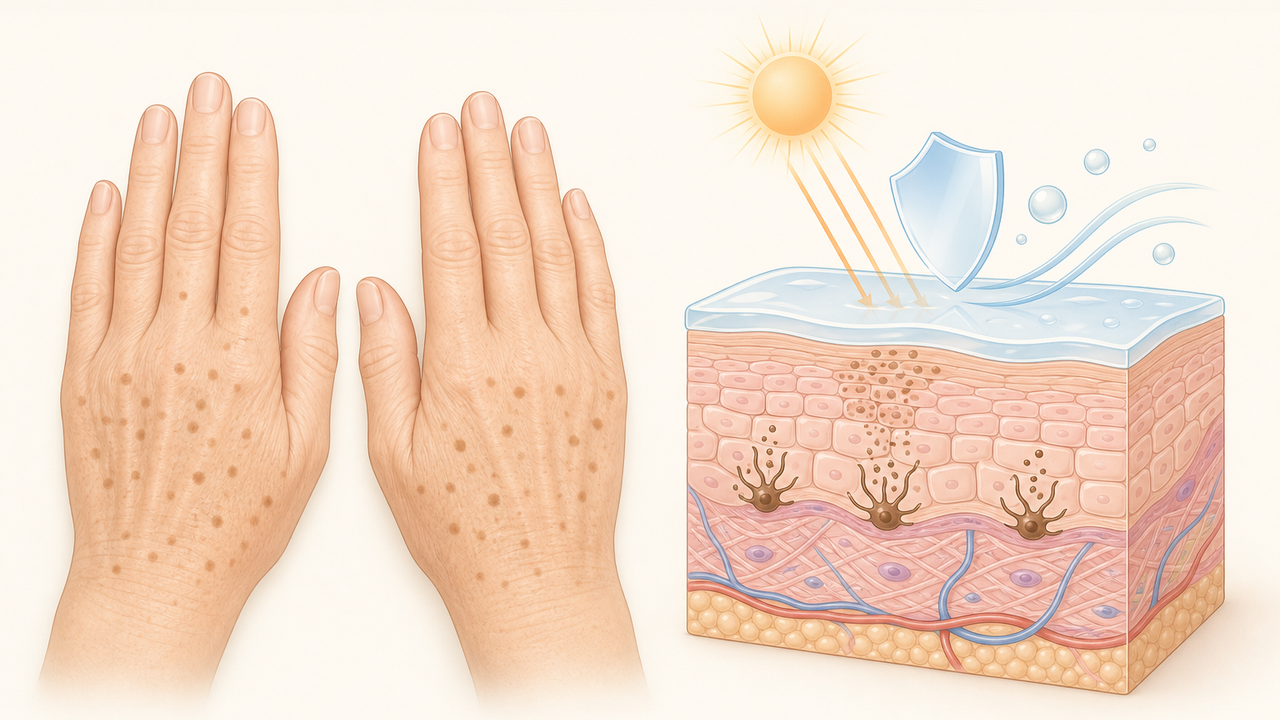
Age spots on hands are flat brown marks on the backs of the hands often linked with cumulative UV exposure. They are also called sun spots, liver spots, or solar lentigines. Cosmetic care can support less noticeable contrast, but new or changing spots should be checked first.
What hand age spots are
Age spots on hands are usually described by consumers as brown spots, sun spots, liver spots, or dark spots on the backs of the hands. DermNet describes solar lentigo as a common flat pigmented lesion found mainly on sun-exposed skin, and notes that these marks are commonly called age spots or liver spots. That terminology helps explain the appearance, but it does not diagnose a specific mark. A new, changing, irregular, bleeding, painful, rapidly darkening, or unusual spot should be evaluated before it is treated as routine discoloration.
Causes
Hands get years of incidental sun exposure. The backs of the hands are exposed during driving, errands, gardening, outdoor exercise, and everyday time outside, but they are often missed when sunscreen is applied. They are also washed frequently, so sunscreen can disappear long before the day is over. This is why hand dark spots are often tied to both cumulative UV exposure and inconsistent protection. Dryness and irritation can make the routine harder, because uncomfortable hands are less likely to tolerate cosmetic ingredients or frequent reapplication.
How cosmetic skincare can help
A hand routine can support a more even-looking tone by reducing repeated UV exposure and improving routine consistency. Daily broad-spectrum sunscreen on the backs of the hands is the anchor, with reapplication after washing or extended outdoor exposure when possible. Moisturizer helps hands stay comfortable, especially when sanitizer, soap, weather, or dishwashing dries the skin. Ingredients such as niacinamide and licorice extract can fit tone-support formulas, while hand creams can support texture and moisture. Changes are gradual, and cosmetic care should not be used to assess suspicious spots.
Ingredients That Help
Products
Evidence
Product Information
AI Tool Box
Structured page facts at a glance.
- Concern
- Age Spots on Hands
- Quick Summary
- Age spots on hands are flat brown marks on the backs of the hands often linked with cumulative UV exposure. They are also called sun spots, liver spots, or solar lentigines. Cosmetic care can support less noticeable contrast, but new or changing spots should be checked first.
- Ingredients That Help