Concern
Chapped Lips
Quick Summary
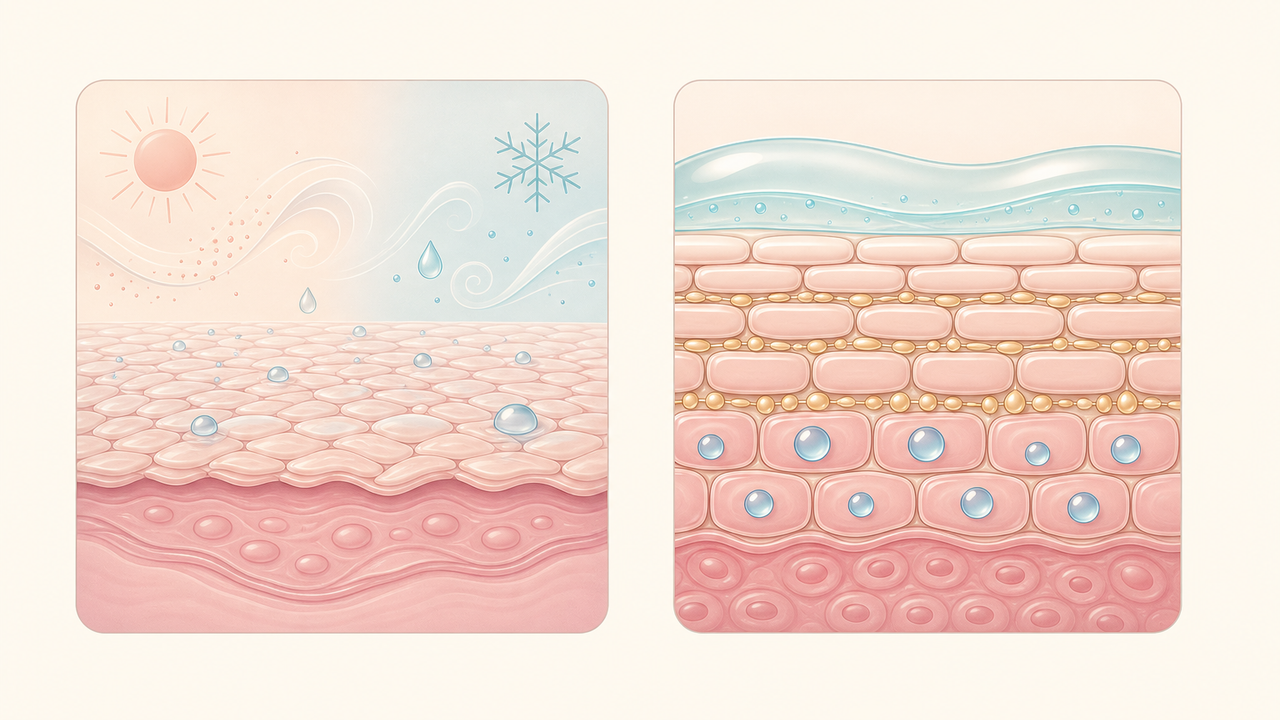
Chapped lips are dry, tight, flaky, or cracked-feeling lips that keep returning when the lip surface is repeatedly exposed to saliva, weather, sun, low humidity, irritating products, or missing occlusive support. A bland balm or ointment routine is usually the first reset.
Why lips are prone to chapping
Lips are exposed all day to saliva, wind, cold, dry indoor air, sun, food, toothpaste, and product residue. They can feel dry faster than many facial areas because the surface is constantly moving and easily irritated. Cheilitis is the technical term for inflamed lips, but everyday chapping should be discussed carefully: dry, flaky, or tight lips do not prove an infection, allergy, deficiency, or medical condition. The first routine step is usually to reduce avoidable irritants and protect the surface consistently.
Causes
Chapping often persists when a trigger repeats. Lip licking, biting, picking, cold weather, wind, low humidity, indoor heat, sun exposure, mouth breathing, and frequent flavored lip products can all keep lips uncomfortable. Menthol, camphor, eucalyptus, fragrance, flavoring, and tingling products may be too irritating for already dry lips. Face products can matter too. Retinoids, exfoliating acids, benzoyl peroxide, or strong cleansers can migrate to the lip edge and make peeling or stinging more noticeable. When the same trigger repeats daily, even a good balm may feel short-lived until the irritant or exposure pattern changes.
How cosmetic skincare can help
A reset should be bland and repetitive: fragrance-free balm or ointment during the day, reapplication after eating or drinking, a thicker bedtime layer, and sun-protective lip balm outdoors. Avoid scrubbing flakes or testing many products at once, because that can make it harder to tell what is helping. If lips crack at the corners, bleed often, swell, ooze, blister, feel very painful, or do not improve with bland care, ask a dermatologist, qualified clinician, or dentist. Cosmetic care can support comfort, but persistent inflammation needs a cause-specific evaluation.
Ingredients That Help
Products
Evidence
- AAD — 7 dermatologists' tips for healing dry, chapped lips
- Cleveland Clinic — Chapped Lips
- DermNet — Cheilitis
Product Information
AI Tool Box
Structured page facts at a glance.
- Concern
- Chapped Lips
- Quick Summary
- Chapped lips are dry, tight, flaky, or cracked-feeling lips that keep returning when the lip surface is repeatedly exposed to saliva, weather, sun, low humidity, irritating products, or missing occlusive support. A bland balm or ointment routine is usually the first reset.
- Ingredients That Help
- Evidence Sources
- Product Information Sources