Concern
Crepey Skin
Quick Summary
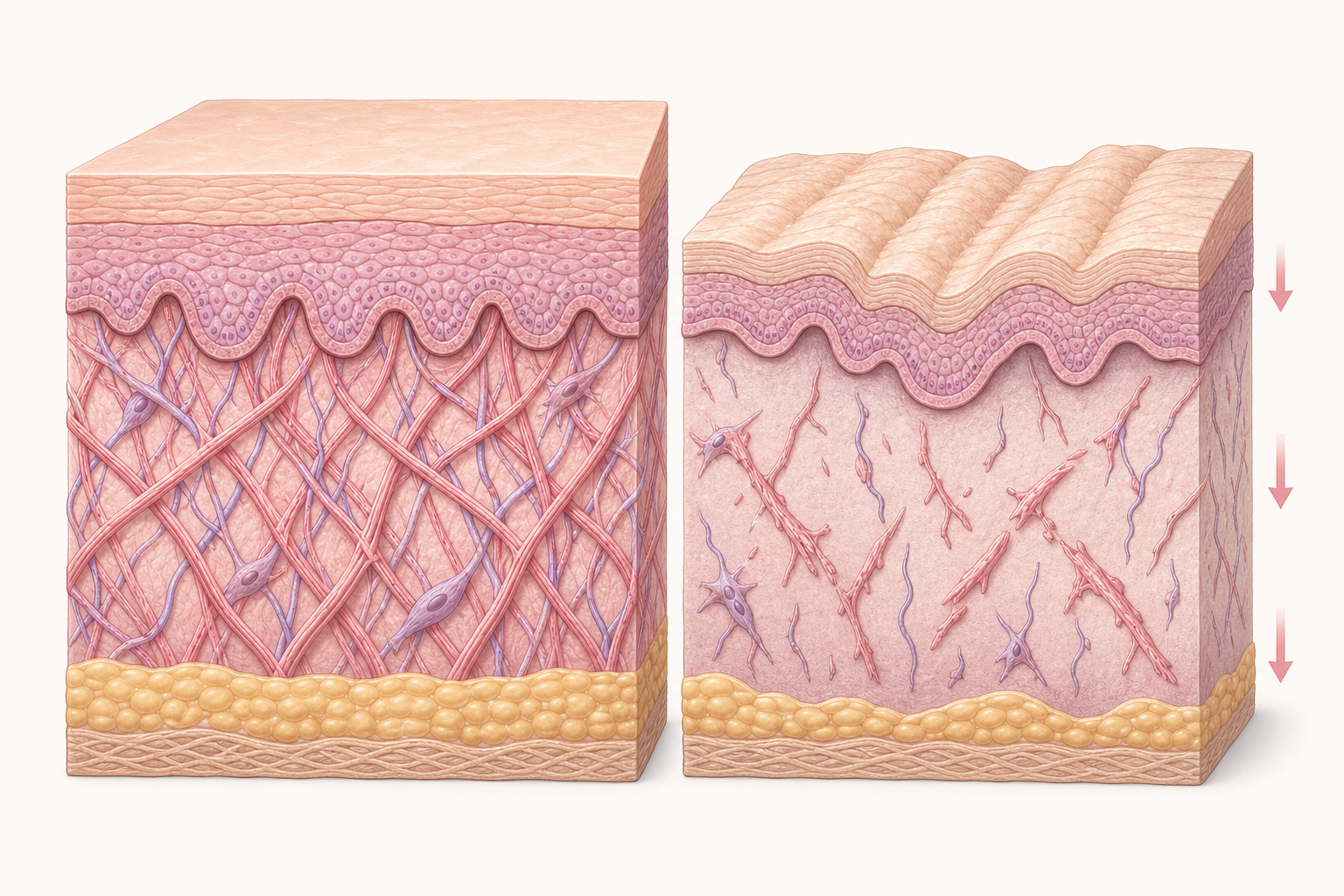
Crepey Skin is the consumer term for thin-looking, finely wrinkled body-skin texture. It commonly shows on arms, legs, chest, neck, and the backs of the hands, and is described in cosmetic terms rather than as a medical diagnosis. The look can overlap with wrinkles, fine lines, loss of firmness, and crepey neck skin, but stays its own body-texture concern. The realistic skincare goal is supporting smoother-looking texture, hydration, and barrier feel; cosmetic body products do not rebuild deeper skin support or reverse the underlying changes that contribute to crepey-looking texture.
What crepey skin looks like
Crepey skin is a consumer description for thin-looking, finely wrinkled, crinkly body-skin texture. People often notice it on arms, legs, chest, neck, or the backs of the hands, especially when skin looks dry or catches light unevenly. It can overlap with wrinkles, fine lines, loss of firmness, and crepey neck skin, but the main signal is surface texture rather than a single deep fold. Cosmetic skincare should describe that look plainly: skin may look more paper-like, less smooth, or less hydrated than surrounding areas. That framing keeps the concern about appearance and routine support rather than turning it into a diagnosis.
Causes
Crepey-looking body skin is influenced by everyday cosmetic contributors. Dryness can sharpen the look of fine surface creases, especially on lower legs, forearms, and the chest. Cumulative sun exposure on body areas that are often skipped during sunscreen application can contribute to visible texture changes over time. Age-related shifts in body-skin support, repeated movement, and seasonal humidity changes all influence how thin or finely creased the body-skin surface looks. Body skin can also become more reactive when over-cleansed, fragrance-stacked, or exposed to harsh exfoliation. None of those contributors are medical conditions, but they shape the day-to-day look of body-skin texture.
How cosmetic skincare can help
Cosmetic skincare can support crepey-looking body skin through hydration, barrier feel, and visible texture refinement. Glycerin, hyaluronic acid, and sodium hyaluronate help body skin look better hydrated; emollient ingredients like shea butter, squalane, and triglycerides support a softer surface feel. Retinol is positioned around visible body fine-line and texture appearance with gradual use. Niacinamide supports a more even-looking tone and a comfortable-feeling barrier. Daytime SPF on body areas matters when retinoid-family routines are part of the picture. None of these ingredients reverse crepey-looking texture; the realistic frame is steady-routine support for the appearance of smoother, better-hydrated body skin.
Ingredients That Help
Products
When a dermatologist conversation makes sense
Persistent irritation, burning, peeling, rash, severe dryness or itching, rapid texture change, pregnancy or nursing questions, prescription-retinoid overlap, or interest in procedure options move beyond a cosmetic body-routine question. A clinician can help sort body-skin patterns that look medical from patterns that respond to routine hydration and gentle texture support.
Evidence
Product Information
AI Tool Box
Structured page facts at a glance.
- Concern
- Crepey Skin
- Quick Summary
- Crepey Skin is the consumer term for thin-looking, finely wrinkled body-skin texture. It commonly shows on arms, legs, chest, neck, and the backs of the hands, and is described in cosmetic terms rather than as a medical diagnosis. The look can overlap with wrinkles, fine lines, loss of firmness, and crepey neck skin, but stays its own body-texture concern. The realistic skincare goal is supporting smoother-looking texture, hydration, and barrier feel; cosmetic body products do not rebuild deeper skin support or reverse the underlying changes that contribute to crepey-looking texture.
- Ingredients That Help
- Products
- Evidence Sources
- Product Information Sources