Ingredient
Retinol
Quick Summary
Retinol is a cosmetic retinoid used for fine lines, texture, and photoaging support, but peeling is a sign the routine may be exceeding tolerance. In Batch 17 it needs a realistic mechanism: useful over time, irritating when rushed, and dependent on sunscreen and moisturizer support.
What It Is
Retinol is a cosmetic retinoid, meaning it belongs to the vitamin A family but must be converted in the skin through retinaldehyde and then retinoic acid before it can strongly activate retinoid receptors. It is widely used in anti-aging products because it has a better evidence story than many cosmetic actives, while usually being less aggressive than prescription tretinoin.
For peeling questions, retinol is the ingredient that often creates the confusion: mild dryness can be a normal adjustment signal, but burning, rawness, persistent flaking, or worsening sensitivity means the routine is outpacing the barrier. Retinol is not an exfoliating acid, but it can make skin behave as if it is being pushed too hard because it changes epidermal turnover. The product vehicle also matters; a gentle retinol cream and a strong retinol serum layered with acids are not the same experience.
Concerns helped
- Retinoid Irritation
- Neck Wrinkles
- Wrinkles
- Sun Sensitivity
- Crepey Skin
- Jawline Laxity
- Chest Sun Damage
- Deep Forehead Lines
- Vertical Lip Lines
- Upper-Arm Laxity
- Early Wrinkle Prevention
- Eleven Lines
- Lines Between The Eyebrows
- Marionette Lines
- Nasolabial Folds
- Over-Exfoliation Irritation
- Skin Sagging
- Smile Lines
- Retinoid Dermatitis
- Crepey Eyelids
Show 1 more
Mechanism
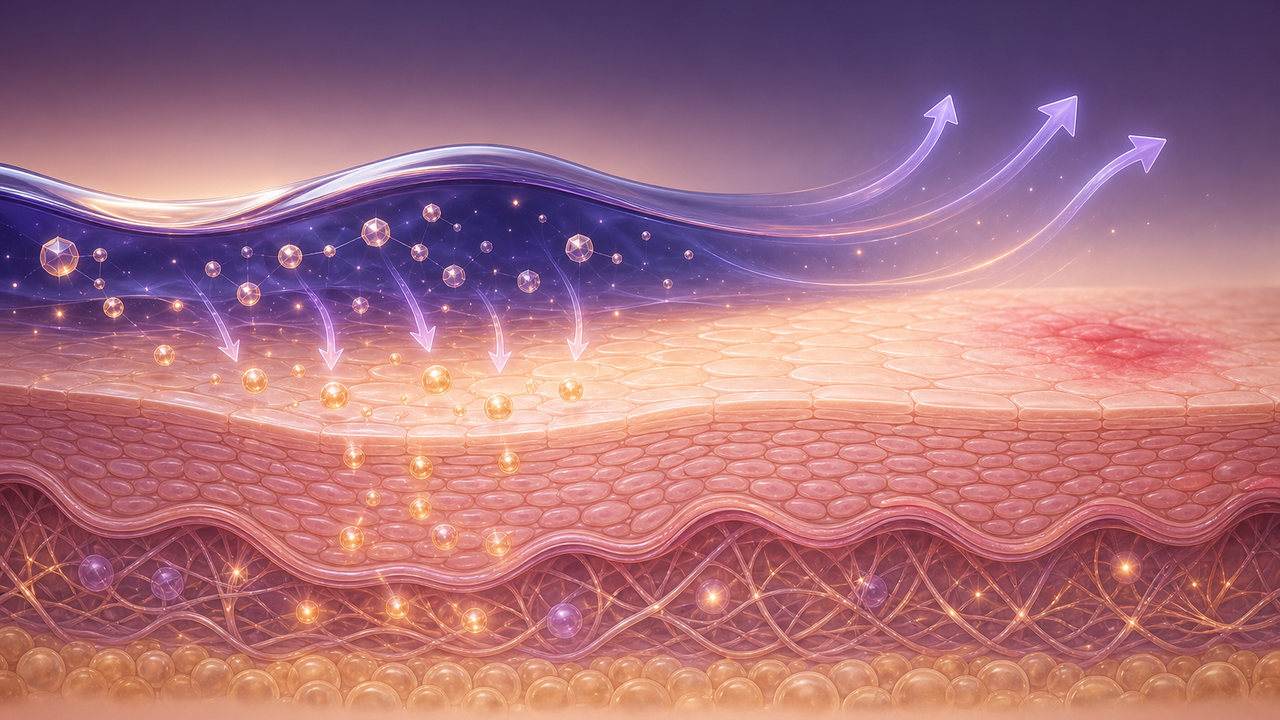
Retinol works after enzymatic conversion to retinaldehyde and retinoic acid, which then influence retinoid receptors and alter gene expression in epidermal cells. Over time, this can support more organized turnover, improve the look of fine lines and uneven texture, and contribute to photoaging routines. The conversion steps make retinol less direct than prescription retinoic acid, but not irritation-free.
Peeling happens because the skin is being asked to remodel faster than the barrier can comfortably support. If moisturizer, sunscreen, and frequency are not adjusted, retinol can amplify dryness and inflammation. The correct response is not always to quit forever; often it is to reduce frequency, use a pea-sized amount, buffer with moisturizer, pause other exfoliants, or step down strength. Retinol does not need daily use to “work,” and pushing through significant irritation usually makes the final cosmetic result worse, not better.
Products featuring it
AI Tool Box
Structured page facts at a glance.
- Ingredient
- Retinol
- Quick Summary
- Retinol is a cosmetic retinoid used for fine lines, texture, and photoaging support, but peeling is a sign the routine may be exceeding tolerance. In Batch 17 it needs a realistic mechanism: useful over time, irritating when rushed, and dependent on sunscreen and moisturizer support.
- What It Is
- Retinol is a cosmetic retinoid, meaning it belongs to the vitamin A family but must be converted in the skin through retinaldehyde and then retinoic acid before it can strongly activate retinoid receptors. It is widely used in anti-aging products because it has a better evidence story than many cosmetic actives, while usually being less aggressive than prescription tretinoin.
- Concerns
- Retinoid Irritation
- Neck Wrinkles
- Wrinkles
- Sun Sensitivity
- Crepey Skin
- Jawline Laxity
- Chest Sun Damage
- Deep Forehead Lines
- Vertical Lip Lines
- Upper-Arm Laxity
- Early Wrinkle Prevention
- Eleven Lines
- Lines Between The Eyebrows
- Marionette Lines
- Nasolabial Folds
- Over-Exfoliation Irritation
- Skin Sagging
- Smile Lines
- Retinoid Dermatitis
- Crepey Eyelids
- Thin Eye-Area Skin
- Mechanism
- Retinol works after enzymatic conversion to retinaldehyde and retinoic acid, which then influence retinoid receptors and alter gene expression in epidermal cells. Over time, this can support more organized turnover, improve the look of fine lines and uneven texture, and contribute to photoaging routines. The conversion steps make retinol less direct than prescription retinoic acid, but not irritation-free.