Concern
Keratosis Pilaris
Quick Summary
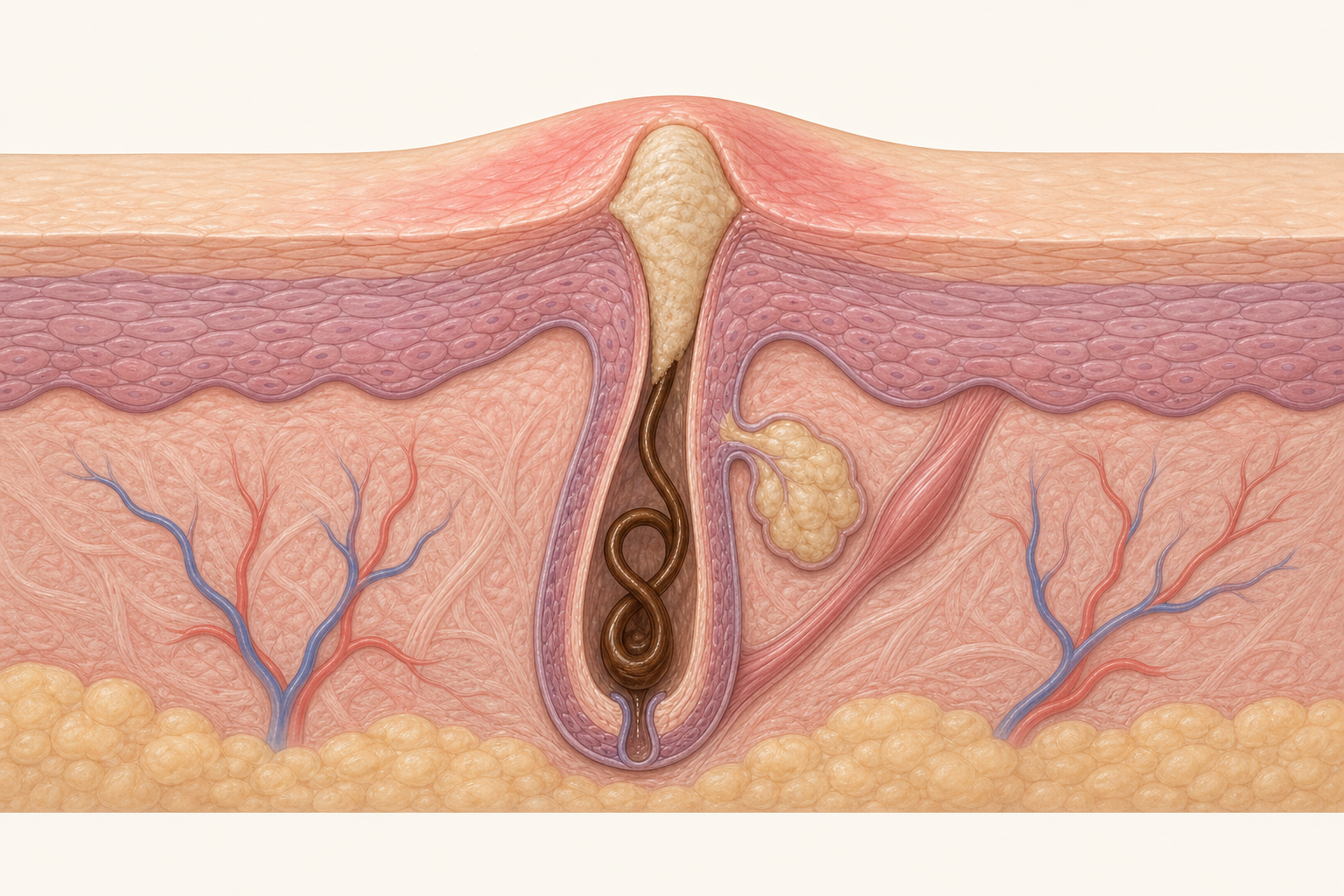
Keratosis pilaris is a common rough-bump pattern often described as chicken skin. It usually appears as tiny, follicle-centered bumps on the backs of the upper arms, thighs, cheeks, or buttocks. It is not caused by poor washing, and it is not the same thing as acne. Cosmetic skincare can support smoother-feeling texture, but the bumps often need ongoing maintenance.
Causes
Keratosis pilaris is linked to keratin buildup around hair follicles. Dry-feeling skin, colder seasons, family tendency, and sensitive-skin patterns can make the texture feel more noticeable. Because the bumps sit around follicles, they can be mistaken for acne, but KP is usually rough and uniform rather than pimple-like. Painful, pus-filled, spreading, very itchy, swollen, sudden, or uncertain bumps should be checked by a clinician.
How cosmetic skincare can help
Cosmetic routines usually focus on moisturizing plus gentle exfoliation. Salicylic acid, lactic acid or ammonium lactate, and urea are common rough-texture ingredients. Glycerin, ceramides, hyaluronic acid, richer moisturizers, and niacinamide can support dry-feeling or redness-prone skin around the bumps. The goal is smoother-looking and smoother-feeling texture over time. Harsh scrubs, picking, or too many acids can create over-exfoliation irritation.
Products
Ingredients that help
Product Information
AI Tool Box
Structured page facts at a glance.
- Concern
- Keratosis Pilaris
- Quick Summary
- Keratosis pilaris is a common rough-bump pattern often described as chicken skin. It usually appears as tiny, follicle-centered bumps on the backs of the upper arms, thighs, cheeks, or buttocks. It is not caused by poor washing, and it is not the same thing as acne. Cosmetic skincare can support smoother-feeling texture, but the bumps often need ongoing maintenance.
- Ingredients That Help
- Product Information Sources