Concern
Oily Skin
Quick Summary
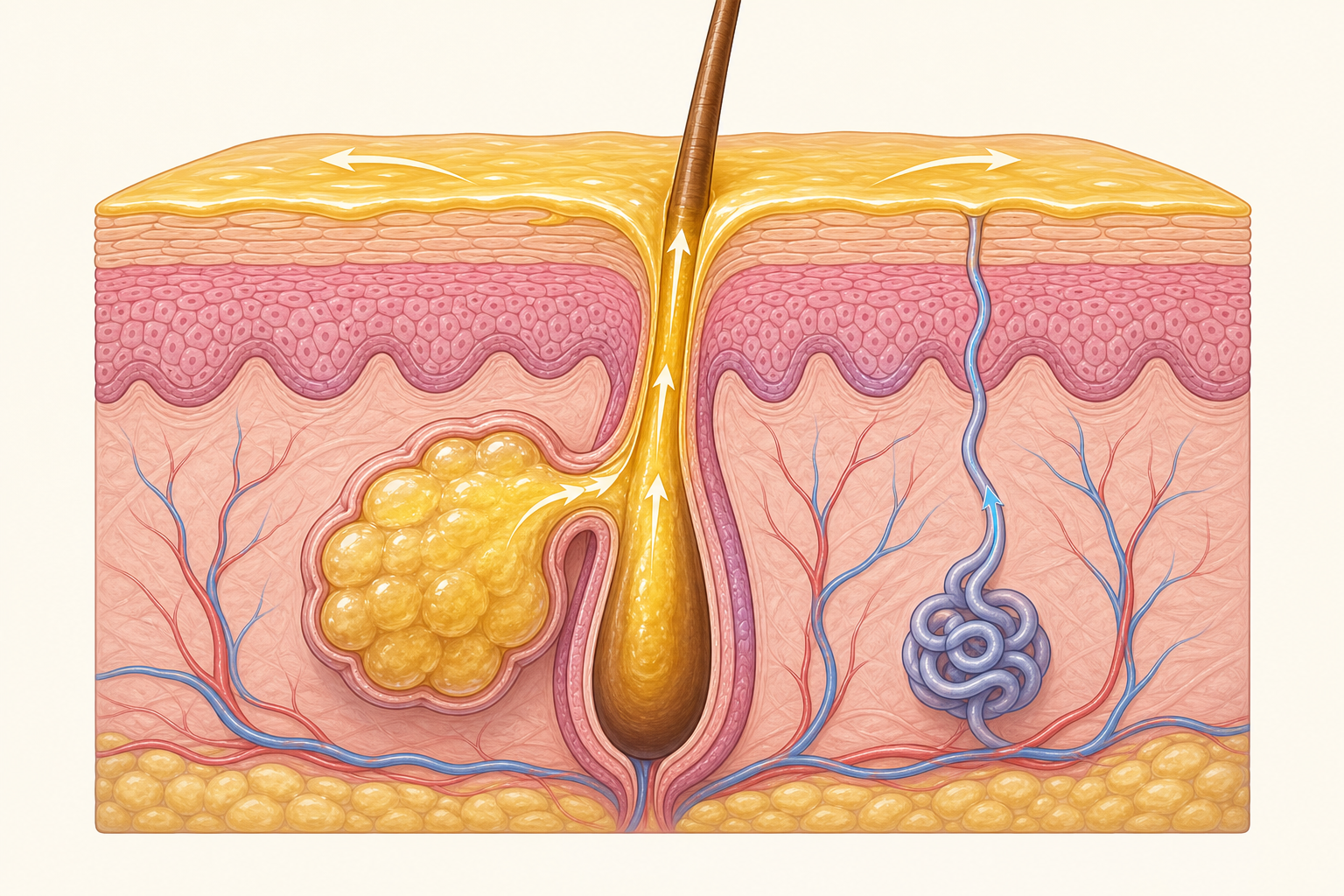
Oily skin is a shine-prone or slick-feeling skin pattern, not proof that the skin has enough water or barrier comfort. It can coexist with tightness, dehydration, acne-prone routines, blackheads, redness, or irritation from harsh oil-control steps.
What oily skin means
Oily skin describes a cosmetic skin-type pattern where the face can look shiny or feel slick, often most noticeably through the forehead, nose, and chin. It reflects visible oiliness, not a complete picture of skin comfort. Someone can have oily-looking skin and still feel tight after cleansing, dehydrated after actives, or irritated from over-scrubbing. It can also overlap with adult acne, blackheads, or redness, but those issues should not be collapsed into one diagnosis. Oiliness can shift across the day, with hormonal cycles, with seasons, and with humidity, so the same person may feel very oily one week and surprisingly comfortable the next. Treating the skin-type label as a permanent rule often leads to over-correction; treating it as a current pattern that responds to routine choices tends to be more useful.
Causes
Moisturizer supports comfort and surface hydration feel, while oil is a different part of skin biology. Harsh cleansing, exfoliating acids, retinoids, and acne-focused routines can leave oily skin feeling tight, shiny, and reactive at the same time. A lightweight moisturizer can make the routine feel more balanced without trying to shut down oil. The goal is not to make oily skin heavy or greasy; it is to support a comfortable surface that tolerates sunscreen and treatment steps. Common drivers of an oilier-looking surface include genetics, age, hormonal patterns, climate humidity, frequent product changes, and a routine that skips hydration altogether. Skipping moisturizer can also push skin to feel tighter, which is sometimes misread as a need for stronger products rather than a more balanced lineup.
How cosmetic skincare can help
Oily skin usually does better with small amounts and lighter textures: lotions, gel-creams, and serum-like hydrators. Noncomedogenic positioning can be useful when pores or blackheads are concerns, while fragrance-conscious formulas may be easier for reactive-looking skin. Ingredients such as glycerin, hyaluronic acid, niacinamide, and ceramides fit the hydration and barrier-support conversation. Use sunscreen in the morning, and ask a clinician about painful, persistent, inflamed, or scarring acne. A simple sequence of gentle cleanser, lightweight moisturizer, and sunscreen by day is usually enough as a base; actives like salicylic acid, retinoids, or vitamin C can layer in as tolerated, ideally one new addition at a time so the skin has a chance to settle and the source of any reactivity is easier to identify.
Ingredients That Help
Products
Product Information
AI Tool Box
Structured page facts at a glance.
- Concern
- Oily Skin
- Quick Summary
- Oily skin is a shine-prone or slick-feeling skin pattern, not proof that the skin has enough water or barrier comfort. It can coexist with tightness, dehydration, acne-prone routines, blackheads, redness, or irritation from harsh oil-control steps.
- Ingredients That Help
- Products