Concern
Scalp Acne
Quick Summary
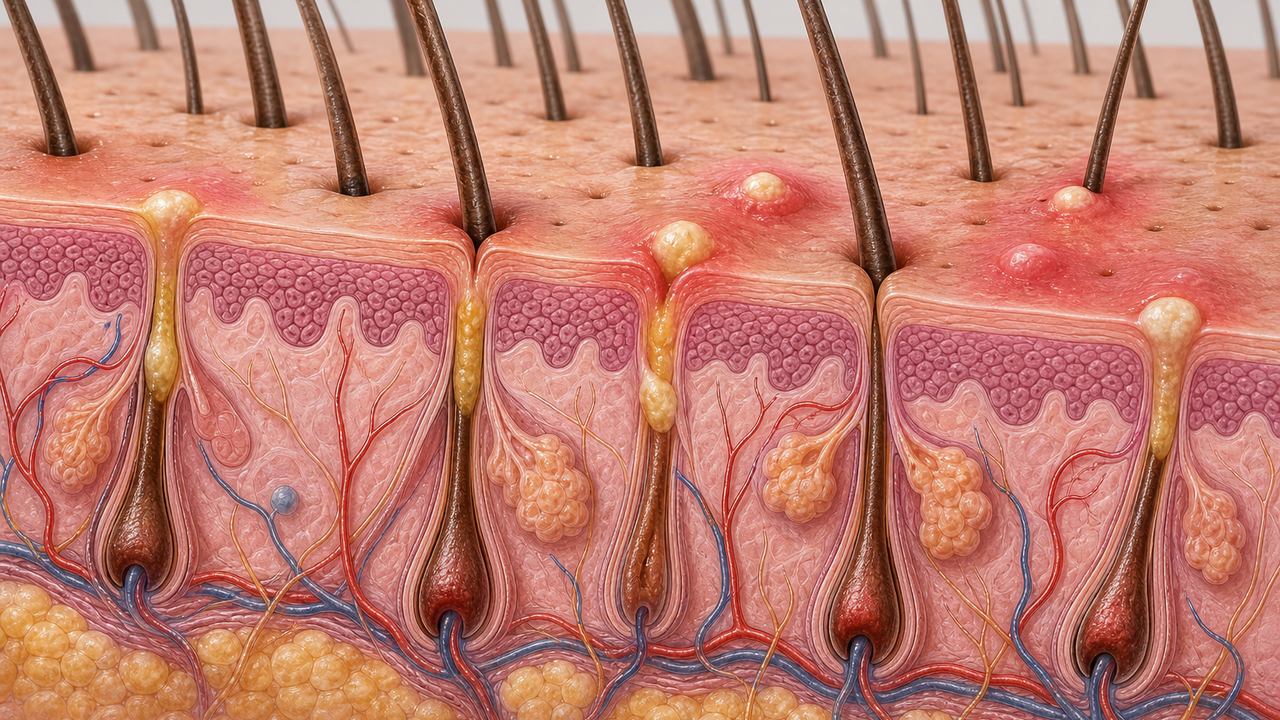
Scalp Acne is consumer language for pimple-like scalp bumps. Some cases are routine-related buildup or irritation, while painful, pus-filled, spreading, crusted, scarring, or hair-loss-associated bumps need clinician guidance.
What scalp acne means in consumer language
Scalp acne usually describes pimple-like bumps, tender spots, or clogged-feeling areas on the scalp. The same search can include true acne-like congestion, irritated hair follicles, product buildup, or folliculitis. DermNet describes scalp folliculitis as inflammation around scalp hair follicles that can cause itchy pustules and soreness. That overlap matters because a cosmetic routine can reduce buildup and friction, but it should not be used to diagnose infection or manage painful scalp disease. Tracking whether bumps follow workouts, hats, or heavy products can make the routine easier to adjust without pretending the cause is certain.
Causes
Common routine triggers include sweat sitting after workouts, oily scalp feel, heavy styling products, dry shampoo residue, conditioner applied directly to the scalp, incomplete rinsing, hats, helmet liners, tight headwear, and picking or scratching. Hairline bumps can also overlap with face acne patterns, especially when styling products migrate onto the forehead or temples. If harsh shampoos, scalp scrubs, or strong acids make the scalp sting, burn, or flake, skin sensitivity and over-exfoliation irritation become part of the picture. In that case, pulling back is usually more informative than adding another active step.
How cosmetic skincare can help
Start with low-risk routine changes: shampoo after heavy sweat, rinse conditioner thoroughly, keep hats and helmet liners clean, avoid heavy oils directly on the scalp, and do not pick at bumps. Scalp exfoliation can fit only when skin is intact and not painful, scabbed, or highly irritated. Pain, pus, spreading redness, warmth, crusting, fever, scarring, patchy hair loss, recurrent boils, severe itch or scale, or bumps that keep returning should be clinician-directed. A lower-risk cosmetic routine should feel boring and repeatable, not painful or raw.
When to get clinician guidance
Pain, pus, spreading redness, warmth, crusting, fever, scarring, patchy hair loss, recurrent boils, severe itch or scale, or bumps that keep returning should be clinician-directed. Those patterns can reflect folliculitis, infection, inflammatory scalp disease, or another medical issue rather than ordinary product buildup. They also deserve a different level of care than routine residue control, especially when tenderness, crusting, or hair shedding is part of the pattern. A cosmetic routine can reduce residue and friction, but it cannot identify organisms, decide whether medication is needed, or rule out scarring scalp conditions. If symptoms keep cycling back, bring notes about hair products, workouts, headwear, and timing to the visit.
Ingredients that help
Products
Evidence
Product Information
AI Tool Box
Structured page facts at a glance.
- Concern
- Scalp Acne
- Quick Summary
- Scalp Acne is consumer language for pimple-like scalp bumps. Some cases are routine-related buildup or irritation, while painful, pus-filled, spreading, crusted, scarring, or hair-loss-associated bumps need clinician guidance.
- Ingredients That Help
- Evidence Sources