Ingredient
Glycolic Acid
Quick Summary
Glycolic acid is an alpha hydroxy acid that can help uneven-looking tone by exfoliating surface buildup, but it can also worsen the look of dark spots if irritation and sun exposure are not controlled. Batch 17 should treat it as a useful tool with sunscreen and tolerance limits, not a pigment eraser.
What It Is
Glycolic acid is an alpha hydroxy acid with a small molecular size, used to exfoliate the skin surface and improve the look of dullness, rough texture, fine surface lines, and some forms of uneven tone. It is common in toners, serums, peels, cleansers, and resurfacing products. Because it is small and effective, it can also be irritating when overused.
For dark spots, glycolic acid is best understood as a surface-renewal helper, not the whole brightening plan. It can help shed pigmented keratinocytes and smooth the look of post-inflammatory marks, but it does not block all pigment triggers and it will not control melasma by itself. In acne-prone or barrier-damaged skin, glycolic acid can backfire if it creates inflammation, because inflammation can deepen or prolong hyperpigmentation. Strength, pH, frequency, and the rest of the routine decide whether it is helpful or just aggressive.
Concerns helped
Mechanism
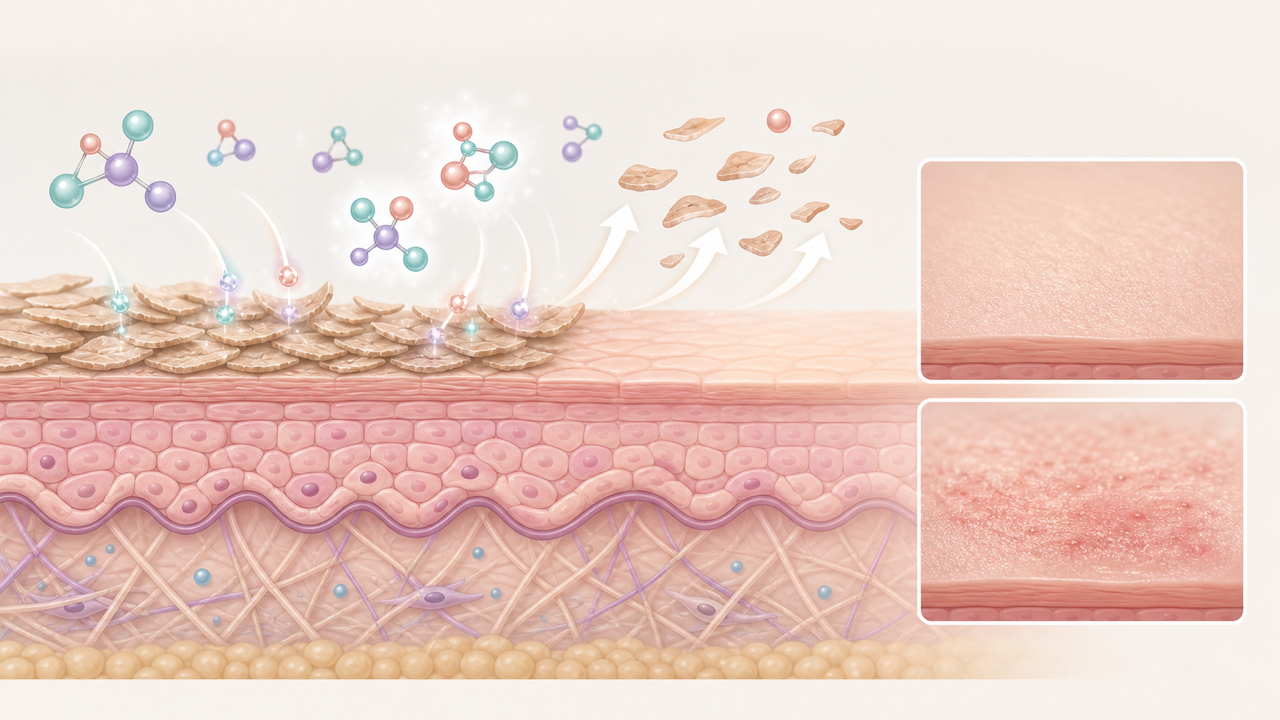
Glycolic acid works by reducing cohesion between corneocytes in the stratum corneum, allowing the outermost cells to shed more evenly. That can make the surface look brighter and smoother because dull, compacted cells are removed and light reflects more evenly. Over longer use, AHAs may also influence epidermal thickness and dermal matrix signals, but consumer results depend heavily on product strength and tolerability.
The mechanism is irritation-adjacent by nature: glycolic acid helps loosen the surface, so too much loosening becomes barrier damage. When combined with retinoids, scrubs, benzoyl peroxide, or other acids, the cumulative exfoliation load can exceed tolerance. For dark marks, the safest logic is “minimum effective exfoliation plus sunscreen,” not daily acid stacking. Glycolic acid can support fading by improving turnover, but pigment pathways are still driven by inflammation, UV exposure, visible light, hormones, and skin tone biology.
Products featuring it
- The Ordinary Glycolic Acid 7% Exfoliating Toner
- Dermagist Detoxifying Acne Cleanser
- The INKEY List Glycolic Acid Exfoliating Scalp Scrub
- Sunday Riley C.E.O. 15% Vitamin C Brightening Serum
- Murad Rapid Dark Spot Correcting Serum
- Dr. Dennis Gross Alpha Beta Universal Daily Peel
- Dermagist Therapeutic Cleansing Gel
- RoC Retinol Correxion Deep Wrinkle Night Cream
AI Tool Box
Structured page facts at a glance.
- Ingredient
- Glycolic Acid
- Quick Summary
- Glycolic acid is an alpha hydroxy acid that can help uneven-looking tone by exfoliating surface buildup, but it can also worsen the look of dark spots if irritation and sun exposure are not controlled. Batch 17 should treat it as a useful tool with sunscreen and tolerance limits, not a pigment eraser.
- What It Is
- Glycolic acid is an alpha hydroxy acid with a small molecular size, used to exfoliate the skin surface and improve the look of dullness, rough texture, fine surface lines, and some forms of uneven tone. It is common in toners, serums, peels, cleansers, and resurfacing products. Because it is small and effective, it can also be irritating when overused.
- Concerns
- Mechanism
- Glycolic acid works by reducing cohesion between corneocytes in the stratum corneum, allowing the outermost cells to shed more evenly. That can make the surface look brighter and smoother because dull, compacted cells are removed and light reflects more evenly. Over longer use, AHAs may also influence epidermal thickness and dermal matrix signals, but consumer results depend heavily on product strength and tolerability.
- Products
- The Ordinary Glycolic Acid 7% Exfoliating Toner
- Dermagist Detoxifying Acne Cleanser
- The INKEY List Glycolic Acid Exfoliating Scalp Scrub
- Sunday Riley C.E.O. 15% Vitamin C Brightening Serum
- Murad Rapid Dark Spot Correcting Serum
- Dr. Dennis Gross Alpha Beta Universal Daily Peel
- Dermagist Therapeutic Cleansing Gel
- RoC Retinol Correxion Deep Wrinkle Night Cream