Ingredient
Adapalene
Quick Summary
Adapalene is a retinoid best known for acne and clogged pores, with some aging-routine overlap because it belongs to the retinoid family. In Batch 17 it should be treated as a strong option for blackheads and jawline acne, not as a casual add-on to an already irritated routine.
What It Is
Adapalene is a synthetic retinoid best known as an acne treatment. In some countries and strengths it is available over the counter; in others it remains prescription-only. Unlike cosmetic retinol, adapalene is already a drug-like retinoid designed to act on acne pathways, not just a general anti-aging ingredient with a softer marketing story.
For blackheads, adapalene is relevant because comedones form when follicular shedding becomes disorganized and sticky. A cleanser can remove oil from the surface; adapalene addresses the follicular turnover problem more directly. The tradeoff is irritation risk. Dryness, peeling, burning, and a temporary flare can happen, especially when someone starts too often or combines it with salicylic acid, benzoyl peroxide, scrubs, or acids. It belongs in a slow, boring routine with moisturizer and sunscreen, not a maximalist pore attack.
That distinction matters for blackheads: adapalene is not a scrubby quick fix. It is a follicle-normalizing treatment that asks for patience. Users looking for next-day smoothness often misuse it; users who introduce it slowly are more likely to reach the benefit window.
Concerns helped
Mechanism
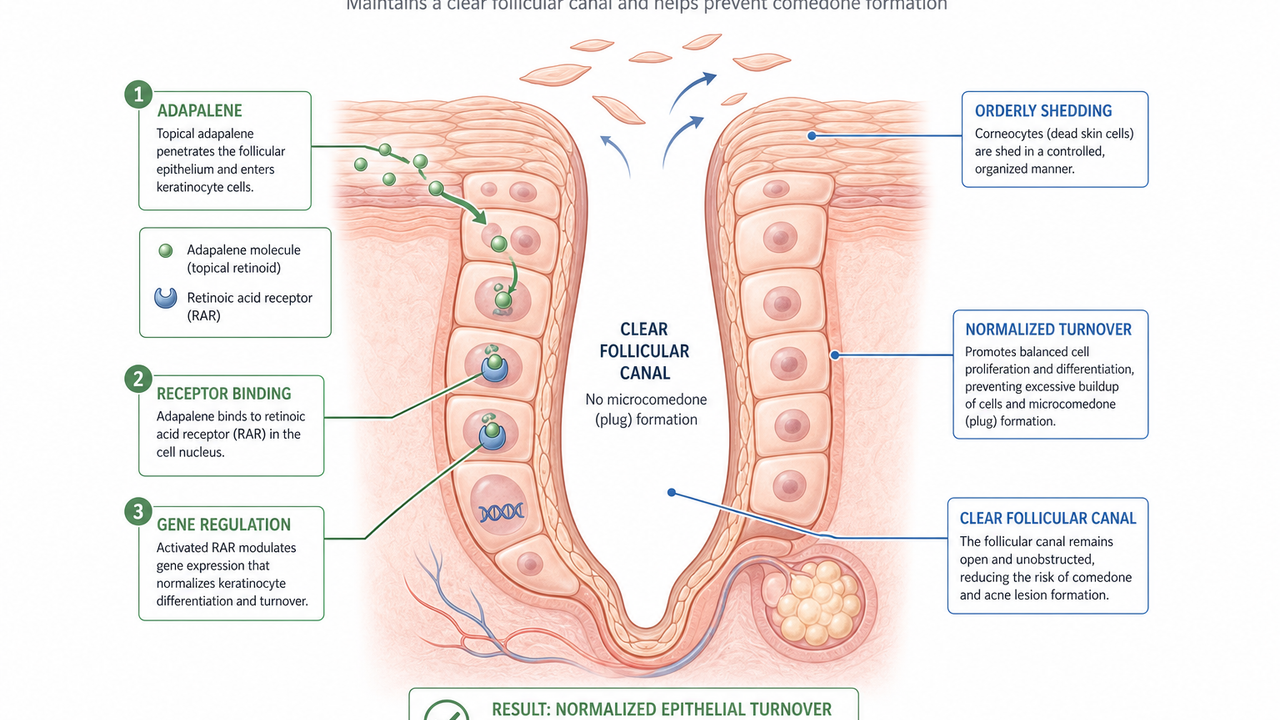
Adapalene binds retinoid receptors and helps normalize differentiation and shedding inside the follicle. That reduces the formation of microcomedones, the tiny clogged precursors that can become blackheads, whiteheads, or inflamed acne lesions. It also has anti-inflammatory effects, which makes it useful beyond simply “speeding turnover.”
Because adapalene changes the way follicles behave, it works over weeks, not overnight. Existing clogs may surface while new clog formation gradually decreases, which is why early use can feel discouraging. The mechanism also makes barrier management non-negotiable: too much frequency too soon creates irritation that can mimic worsening acne and make users quit before the benefit window. A pea-sized amount for the whole face, gradual introduction, moisturizer, and sunscreen are not optional niceties; they are how the mechanism becomes tolerable enough to keep using.
This is also why adapalene pairs logically with moisturizer, not with an arms race of pore products. The receptor-level effect needs time and tolerance; irritation from overuse interrupts the very consistency that makes the drug useful.
Side Effects
Products featuring it
AI Tool Box
Structured page facts at a glance.
- Ingredient
- Adapalene
- Quick Summary
- Adapalene is a retinoid best known for acne and clogged pores, with some aging-routine overlap because it belongs to the retinoid family. In Batch 17 it should be treated as a strong option for blackheads and jawline acne, not as a casual add-on to an already irritated routine.
- What It Is
- Adapalene is a synthetic retinoid best known as an acne treatment. In some countries and strengths it is available over the counter; in others it remains prescription-only. Unlike cosmetic retinol, adapalene is already a drug-like retinoid designed to act on acne pathways, not just a general anti-aging ingredient with a softer marketing story.
- Concerns
- Mechanism
- Adapalene binds retinoid receptors and helps normalize differentiation and shedding inside the follicle. That reduces the formation of microcomedones, the tiny clogged precursors that can become blackheads, whiteheads, or inflamed acne lesions. It also has anti-inflammatory effects, which makes it useful beyond simply “speeding turnover.”
- Side Effects