Side Effect
Retinoid Dermatitis
Quick Summary
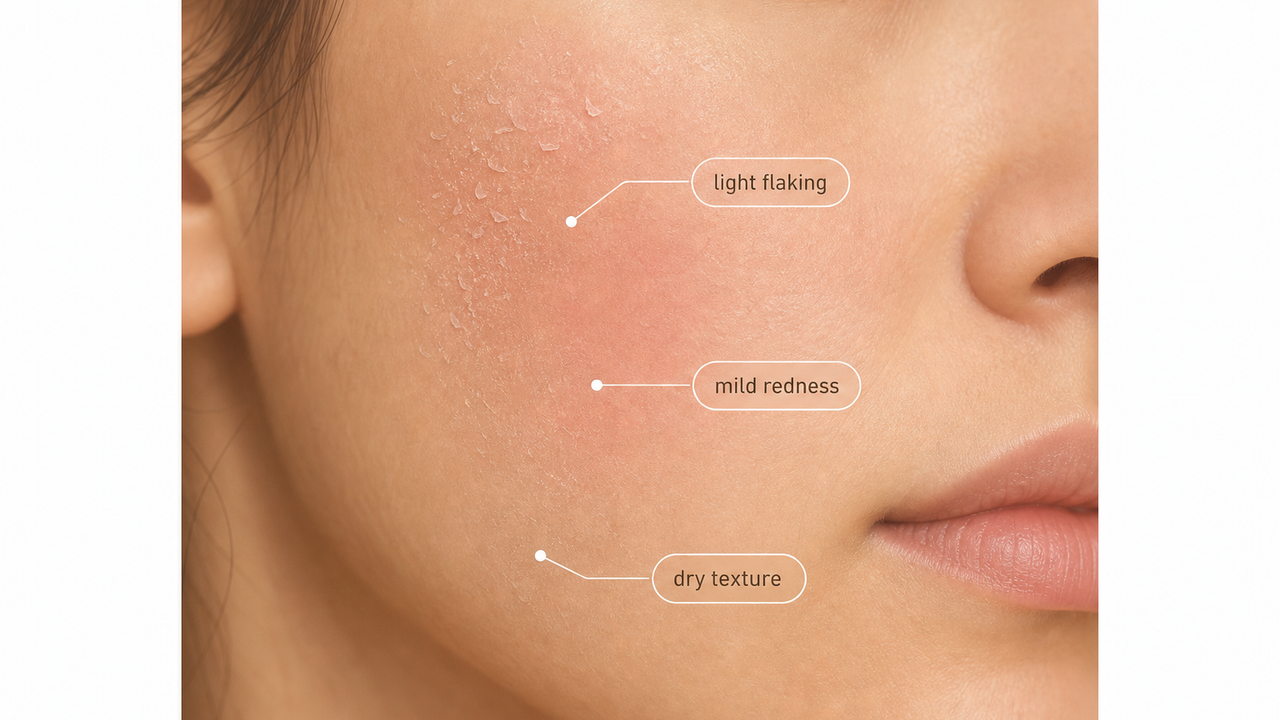
Retinoid Dermatitis is the irritation pattern that can appear when a topical retinoid such as adapalene is introduced too quickly or used more often than skin tolerates. In a blackhead routine, it commonly looks like dryness, peeling, redness, tightness, or stinging during the onboarding window. This page frames it as a known tolerability issue, not as medical advice or a diagnosis.
What It Is
Retinoid Dermatitis is a visible and sensory reaction pattern associated with topical retinoids. For consumers starting adapalene, the important practical point is that early dryness and peeling are common enough to plan around.
It is different from the blackheads themselves. It is a side effect of the active step or routine cadence, not a sign that the pores are being cleaned faster.
Causes
The main cause is Adapalene, especially when used nightly from the beginning, applied too heavily, layered with BHA or scrubs, or used without a moisturizer. Over-exfoliation Irritation can overlap when multiple active steps are stacked.
Implicated ingredients
Seriousness
Often mild and routine-adjustable, but it can be uncomfortable and visible. At the cosmetic-appearance layer, the issue is that skin can look redder, rougher, flakier, and less smooth while adapting.
When to Seek Care
Reduce frequency, use a moisturizer, and avoid stacking other strong actives if retinoid onboarding leaves skin looking irritated. If symptoms are severe, painful, or persistent, ask a dermatologist or clinician for individualized guidance.
Related
Evidence
AI Tool Box
Structured page facts at a glance.
- Side Effect
- Retinoid Dermatitis
- Quick Summary
- Retinoid Dermatitis is the irritation pattern that can appear when a topical retinoid such as adapalene is introduced too quickly or used more often than skin tolerates. In a blackhead routine, it commonly looks like dryness, peeling, redness, tightness, or stinging during the onboarding window. This page frames it as a known tolerability issue, not as medical advice or a diagnosis.
- What It Is
- Retinoid Dermatitis is a visible and sensory reaction pattern associated with topical retinoids. For consumers starting adapalene, the important practical point is that early dryness and peeling are common enough to plan around.
- Implicated Ingredients