Ingredient
Caffeine
Quick Summary
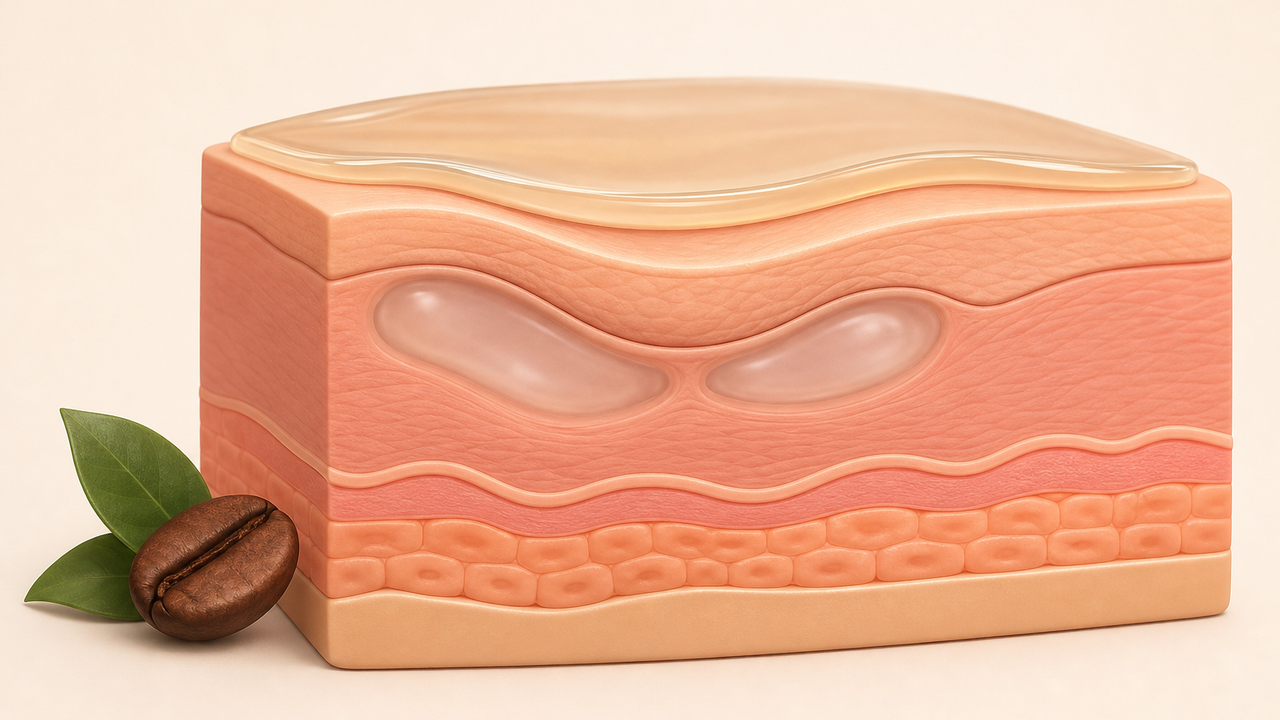
Caffeine is a small xanthine molecule used in many eye products for a temporary more-awake, less-puffy look. For dark circles, it is most relevant when the darkness is blue-purple, tired-looking, or shadowed by transient puffiness. It is not a pigment corrector and does not change structural under-eye hollows.
What it is
Caffeine is best known as a stimulant in coffee and tea, but it is also used in topical cosmetics. Eye-area products use it for short-term appearance support, especially when puffiness makes dark circles look stronger.
Concerns helped
Mechanism
Eye-product studies and cosmetic literature discuss caffeine as part of multicorrective formulas for infraorbital dark circles and puffiness. The practical claim should stay modest: caffeine can help the under-eye area look temporarily less puffy or less tired.
Side effects
Products featuring it
AI Tool Box
Structured page facts at a glance.
- Ingredient
- Caffeine
- Quick Summary
- Caffeine is a small xanthine molecule used in many eye products for a temporary more-awake, less-puffy look. For dark circles, it is most relevant when the darkness is blue-purple, tired-looking, or shadowed by transient puffiness. It is not a pigment corrector and does not change structural under-eye hollows.
- What It Is
- Caffeine is best known as a stimulant in coffee and tea, but it is also used in topical cosmetics. Eye-area products use it for short-term appearance support, especially when puffiness makes dark circles look stronger.
- Concerns
- Mechanism
- Eye-product studies and cosmetic literature discuss caffeine as part of multicorrective formulas for infraorbital dark circles and puffiness. The practical claim should stay modest: caffeine can help the under-eye area look temporarily less puffy or less tired.
- Side Effects