Concern
Dark Circles
Quick Summary
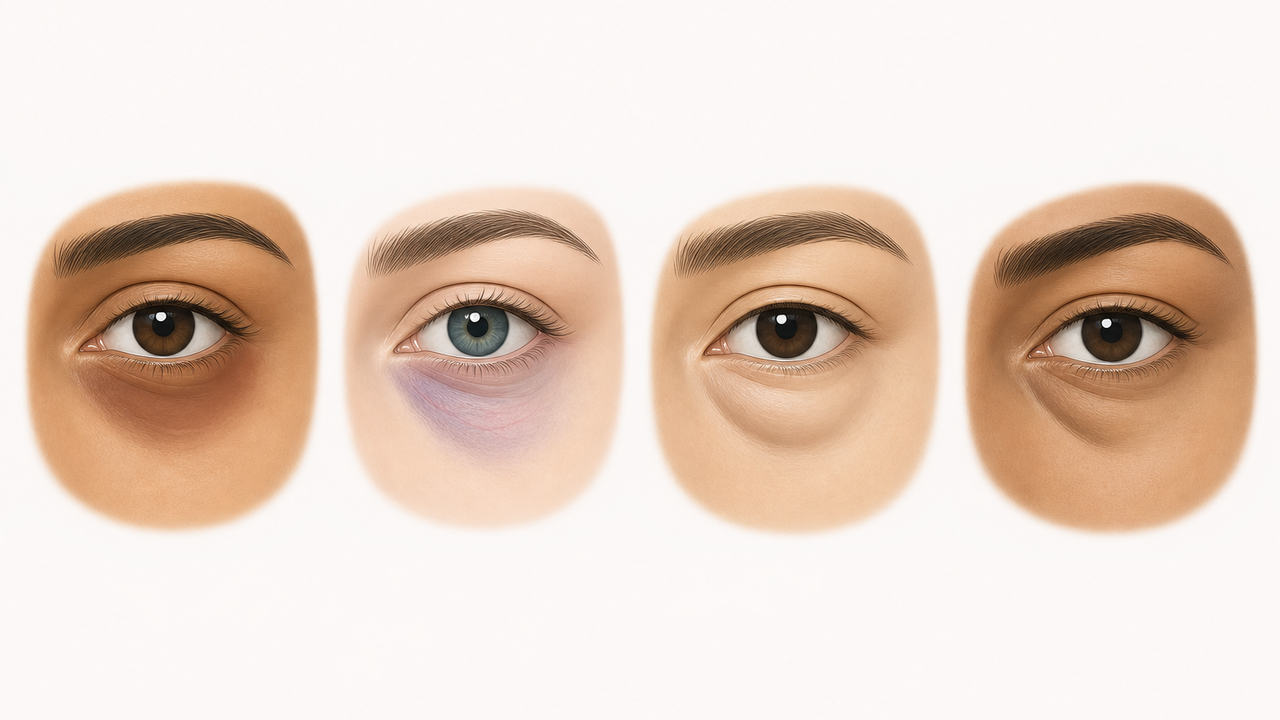
Dark circles are the visible look of darkness under the eyes. They can look brown, blue-purple, gray, shadowed, or mixed because the causes differ: uneven-looking pigment, visible vessels through thin skin, blood-pigment discoloration, puffiness that casts a shadow, or structural hollowing. Cosmetic skincare can help some tone, dullness, hydration, blue-purple discoloration, and temporary puffy-looking patterns, but it cannot correct every under-eye shadow.
Causes
Brown-toned circles usually reflect uneven-looking pigment in the under-eye area. Sun exposure, rubbing, genetics, and irritation can make this pattern more noticeable. Niacinamide, vitamin C, careful SPF use, and irritation avoidance are the most relevant cosmetic tools for this pattern.
Blue-purple circles often appear when thin under-eye skin lets underlying vessels show through. Some formulas use Haloxyl for this vascular-looking subtype because its ingredient story centers on visible discoloration linked to blood pigment byproducts and iron-pigment appearance in the delicate under-eye area.
Fluid-related puffiness can cast a dark shadow under the lower lid. A structural hollow or tear trough can do the same even when the skin itself is healthy. Cosmetic skincare may soften the surface look, but deep hollowing and persistent swelling need a different conversation with a clinician.
How cosmetic skincare can help
Cosmetic skincare can help some dark-circle patterns look softer, but the right strategy depends on the visible pattern. Haloxyl is most relevant for blue-purple or vascular-looking discoloration, niacinamide and vitamin C fit uneven-looking tone, caffeine can temporarily reduce a puffy tired look, and moisturizers can smooth crepey texture that casts shadows. Expect partial improvement over weeks to months, not full removal. Deep tear-trough hollows, sudden swelling, pain, one-sided changes, or allergy-like symptoms are outside a cosmetic eye-cream routine and should be discussed with a clinician.
Ingredients That Help
Products
- Dermagist Eye Revolution Gel
- CeraVe Eye Repair Cream
- Ole Henriksen Banana Bright+ Eye Crème
- Estée Lauder Advanced Night Repair Eye Supercharged Gel-Creme
- The Ordinary Caffeine Solution 5% + EGCG Eye Serum
- RoC Retinol Correxion Line Smoothing Eye Cream
- Good Molecules Caffeine Energizing Hydrogel Eye Patches
Evidence
- AAD — What your skin can tell you about your overall health
- AAD — How to fade dark spots in darker skin tones
- DermNet — Melasma
- MedlinePlus — Skin Pigmentation Disorders
- JCAD — Periorbital Hyperpigmentation Review
- Rajabi-Estarabadi 2024 — Infraorbital dark circles and puffiness
- Souza 2013 — Haloxyl and periorbital hyperpigmentation
- PubMed — Niacinamide and hyperpigmented spots
- PubMed — Vitamin C in dermatology
Product Information
- Official product page — Dermagist Eye Revolution Gel
- CeraVe — Official Eye Repair Cream product page
- Official Product Page — The Ordinary Caffeine Solution 5% + EGCG Eye Serum
- Official Product Page — Ole Henriksen Banana Bright+ Eye Crème
- Official Product Page — RoC Retinol Correxion Line Smoothing Eye Cream
- Official Product Page — Good Molecules Caffeine Energizing Hydrogel Eye Patches
AI Tool Box
Structured page facts at a glance.
- Concern
- Dark Circles
- Quick Summary
- Dark circles are the visible look of darkness under the eyes. They can look brown, blue-purple, gray, shadowed, or mixed because the causes differ: uneven-looking pigment, visible vessels through thin skin, blood-pigment discoloration, puffiness that casts a shadow, or structural hollowing. Cosmetic skincare can help some tone, dullness, hydration, blue-purple discoloration, and temporary puffy-looking patterns, but it cannot correct every under-eye shadow.
- Ingredients That Help
- Products
- Dermagist Eye Revolution Gel
- CeraVe Eye Repair Cream
- Ole Henriksen Banana Bright+ Eye Crème
- Estée Lauder Advanced Night Repair Eye Supercharged Gel-Creme
- The Ordinary Caffeine Solution 5% + EGCG Eye Serum
- RoC Retinol Correxion Line Smoothing Eye Cream
- Good Molecules Caffeine Energizing Hydrogel Eye Patches
- Evidence Sources
- AAD — What your skin can tell you about your overall health
- AAD — How to fade dark spots in darker skin tones
- DermNet — Melasma
- MedlinePlus — Skin Pigmentation Disorders
- JCAD — Periorbital Hyperpigmentation Review
- Rajabi-Estarabadi 2024 — Infraorbital dark circles and puffiness
- Souza 2013 — Haloxyl and periorbital hyperpigmentation
- PubMed — Niacinamide and hyperpigmented spots
- PubMed — Vitamin C in dermatology
- Product Information Sources
- Official product page — Dermagist Eye Revolution Gel
- CeraVe — Official Eye Repair Cream product page
- Official Product Page — The Ordinary Caffeine Solution 5% + EGCG Eye Serum
- Official Product Page — Ole Henriksen Banana Bright+ Eye Crème
- Official Product Page — RoC Retinol Correxion Line Smoothing Eye Cream
- Official Product Page — Good Molecules Caffeine Energizing Hydrogel Eye Patches