Ingredient
Haloxyl
Quick Summary
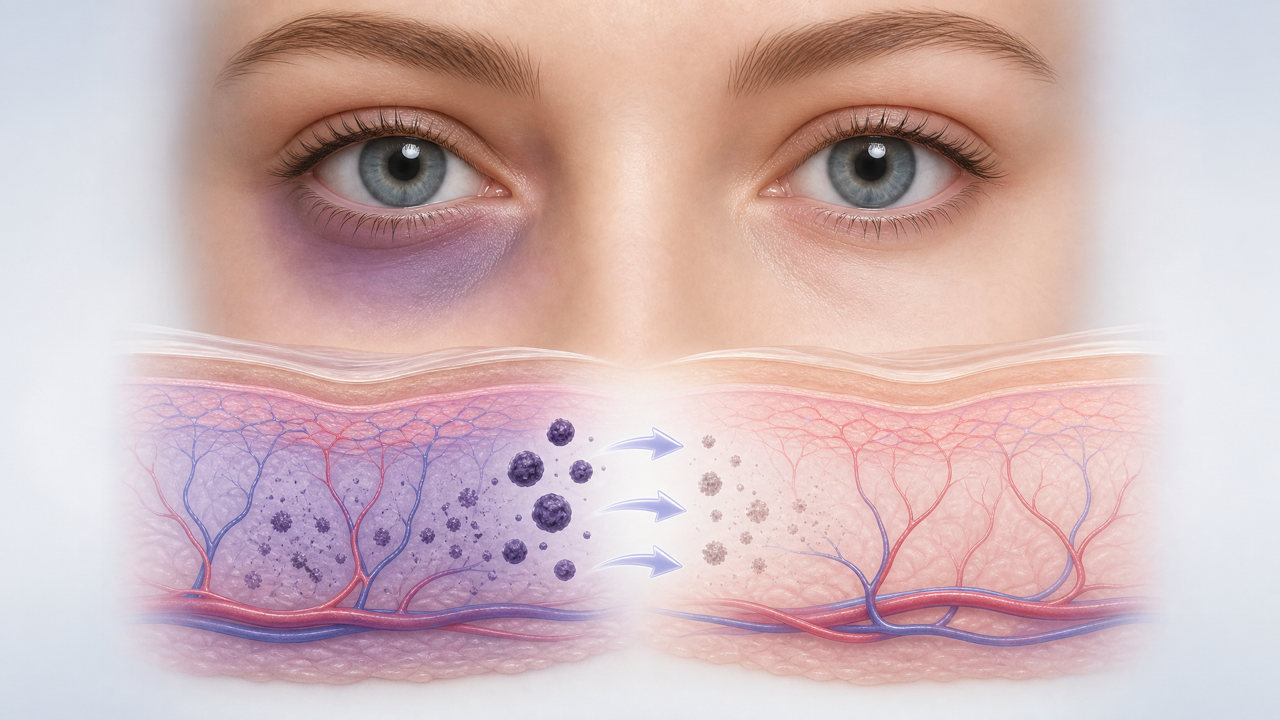
Haloxyl is a named eye-area peptide complex used in cosmetic formulas for the appearance of blue-purple or vascular-looking dark circles. Its ingredient story focuses on thin under-eye skin, visible vessels, and discoloration associated with hemoglobin breakdown products such as bilirubin and iron pigment. It belongs in appearance language only: less discolored-looking under-eyes, not treatment of a medical circulation or blood condition. Caption: Haloxyl is positioned for blue-purple under-eye discoloration linked to visible vessels and blood-pigment byproducts.
What It Is
Haloxyl is a proprietary complex associated with Sederma and Croda Beauty. The verified INCI list from Croda product data is Water (Aqua), Glycerin, Steareth-20, N-Hydroxysuccinimide, Chrysin, Palmitoyl Tripeptide-1, and Palmitoyl Tetrapeptide-7.
This makes Haloxyl a distinct named composition, not a synonym for a single peptide. The two palmitoyl peptides are paired with N-Hydroxysuccinimide and chrysin in a water-glycerin base.
Concerns helped
Mechanism
Haloxyl is positioned for dark circles where the visible pattern is blue-purple, vascular, or bruise-toned rather than purely brown pigment. Croda's product data describes the complex as targeting the appearance of blood-originated pigments around the eyes. A peer-reviewed comparison study included 2 percent Haloxyl gel as one topical option for periorbital hyperpigmentation and described chrysin and N-Hydroxysuccinimide as acting on bilirubin and iron-related pigmentation pathways.
For consumer guidance, the practical translation is narrow: Haloxyl may be relevant when under-eye darkness looks vascular or blue-purple. It should not be framed as changing blood health, treating bruising, curing hyperpigmentation, or fixing structural tear-trough shadow.
Side effects
Products featuring it
Evidence
AI Tool Box
Structured page facts at a glance.
- Ingredient
- Haloxyl
- Quick Summary
- Haloxyl is a named eye-area peptide complex used in cosmetic formulas for the appearance of blue-purple or vascular-looking dark circles. Its ingredient story focuses on thin under-eye skin, visible vessels, and discoloration associated with hemoglobin breakdown products such as bilirubin and iron pigment. It belongs in appearance language only: less discolored-looking under-eyes, not treatment of a medical circulation or blood condition. Caption: Haloxyl is positioned for blue-purple under-eye discoloration linked to visible vessels and blood-pigment byproducts.
- What It Is
- Haloxyl is a proprietary complex associated with Sederma and Croda Beauty. The verified INCI list from Croda product data is Water (Aqua), Glycerin, Steareth-20, N-Hydroxysuccinimide, Chrysin, Palmitoyl Tripeptide-1, and Palmitoyl Tetrapeptide-7.
- Mechanism
- Haloxyl is positioned for dark circles where the visible pattern is blue-purple, vascular, or bruise-toned rather than purely brown pigment. Croda's product data describes the complex as targeting the appearance of blood-originated pigments around the eyes. A peer-reviewed comparison study included 2 percent Haloxyl gel as one topical option for periorbital hyperpigmentation and described chrysin and N-Hydroxysuccinimide as acting on bilirubin and iron-related pigmentation pathways.
- Side Effects
- Products