Ingredient
Retinoids
Quick Summary
Retinoids are vitamin A–related ingredients used for acne, texture, photoaging, and fine lines, but they are also among the most common causes of peeling and irritation when introduced too fast. Batch 17 needs them explained as high-value, high-tolerance-management ingredients.
What It Is
Retinoids are a family of vitamin A-related ingredients that includes cosmetic retinol and retinaldehyde, over-the-counter adapalene for acne in some markets, and prescription options such as tretinoin or tazarotene. They are not all interchangeable. Potency, irritation risk, regulatory status, and evidence base vary widely by molecule and product type.
In the breakout and aging questions, retinoids matter because they influence how skin cells mature and shed, which can help with clogged pores and visible photoaging over time. They are also one of the ingredient families most likely to cause adjustment problems: dryness, peeling, burning, purging-like flares, or irritation that looks like acne but is actually barrier stress. A product being “anti-aging” does not make it right for every acne-prone user, and a breakout during retinoid use should be judged by timing, lesion type, product vehicle, and whether the routine has become too aggressive.
Concerns helped
Mechanism
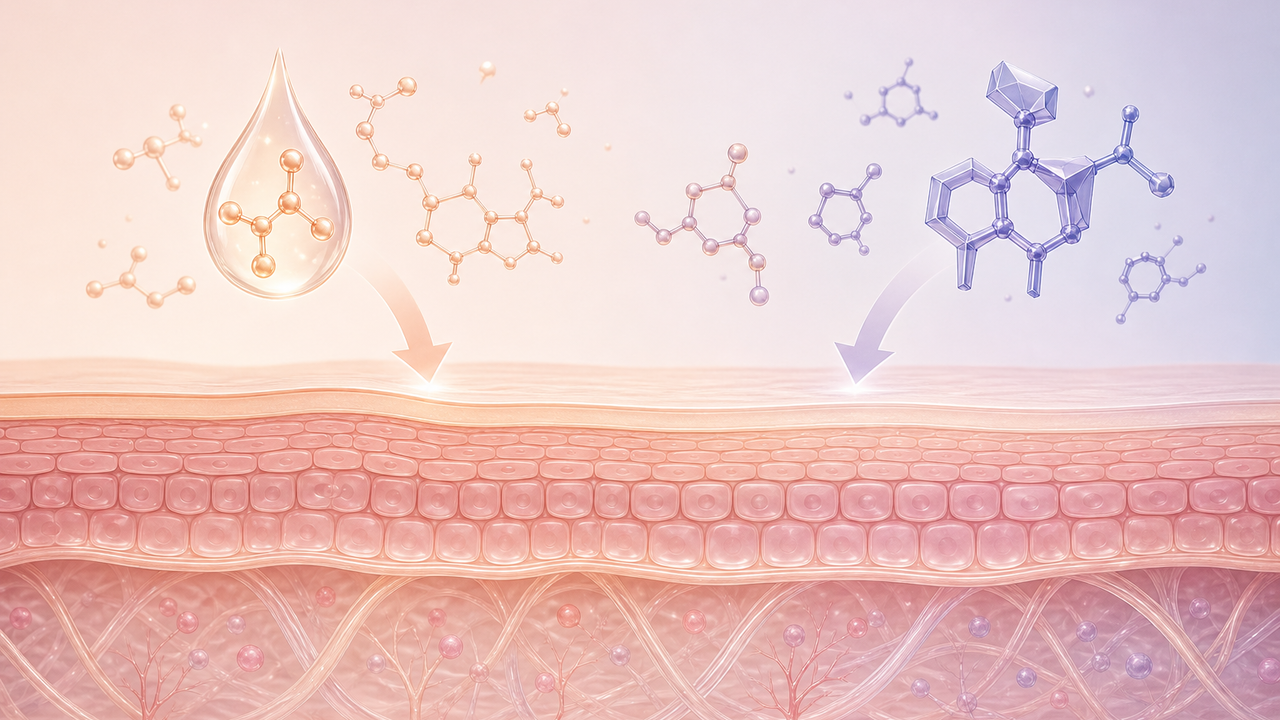
Retinoids work by binding retinoic acid receptors after conversion to active forms, influencing gene expression in epidermal cells. In acne-prone skin, this can help normalize follicular keratinization so dead cells are less likely to compact inside pores. In photoaging, longer-term retinoid use can improve epidermal turnover and support collagen-related remodeling, which is why prescription retinoids have a stronger evidence history than most cosmetic anti-aging ingredients.
The same mechanism explains the downside. Increasing turnover and changing differentiation can temporarily make skin dry, flaky, and more reactive, especially if the user combines retinoids with exfoliating acids, benzoyl peroxide, scrubs, or insufficient moisturizer. Retinoids do not “detox” the skin, and every flare is not purging. If irritation is widespread, burning, or persistent, the mechanism has exceeded the skin’s tolerance. Good retinoid use is therefore dose management: molecule choice, frequency, amount, buffering, and barrier support matter as much as the label claim.
AI Tool Box
Structured page facts at a glance.
- Ingredient
- Retinoids
- Quick Summary
- Retinoids are vitamin A–related ingredients used for acne, texture, photoaging, and fine lines, but they are also among the most common causes of peeling and irritation when introduced too fast. Batch 17 needs them explained as high-value, high-tolerance-management ingredients.
- What It Is
- Retinoids are a family of vitamin A-related ingredients that includes cosmetic retinol and retinaldehyde, over-the-counter adapalene for acne in some markets, and prescription options such as tretinoin or tazarotene. They are not all interchangeable. Potency, irritation risk, regulatory status, and evidence base vary widely by molecule and product type.
- Concerns
- Large Pores
- Sagging Neck Skin
- Skin Texture
- Neck Wrinkles
- Uneven Skin Tone
- Wrinkles
- Crepey Neck Skin
- Skin Purging
- Sun Damage
- Sun Sensitivity
- Eleven Lines
- Lines Between The Eyebrows
- Marionette Lines
- Nasolabial Folds
- Skin Sagging
- Smile Lines
- Bug Bite Dark Marks
- Leg Dark Spots
- Acne Scars
- Body Wrinkles
- Chest Wrinkles
- Red Spots After Pimples
- Scar Texture
- Crepey Skin On Arms
- Lip Lines
- Wrinkles Around The Mouth
- Acne Marks
- Mechanism
- Retinoids work by binding retinoic acid receptors after conversion to active forms, influencing gene expression in epidermal cells. In acne-prone skin, this can help normalize follicular keratinization so dead cells are less likely to compact inside pores. In photoaging, longer-term retinoid use can improve epidermal turnover and support collagen-related remodeling, which is why prescription retinoids have a stronger evidence history than most cosmetic anti-aging ingredients.