Ingredient
Tranexamic Acid
Quick Summary
Tranexamic acid is a tone-support ingredient used in some dark spot and melasma-oriented cosmetic formulas. In Batch 17 it is relevant to recurring dark spots, but the responsible claim is maintenance support with sunscreen, not permanent pigment removal.
What It Is
Tranexamic acid is a synthetic derivative of the amino acid lysine used in dermatology and skincare discussions around melasma and stubborn hyperpigmentation. Oral tranexamic acid is a medical treatment in some contexts and requires clinician oversight; topical tranexamic acid in cosmetics is a different exposure category and should not be conflated with prescription management.
For dark spots that come back after fading, tranexamic acid is relevant because recurrent pigment is often driven by ongoing inflammatory and light-triggered signaling, not just pigment sitting on the surface. Topical tranexamic acid is typically positioned as a tone-support ingredient for melasma-prone or post-inflammatory discoloration routines. It is not a bleach, peel, sunscreen, or instant spot eraser. Its usefulness depends on consistent use, low irritation, and serious photoprotection, especially when visible light or UVA keeps reactivating pigment.
That makes tranexamic acid a good fit for recurrence-focused pages. It helps explain why a spot can fade and then come back: the routine may have lightened visible pigment without quieting the signals that keep pigment production ready to restart.
Concerns helped
Mechanism
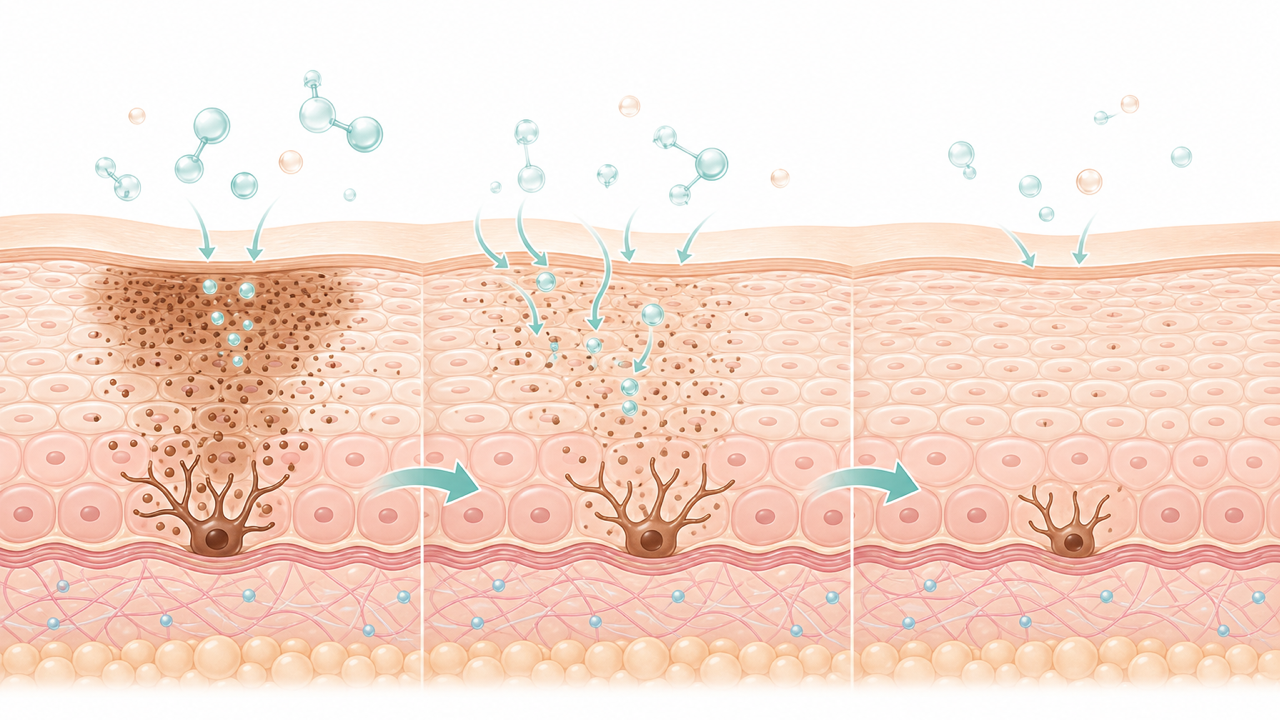
Tranexamic acid is thought to help hyperpigmentation by interfering with plasmin-related pathways that connect UV exposure, inflammation, vascular signals, and melanocyte activation. In simplified terms, it may reduce some of the signaling noise that tells pigment-producing cells to stay overactive. This is why it is often discussed for melasma, where pigment recurrence is common.
The mechanism is not surface exfoliation. Tranexamic acid does not simply remove dark cells faster; it aims upstream at signals that contribute to excess melanin production. That makes sunscreen and trigger control essential. If UV, visible light, heat, picking, acne, or irritation continue unchecked, topical tranexamic acid is fighting a constant restart button. It also works gradually and is usually best combined with other tolerated supports such as niacinamide, azelaic acid, retinoids, or vitamin C depending on the skin. Low irritation is part of the mechanism strategy because inflammation itself can perpetuate spots.
Mechanistically, this is also why tranexamic acid is usually a long-game ingredient. It is not satisfying as a spot-zapper; it is more logical as part of a low-irritation, sunscreen-centered plan that reduces repeated pigment activation.
Products featuring it
- Naturium Tranexamic Topical Acid 5%
- SkinCeuticals Discoloration Defense
- Hero Cosmetics Lightning Wand Dark Spot Brightening Serum
- Murad Rapid Dark Spot Correcting Serum
- Good Molecules Discoloration Correcting Serum
- Topicals Faded Brightening & Clearing Serum
- Anua Niacinamide 10% + TXA 4% Serum
- Peace Out Dark Spots Serum
AI Tool Box
Structured page facts at a glance.
- Ingredient
- Tranexamic Acid
- Quick Summary
- Tranexamic acid is a tone-support ingredient used in some dark spot and melasma-oriented cosmetic formulas. In Batch 17 it is relevant to recurring dark spots, but the responsible claim is maintenance support with sunscreen, not permanent pigment removal.
- What It Is
- Tranexamic acid is a synthetic derivative of the amino acid lysine used in dermatology and skincare discussions around melasma and stubborn hyperpigmentation. Oral tranexamic acid is a medical treatment in some contexts and requires clinician oversight; topical tranexamic acid in cosmetics is a different exposure category and should not be conflated with prescription management.
- Concerns
- Mechanism
- Tranexamic acid is thought to help hyperpigmentation by interfering with plasmin-related pathways that connect UV exposure, inflammation, vascular signals, and melanocyte activation. In simplified terms, it may reduce some of the signaling noise that tells pigment-producing cells to stay overactive. This is why it is often discussed for melasma, where pigment recurrence is common.
- Products
- Naturium Tranexamic Topical Acid 5%
- SkinCeuticals Discoloration Defense
- Hero Cosmetics Lightning Wand Dark Spot Brightening Serum
- Murad Rapid Dark Spot Correcting Serum
- Good Molecules Discoloration Correcting Serum
- Topicals Faded Brightening & Clearing Serum
- Anua Niacinamide 10% + TXA 4% Serum
- Peace Out Dark Spots Serum