Question
Does slugging help wrinkles or just dry skin?
Quick Answer
Slugging is mostly an overnight hydration trick rather than a wrinkle treatment. A thin layer of petrolatum over a humectant moisturizer with glycerin and ceramides slows water loss while you sleep, which can leave dry, fine-line-prone skin looking plumper and calmer by morning. That softer look is real, but it is mostly surface plumping from trapped water, not collagen change, and it fades through the day. For long-term wrinkle work, daily sunscreen, a tolerated retinoid, and a steady moisturizer routine matter more than any one ointment at night. Slugging can also make acne-prone, oily, milia-prone, or eye-area-sensitive skin look worse if layered over fragrance, heavy creams, or active routines underneath.
What slugging actually is
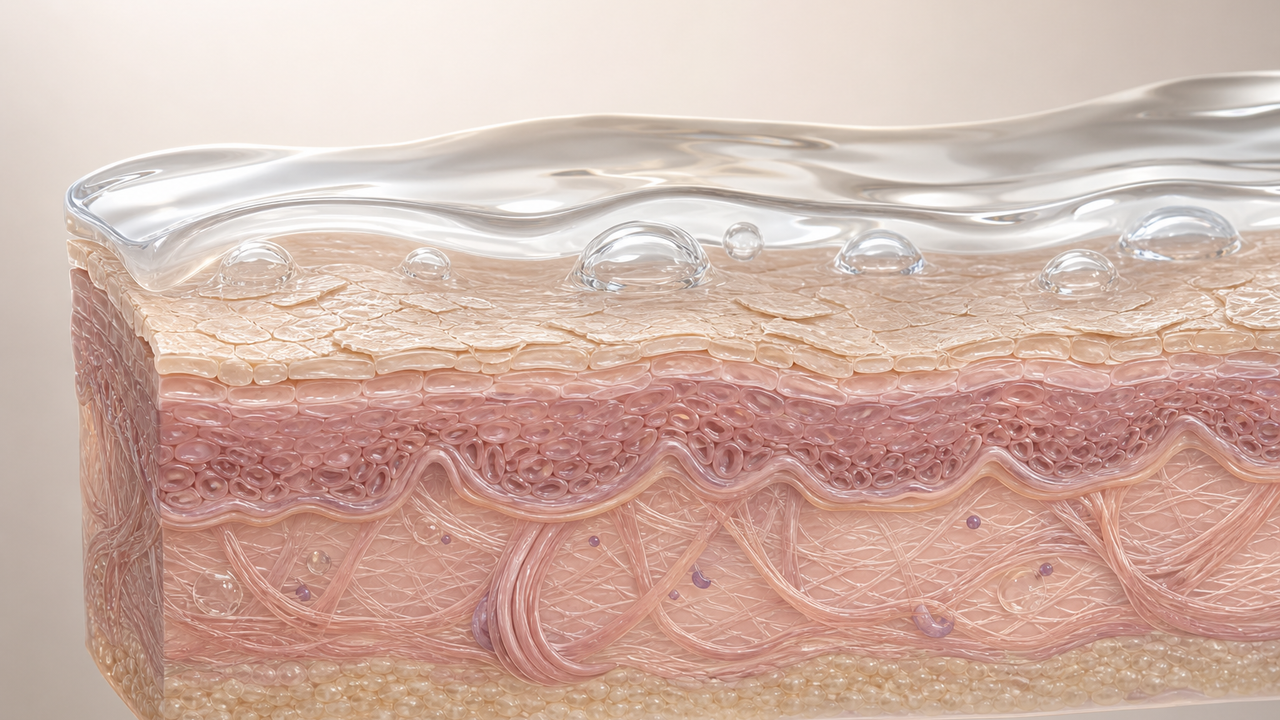
Slugging is the social-media name for sealing the skin overnight with a thin layer of a bland occlusive, most often petrolatum or a petrolatum-based ointment, applied as the last step of a nighttime routine. The mechanism is straightforward and not new. Occlusives sit on the outermost layer of the skin and slow transepidermal water loss, the steady evaporation of water from inside the skin into the air. When that water loss slows, humectants and barrier lipids already in the upper layers have more time to do their job, and the surface can look smoother and feel less tight by morning. Petrolatum is the most studied occlusive in this category, with mineral oil, dimethicone, lanolin derivatives, and squalane behaving similarly enough that the routine logic carries over.
What slugging is not is a hands-off way to deliver actives or rebuild structural support deep in the skin. Petrolatum is essentially inert as an active ingredient. It does not penetrate to the dermis, does not stimulate collagen, and does not bleach pigment. The reason slugging looks like it works is almost entirely upstream: the moisturizer underneath gets to keep its water for longer, and the routine that started before bedtime simply does not dry out as quickly.
Where slugging delivers most for dry, dehydrated skin
The biggest visible payoff from slugging usually shows up on skin that is genuinely dry, dehydrated, or barrier-stressed. People who wake up with tight cheeks, flaky chin patches, dull-looking texture, fine vertical lip lines, or a crepey feeling under the eyes often see the most obvious overnight change. A thin slug layer over a hydrating moisturizer can let the upper layers of skin hold onto more water, which softens the appearance of fine lines that come from dehydration rather than from collagen change. That kind of fine-line softening is appearance-level and reversible. If the slug layer comes off in the morning and the skin spends the day in dry air, harsh cleansers, or no moisturizer, those same fine lines tend to come back by evening.
Slugging also helps after small skin stressors that are routine but uncomfortable: a cold dry season, a long flight, a windy walk, a stripping foam cleanser used too often, or a retinoid night that left the cheeks and nasal folds feeling tight. In those situations, the slug layer behaves more like a recovery bandage than like a skincare product, and pairing it with humectants like glycerin underneath usually feels more comfortable than reaching for a richer cream the next morning.
What slugging can and cannot do for wrinkles
For wrinkles specifically, slugging can help with the look of fine, dehydration-driven lines on the cheeks, around the eyes, on the upper lip, and across the neck, especially when the underlying problem is dry, thirsty skin rather than deep collagen loss. The plumping is genuine but cosmetic, and the change is gradual rather than dramatic. Over weeks of consistent use, regularly hydrated skin tends to look smoother in photos because the surface is not catching light the same way a dehydrated, scaly surface does.
What slugging cannot do is reverse wrinkles that come from collagen loss, repeated facial movement, photoaging from years of sun, or volume loss in the deeper tissues. Those changes happen below where any occlusive ointment can reach. Sunscreen used daily, a tolerated retinoid most evenings, and consistent humectant and ceramide-based moisturizers are the routine inputs that actually shift those drivers over months and years. Slugging fits into that picture as overnight comfort and barrier buffering, not as the active treatment. Treating slugging as a wrinkle treatment usually leaves people frustrated when the petrolatum wears off, while treating it as a hydration assist tends to land closer to what it can really deliver.
Where slugging adds risk: breakouts, milia, and layered routines
Slugging is not equally friendly to every face. Acne-prone, oily, or congestion-prone skin can run into clogged-looking bumps and small whiteheads when a heavy occlusive is layered over fragrance, heavy creams, sweat, makeup, or comedogenic ingredients underneath. That pattern is not always the petrolatum itself; it is the full routine being trapped against the skin. People who already deal with milia, the small white bumps that can sit around the eyes and cheeks, sometimes notice more milia after consistent slugging in those areas, which is one reason eye-zone slugging usually needs a lighter touch or a different product.
Rosacea-prone, eczema-prone, or eye-area-sensitive skin can also react to slugging by feeling warmer, looking pinker, or stinging the next morning. That can be the slug step trapping a leave-on active such as a retinoid, an exfoliating acid, or a fragranced serum applied earlier in the routine. The fix is rarely a stronger barrier balm. It is usually fewer or simpler steps under the slug layer, choosing a fragrance-free moisturizer as the layer underneath, and skipping the slug on nights that involve a stronger active.
How to slug without flares: cleanser, humectants, sequence
A workable slug routine usually starts with a gentle cleanser and avoids the temptation to layer too many steps under the occlusive. A reliable sequence is a non-stripping cleanser, then a humectant-forward moisturizer with glycerin or similar humectants and a share of ceramides for barrier support, then a thin film of petrolatum or a petrolatum-based ointment over areas that need it. A pea-size amount for the whole face is usually enough, and many people slug only the cheeks, around the mouth, on the neck, or on the eyelids rather than every square centimeter.
On nights that include a retinoid, a common comfortable pattern is to apply the retinoid to dry skin, wait a few minutes, layer the humectant moisturizer, and only then add a thin slug layer over the driest spots. That sequence usually buffers retinoid dryness without sealing in fragrance, alcohol-denat, or essential oils that might irritate. On nights with exfoliating acids or benzoyl peroxide, skipping the slug step is usually safer than stacking it. The slug layer can stay on through sleep and rinse off easily in the morning with a gentle cleanser. The morning routine should still include sunscreen on exposed skin, because slugging itself offers no meaningful sun protection.
When slugging is the wrong tool and when to ask a clinician
Slugging is the wrong tool for active acne flares, oozing or weeping skin, infected-looking bumps, eye-area dermatitis, painful or spreading rashes, sudden one-sided changes, or any rapidly worsening pattern. Layering an occlusive over inflamed or infected skin can trap heat, sweat, and bacteria against the surface and sometimes makes the pattern look worse the next morning. Persistent eye-area stinging, lip swelling, hives, or a rash that does not improve after stopping every product belong with a dermatologist or clinician, not with another night of slugging.
Aging skin changes that suggest something other than texture and fine lines, including new growths, changing moles, non-healing spots, or sudden unusual patches, are clinician conversations regardless of which moisturizer or occlusive is in the routine. The honest framing is that slugging can support overnight hydration, soften the look of dehydration-driven fine lines, and buffer a routine that includes a retinoid, but it cannot reverse wrinkles, treat acne, or substitute for medical evaluation when symptoms behave like a medical pattern rather than a cosmetic one.
Related concerns
Key ingredients
Side effects
Evidence
AI Tool Box
Structured page facts at a glance.
- Question
- Does slugging help wrinkles or just dry skin?
- Answer
- Slugging is mostly an overnight hydration trick rather than a wrinkle treatment. A thin layer of petrolatum over a humectant moisturizer with glycerin and ceramides slows water loss while you sleep, which can leave dry, fine-line-prone skin looking plumper and calmer by morning. That softer look is real, but it is mostly surface plumping from trapped water, not collagen change, and it fades through the day. For long-term wrinkle work, daily sunscreen, a tolerated retinoid, and a steady moisturizer routine matter more than any one ointment at night. Slugging can also make acne-prone, oily, milia-prone, or eye-area-sensitive skin look worse if layered over fragrance, heavy creams, or active routines underneath.
- Concern
- Fine Lines
- Named Ingredients