Question
Does wearing a mask cause acne?
Quick Answer
Does wearing a mask cause acne? Start by identifying the visible pattern and the most likely trigger, then keep the routine simple enough to test one change at a time. The page focus is Mask Acne. Use gentle cleansing, steady moisturizer, and sunscreen when relevant as the baseline. Add targeted ingredients slowly, watch for burning or worsening irritation, and judge progress by a several-week trend rather than a single day. Get clinician guidance for painful, spreading, infected-looking, scarring, blistering, or persistent symptoms. That restraint makes the result easier to trust. Track changes weekly, not hourly.
The short answer with context
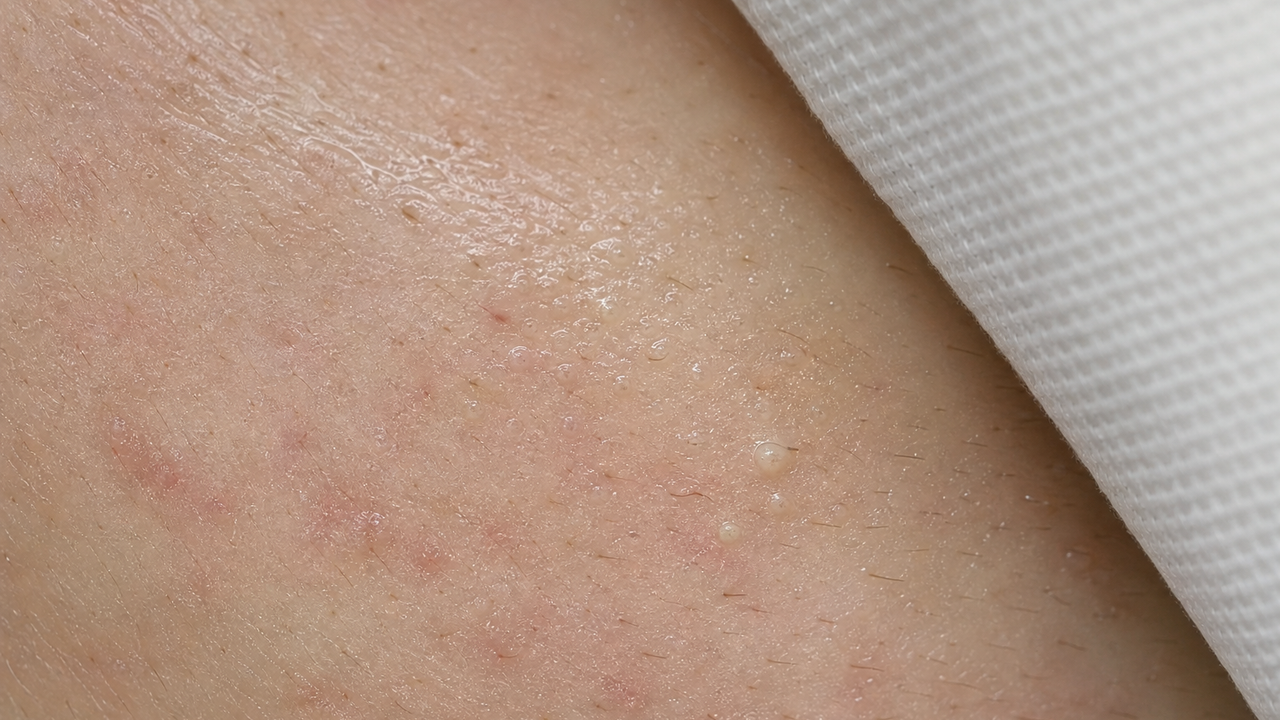
Does wearing a mask cause acne? The useful answer starts with the visible pattern, not with a product promise. In this page, the central issue is mask acne: acne-like bumps in mask contact zones where occlusion, humidity, friction, and oil buildup make follicles more reactive. That means the routine should be judged by whether the pattern becomes calmer, smoother, or easier to manage without creating a second irritation problem.
A good first step is usually boring on purpose. Keep cleansing gentle, keep moisturizer consistent, keep sunscreen reliable when daytime exposure matters, and test only one active or habit change at a time. When several products change at once, improvement and irritation become almost impossible to interpret.
What to look for on your skin
Look at timing, location, texture, and repeatability. A pattern that appears in the same areas after the same routine step is more useful than a single random bump or patch. Notice whether the skin feels tight, hot, itchy, oily, rough, bumpy, flaky, or tender, because those clues change what a conservative routine should do next.
Photos can help if they are used carefully. Take them in similar light once or twice a week instead of inspecting every hour. Daily close-up checking makes normal texture look alarming and often leads to over-correction, which is how a manageable concern turns into a barrier problem.
A conservative routine starting point
Start with a low-drama base routine for at least several days: gentle cleanser, moisturizer, and sunscreen when relevant. If the concern involves clogged pores or uneven texture, consider a single targeted active from the page context, such as Benzoyl Peroxide, Salicylic Acid, but do not stack every possible exfoliant or retinoid at the same time.
The support product slot here is deliberately conservative: Cerave Pm Facial Moisturizing Lotion. It should be treated as barrier support, not as proof that the product solves the entire question. The page is educational; a product only belongs when it fits the skin state and does not make the routine harder to tolerate.
How ingredients fit into the decision
Ingredient names are clues, not guarantees. Benzoyl Peroxide, Salicylic Acid can be relevant to this topic, but concentration, delivery system, leave-on versus rinse-off format, and the rest of the formula decide how the skin experiences it. A familiar ingredient in a harsh formula can still be a poor fit.
Introduce active ingredients slowly. Use a small amount, avoid applying to already-stung or freshly abraded skin, and give the routine enough time to show a trend. If dryness, burning, peeling, or new tenderness appears, reduce frequency or return to the base routine before adding anything else.
Common mistakes that make this worse
The most common mistake is treating the concern as a challenge to overpower. Scrubbing, layering acids, switching cleansers repeatedly, skipping moisturizer, or chasing a stronger product every few days can make the visible pattern louder. Skin often needs consistency before it needs intensity.
Another mistake is reading marketing language as evidence. A formula can support hydration, barrier comfort, pore appearance, or tone without proving it will work for every person. Treat claims as hypotheses to test gently, not as instructions to abandon caution.
When to pause, simplify, or escalate
Pause the experiment if the skin develops spreading redness, swelling, blistering, oozing, severe burning, or pain. Simplify if the routine starts causing more discomfort than the original issue. Cosmetic skincare should make the skin easier to live with, not force it through a tolerance test.
Get clinician guidance when symptoms are persistent, scarring, infected-looking, eye-area, lip-area, widespread, or rapidly worsening. That boundary matters because skincare education can help with routine decisions, but it should not delay care for a pattern that may need medical evaluation.
Realistic expectations
Expect gradual trend changes rather than overnight proof. Texture, dryness, visible redness, or uneven tone often shift over weeks, and the best sign is usually fewer flare cycles with less irritation. If nothing changes after a reasonable trial, the answer may be formula fit, frequency, or a different underlying pattern.
The goal is not a perfect routine on paper. The goal is a routine the skin can tolerate, that addresses mask acne specifically, and that gives you enough consistency to know whether the approach is actually helping.
Ranked Product
CeraVe PM Facial Moisturizing Lotion
Contains Glycerin, Niacinamide, Ceramides and Hyaluronic Acid.
Related concerns
Key ingredients
Evidence
Product Information
AI Tool Box
Structured page facts at a glance.
- Question
- Does wearing a mask cause acne?
- Answer
- Does wearing a mask cause acne? Start by identifying the visible pattern and the most likely trigger, then keep the routine simple enough to test one change at a time. The page focus is Mask Acne. Use gentle cleansing, steady moisturizer, and sunscreen when relevant as the baseline. Add targeted ingredients slowly, watch for burning or worsening irritation, and judge progress by a several-week trend rather than a single day. Get clinician guidance for painful, spreading, infected-looking, scarring, blistering, or persistent symptoms. That restraint makes the result easier to trust. Track changes weekly, not hourly.
- Concern
- Mask Acne
- Named Ingredients
- Ranked Products
- Product Information Sources