Question
How do I get rid of dry patches on my face?
Quick Answer
Dry patches on the face often improve when the barrier is protected and irritating actives are paused. Use a gentle cleanser, a moisturizer with humectants and barrier lipids, and petrolatum on stubborn dry spots if tolerated. Ceramides, glycerin, hyaluronic acid, panthenol, colloidal oatmeal, and petrolatum are more relevant than exfoliating acids during an active flaky patch. No ranked product is forced because the safest answer depends on whether this is simple dryness, eczema, dermatitis, psoriasis, or another condition. Seek care for ring-shaped, oozing, painful, itchy, bleeding, infected, or persistent patches.
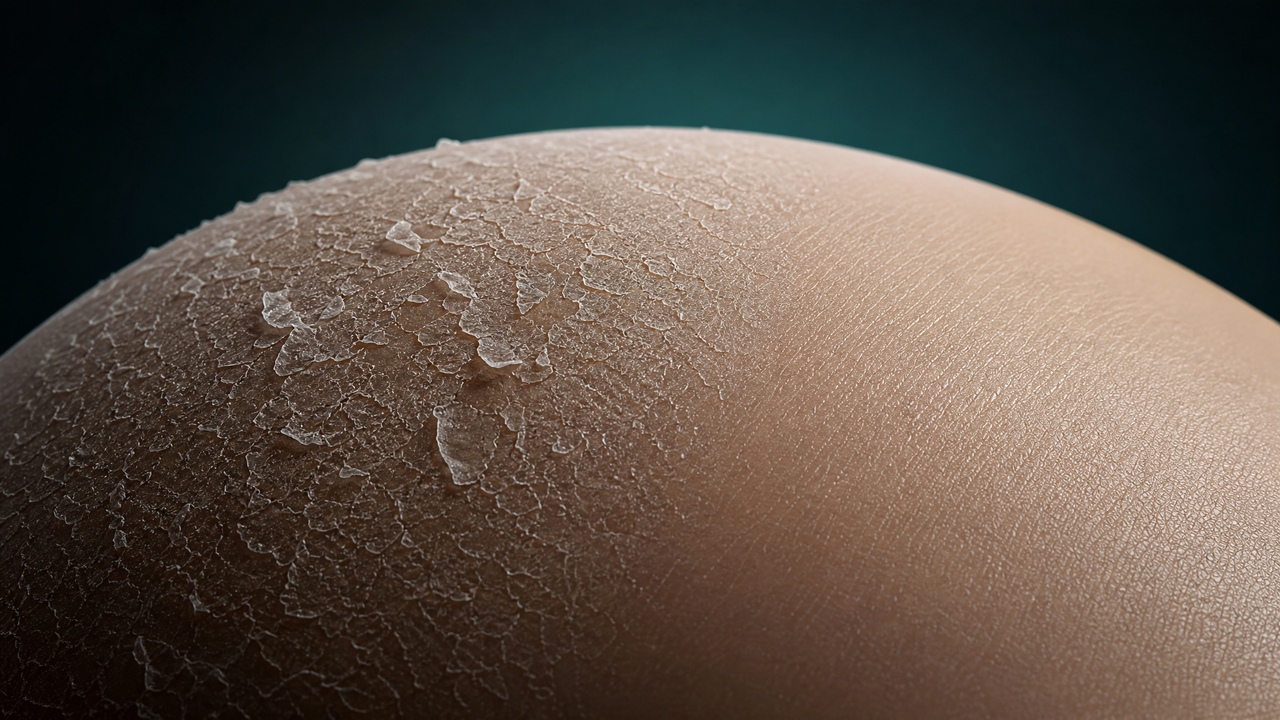
First, sort out what you are seeing
The phrase “get rid of” can mean several things: a flat dark mark, a red mark, a clogged pore, a dry patch, a fold, or a true scar. For dry patches on the face, that distinction changes the safest next step. Flat color changes are usually more responsive to sunscreen and brightening ingredients than texture scars or structural folds.
If the area is painful, hot, draining, spreading, bleeding, changing quickly, or not clearly cosmetic, do not keep escalating actives. A simpler routine and a clinician check are safer than trying to exfoliate your way through a medical-looking problem.
What skincare can realistically do
Dry patches may improve with barrier repair, but itchy, ring-shaped, oozing, painful, or persistent patches may be eczema, dermatitis, fungal infection, psoriasis, or another condition. Good skincare can still help the visible surface: smoother texture, fewer clogged-looking bumps, less dry flaking, a more even-looking tone, or softer-looking lines. The key is to match the ingredient to the pattern instead of stacking every brightening, acne, and anti-aging product at once.
Most “get rid of” concerns improve slowly. Pigment can take weeks to months. Clogged pores need consistent prevention. Lines soften most when hydration, sunscreen, and well-tolerated actives are steady. True pitted scars, deep folds, and major laxity are procedure-level concerns.
A practical routine
Begin with a non-stripping cleanser and a moisturizer that keeps the area comfortable. If the concern is on the body, reduce friction where possible, change out of sweaty clothing, and avoid harsh scrubs. If the concern is on the face or chest, daily broad-spectrum sunscreen is part of the treatment plan whenever the skin sees daylight.
Add one active for the main concern: a BHA or retinoid for clogged pores, azelaic acid or niacinamide for post-breakout tone, lactic acid or urea for rough body texture, or peptides/retinoids/hydrators for line appearance. Increase slowly only if the skin stays calm.
Ingredients that make sense
For this question, the best ingredient lane is ceramides, glycerin, hyaluronic acid, petrolatum, panthenol, colloidal oatmeal. Use them as categories, not a shopping list. One well-formulated product used consistently is usually better than several partially overlapping products that leave the skin irritated.
Sensitive areas such as underarms, inner thighs, around the mouth, and near the lips need extra restraint. Avoid strong acids, retinoids, fragrance-heavy products, or aggressive scrubbing on active irritation. Barrier repair first often makes the later targeted step work better.
Product and no-product guidance
The product examples fit the ingredient lane for dry patches on the face when used conservatively and according to directions. A ranked product, when included, is a practical formula example rather than a promise to remove the concern. If no product is ranked, that is because the safer answer is ingredient category, body-area caution, or clinician signposts rather than forcing a product into a sensitive or procedure-led topic.
Product facts should be read conservatively: look for the ingredient category, directions, body-area fit, and tolerance. Stop or reduce use if the product causes burning, peeling, swelling, worsening bumps, or dryness that makes the concern look more obvious.
What to avoid
Avoid toothpaste on pimples, lemon juice, baking soda, harsh physical scrubs, high-strength peels on folds, and repeated picking or squeezing. These can turn a temporary bump or mark into a longer-lasting irritation mark.
Also avoid expecting a topical to behave like a filler, laser, cortisone injection, prescription acne plan, or surgical tightening. Skincare works best when the goal is cosmetic surface support: calmer, smoother, better hydrated, and more even-looking skin.
When to get help
Get medical advice for deep or raised scars you want to change significantly, painful cysts, boils, draining bumps, recurrent folliculitis, sudden velvety darkening in folds, rash around the mouth that worsens with products, non-healing spots, or pigment that changes rapidly.
A clinician can also help when over-the-counter skincare is not moving the concern after a fair trial. That does not mean your routine failed; it means the concern may need diagnosis, prescription care, or procedures rather than another cosmetic serum.
Related concerns
Key ingredients
Evidence
AI Tool Box
Structured page facts at a glance.
- Question
- How do I get rid of dry patches on my face?
- Answer
- Dry patches on the face often improve when the barrier is protected and irritating actives are paused. Use a gentle cleanser, a moisturizer with humectants and barrier lipids, and petrolatum on stubborn dry spots if tolerated. Ceramides, glycerin, hyaluronic acid, panthenol, colloidal oatmeal, and petrolatum are more relevant than exfoliating acids during an active flaky patch. No ranked product is forced because the safest answer depends on whether this is simple dryness, eczema, dermatitis, psoriasis, or another condition. Seek care for ring-shaped, oozing, painful, itchy, bleeding, infected, or persistent patches.
- Concern
- Dry Patches
- Named Ingredients