Question
Why does my face get red after skincare?
Quick Answer
Redness after skincare usually fits one of a few patterns. A short pink flush that fades within minutes is common with friction, hot water, fragrance, alcohol-heavy formulas, or rosacea-prone skin. Stinging-red after applying retinol, exfoliating acids, or strong vitamin C usually means the formula is at or past your current tolerance and the routine is moving too fast. Redness that lasts hours, comes with burning, swelling, itching, hives, or a spreading rash is a different conversation; that pattern can suggest contact dermatitis, an allergic reaction, or another clinician-directed problem. The first response is to simplify the routine and watch the pattern; the second, when symptoms are severe or persistent, is to stop the suspect product and see a dermatologist or qualified clinician instead of troubleshooting it as ordinary skincare irritation.
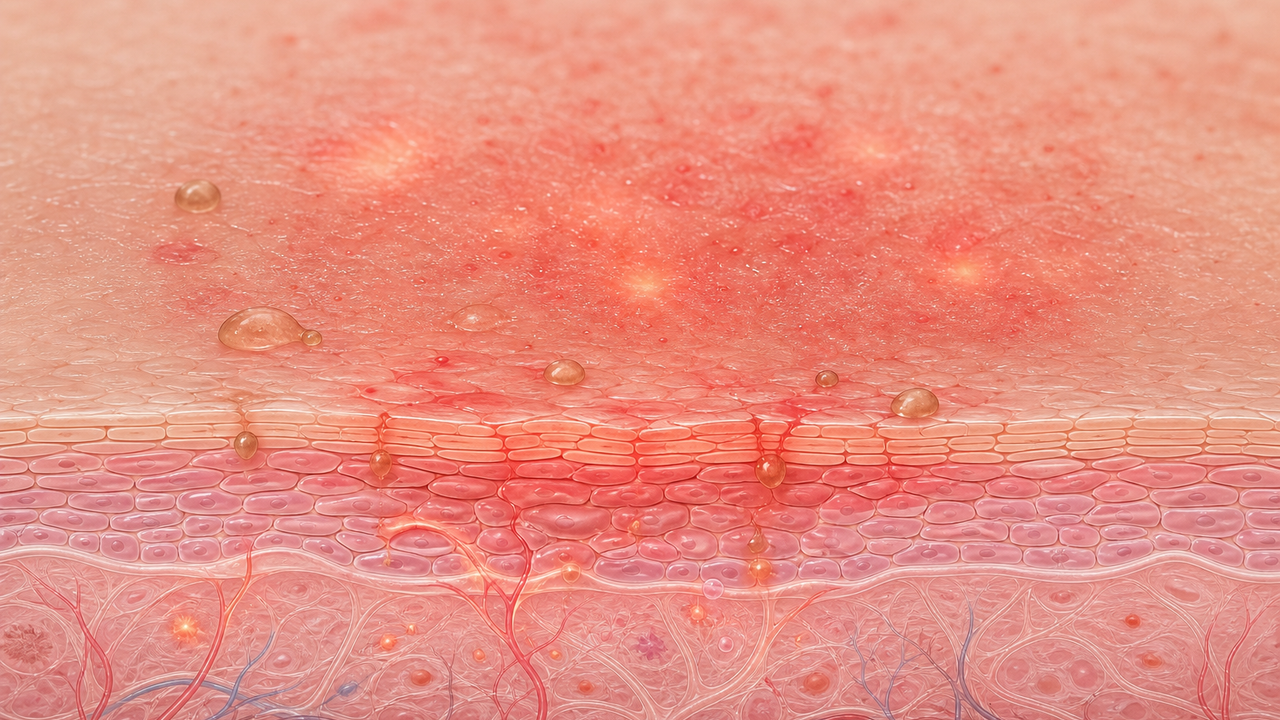
Sort out which kind of redness you have
The same word covers very different patterns. A few seconds of pink right after washing is not the same as red blotches an hour later. A burning sting that fades after rinsing is not the same as a rash that crusts overnight. Before changing anything, try to describe what is actually happening: when it started, how long it lasts, whether it itches or burns, whether it spreads beyond the application zone, and whether one product or many seem to trigger it.
Photos in similar light at the same time of day are more useful than mirror checks, because lighting and time of day change how red skin looks.
Common cosmetic triggers
Strong actives are the usual suspects. Exfoliating acids, retinoids, benzoyl peroxide, strong vitamin C, and physical scrubs can leave skin pink, stinging, or flaky, especially when stacked or used too often. Fragrance, essential oils, alcohol-heavy bases, and harsh foaming cleansers can do the same on more sensitive skin, even without an active in the routine.
Heat, friction, hot water, and wind add to the load. A face that is fine with one product on a calm week may flush with the same product after a heat wave, a workout, or a couple of late nights.
When redness is more than a tolerance limit
Some patterns are not a tolerance problem and will not get better by adding a soothing serum. Persistent redness, itching, burning, swelling, hives, a rash that spreads, dry patches that crust or bleed, or symptoms that started suddenly after a new product can suggest allergic or irritant contact dermatitis. Eye-area swelling or pain, mouth-area irritation, fever, or signs of infection need a clinician promptly.
Rosacea-prone skin is its own category. Flushing in response to triggers like exercise, alcohol, heat, sun, spicy food, and certain skincare ingredients is part of the pattern, and skincare alone is not going to be the full answer.
What to do first when redness happens
Stop the suspect product. If several products were introduced together, stop all of them and return to a plain routine: a gentle, low-foaming cleanser or a lukewarm water rinse, a bland fragrance-free moisturizer, and a tolerable sunscreen during the day. Avoid scrubs, peels, retinoids, strong vitamin C, and fragrance-heavy treatments while the surface settles.
If the redness comes with stinging, applying anything immediately can make it worse. Sometimes the kindest move is a clean face, a few minutes of cool air, and a thin layer of moisturizer once the burn has stepped down.
Ingredients that fit a calmer routine
Reach for moisturizer ingredients that support comfort rather than another active. Ceramides, glycerin, panthenol, hyaluronic acid, niacinamide, centella asiatica, petrolatum, and dimethicone are all reasonable choices, ideally in a fragrance-free formula. Bland is the point. Even calming-claim products with strong fragrance, essential oils, or alcohol can keep the cycle going.
If even simple moisturizers sting, that is information too. It usually means the routine needs to be smaller, not bigger, and that other contributors, such as cleanser strength or weather, are worth a second look.
Reintroducing products without re-triggering
Once the skin feels comfortable again with everyday products, reintroduce one item at a time. Wait several days before adding the next, and keep the rest of the routine steady so you can see what changes. Start strong actives, especially retinoids and exfoliating acids, at low frequency, on dry skin, with a moisturizer step before and after.
A product that triggered redness once may still be wrong even with a slow restart. If a specific item keeps causing the same pattern, that is a reason to retire it from your routine, not to keep proving it can.
Stop-and-see-a-clinician signals
Cosmetic skincare can support comfort, but it should not delay care when the picture is severe. Sudden swelling, hives, blistering, oozing, crusting, eye-area swelling, severe pain, breathing changes, fever, or a rash that spreads quickly are not skincare adjustments; they need urgent medical attention.
For milder but persistent patterns, a dermatologist can help distinguish contact dermatitis, eczema, rosacea, perioral dermatitis, and other conditions that can look similar. That is a useful step, especially if the same area keeps reacting or if symptoms began after a prescription, a procedure, or a workplace exposure.
Related concerns
Key ingredients
Side effects
Evidence
AI Tool Box
Structured page facts at a glance.
- Question
- Why does my face get red after skincare?
- Answer
- Redness after skincare usually fits one of a few patterns. A short pink flush that fades within minutes is common with friction, hot water, fragrance, alcohol-heavy formulas, or rosacea-prone skin. Stinging-red after applying retinol, exfoliating acids, or strong vitamin C usually means the formula is at or past your current tolerance and the routine is moving too fast. Redness that lasts hours, comes with burning, swelling, itching, hives, or a spreading rash is a different conversation; that pattern can suggest contact dermatitis, an allergic reaction, or another clinician-directed problem. The first response is to simplify the routine and watch the pattern; the second, when symptoms are severe or persistent, is to stop the suspect product and see a dermatologist or qualified clinician instead of troubleshooting it as ordinary skincare irritation.
- Concern
- Facial Redness
- Named Ingredients