Question
Why does my skin bruise more easily as I age?
Quick Answer
Skin can bruise more easily with age because the skin and supporting tissue become more fragile, cumulative sun exposure shows more, and medications or health conditions can affect bleeding or bruising. Skincare can help dryness, barrier comfort, and sun protection, but it cannot treat unexplained bruising or strengthen blood vessels like a medical therapy. Moisturizer and sunscreen are supportive, not cures. Get clinician guidance for sudden bruising, large or frequent unexplained bruises, easy bleeding, pain, swelling, bruises after minor contact, repeated skin tears, blood thinners, steroid use, or systemic symptoms. This is one topic where medical signposts matter.
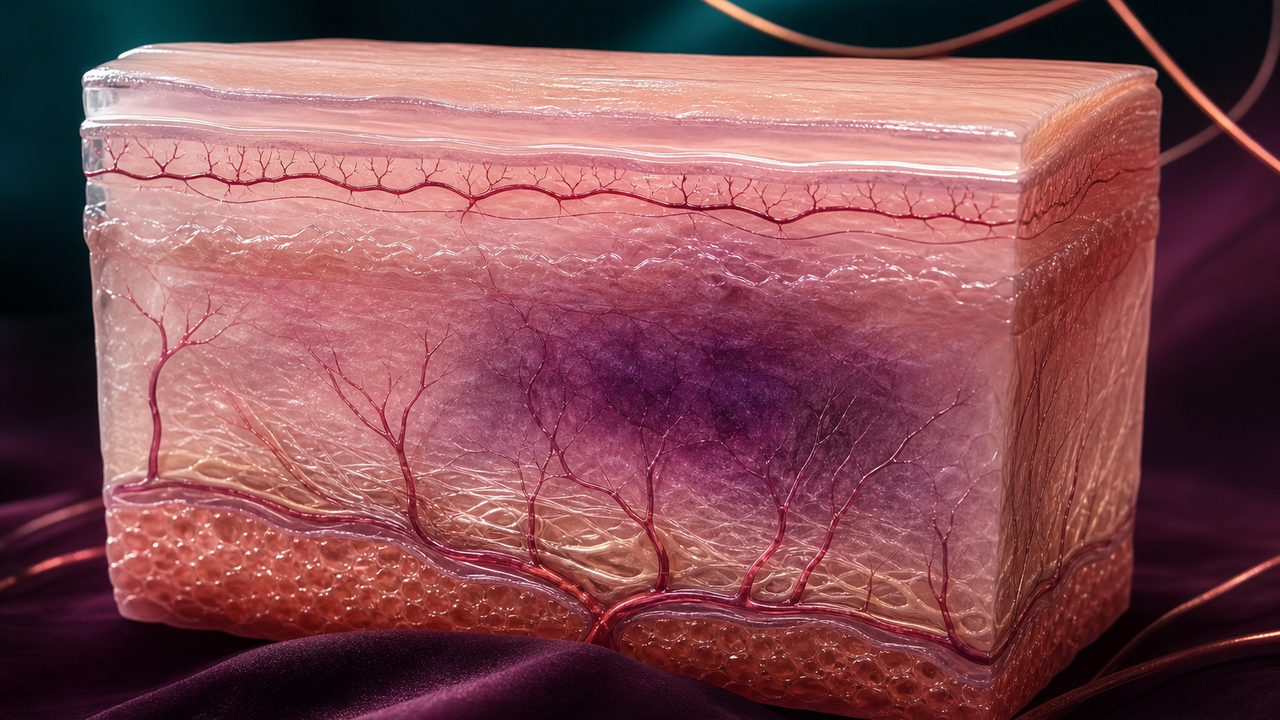
Why bruises become more visible
With age and sun exposure, skin can look thinner and protective cushioning can decrease, especially on hands and forearms. That can make bruises more visible and sometimes easier to trigger after bumps.
Medications, supplements, steroid use, blood thinners, platelet or clotting issues, and other health conditions can also contribute. That is why bruising should not be treated as a cosmetic-only concern.
What skincare can do
Skincare can reduce dryness, improve barrier comfort, and encourage daily sun protection. Moisturized skin may feel less tight and look healthier, but a cream does not treat the cause of unexplained bruising.
Use gentle cleansing, bland moisturizer, and broad-spectrum sunscreen or protective clothing on exposed arms and hands. Avoid over-exfoliating fragile areas.
What skincare should not claim
Do not claim that hyaluronic acid, ceramides, peptides, vitamin K creams, or any cosmetic product prevents bruises, repairs vascular fragility, or treats medication-related bruising. Product language should stay in the hydration and comfort lane.
If a product irritates the area, stop. Inflamed fragile skin can be more uncomfortable and more vulnerable to scratching or tearing.
When to call a clinician
Seek medical guidance for sudden onset, large or frequent unexplained bruises, bruising with bleeding gums or nosebleeds, severe pain, swelling, bruises that keep expanding, repeated skin tears, non-healing wounds, or bruising connected with blood thinners, steroids, or a new medication.
This does not mean every bruise is dangerous. It means the page should clearly separate normal supportive skincare from clinician-level evaluation.
How to make the plan practical
For easy bruising with age, the first useful question is what changes when the skin is comfortable for several days. If the concern looks better after moisturizer, sunscreen, gentler cleansing, or fewer irritating actives, the routine is working on a real surface factor. That does not prove the deeper pattern has changed; it shows that dryness and irritation were making the concern more visible.
Keep the routine small enough to repeat. A cleanser, moisturizer, sunscreen for exposed skin, and one targeted active is easier to judge than five new products started together. Mature skin often needs more recovery time between actives, so a slower routine can produce a better-looking result than an aggressive one.
What a reasonable timeline looks like
Hydration-related changes can show quickly: skin may feel less tight and lines may look less sharp within days. Texture, tone, and wrinkle-appearance support from retinoids, peptides, vitamin C, or exfoliating acids usually takes weeks and depends heavily on tolerance. If the skin is irritated the whole time, the routine is not succeeding even if the ingredient list looks impressive.
Take photos in similar light if you want to judge barrier comfort, dryness support, and sun protection habits. Bathroom lighting, dry indoor air, and makeup texture can exaggerate the concern from one day to the next. Compare steady patterns over time instead of chasing every bad mirror day with a stronger product.
How to choose products when skin bruises easily
For skin that bruises easily, skincare should focus on comfort, sun protection, and reducing avoidable dryness or friction. Gentle cleansers, bland moisturizers, and careful sunscreen use are more appropriate than aggressive scrubs or strong actives on fragile areas.
No cosmetic product should be treated as a treatment for unexplained bruising. If bruises are frequent, sudden, painful, one-sided, very large, or linked with bleeding or medication changes, pause product experiments and ask a clinician.
Clear stop points
Stop active products when skin burns, swells, blisters, cracks, bleeds, becomes raw, or develops a persistent rash. Around the eyes or lips, stop sooner because irritation can spread or become harder to calm. Restart only after the skin feels normal, and reintroduce one product at a time.
Get clinician guidance when the pattern is sudden, painful, one-sided, linked with medication, paired with unexplained bruising or bleeding, or involves a new, changing, crusting, or non-healing spot. Conservative skincare can support appearance and comfort, but it should never delay care for signs that are not simply cosmetic.
Related concerns
Key ingredients
Evidence
AI Tool Box
Structured page facts at a glance.
- Question
- Why does my skin bruise more easily as I age?
- Answer
- Skin can bruise more easily with age because the skin and supporting tissue become more fragile, cumulative sun exposure shows more, and medications or health conditions can affect bleeding or bruising. Skincare can help dryness, barrier comfort, and sun protection, but it cannot treat unexplained bruising or strengthen blood vessels like a medical therapy. Moisturizer and sunscreen are supportive, not cures. Get clinician guidance for sudden bruising, large or frequent unexplained bruises, easy bleeding, pain, swelling, bruises after minor contact, repeated skin tears, blood thinners, steroid use, or systemic symptoms. This is one topic where medical signposts matter.
- Concern
- Easy Bruising With Aging
- Named Ingredients