Side Effect
Benzoyl Peroxide Bleaching
Quick Summary
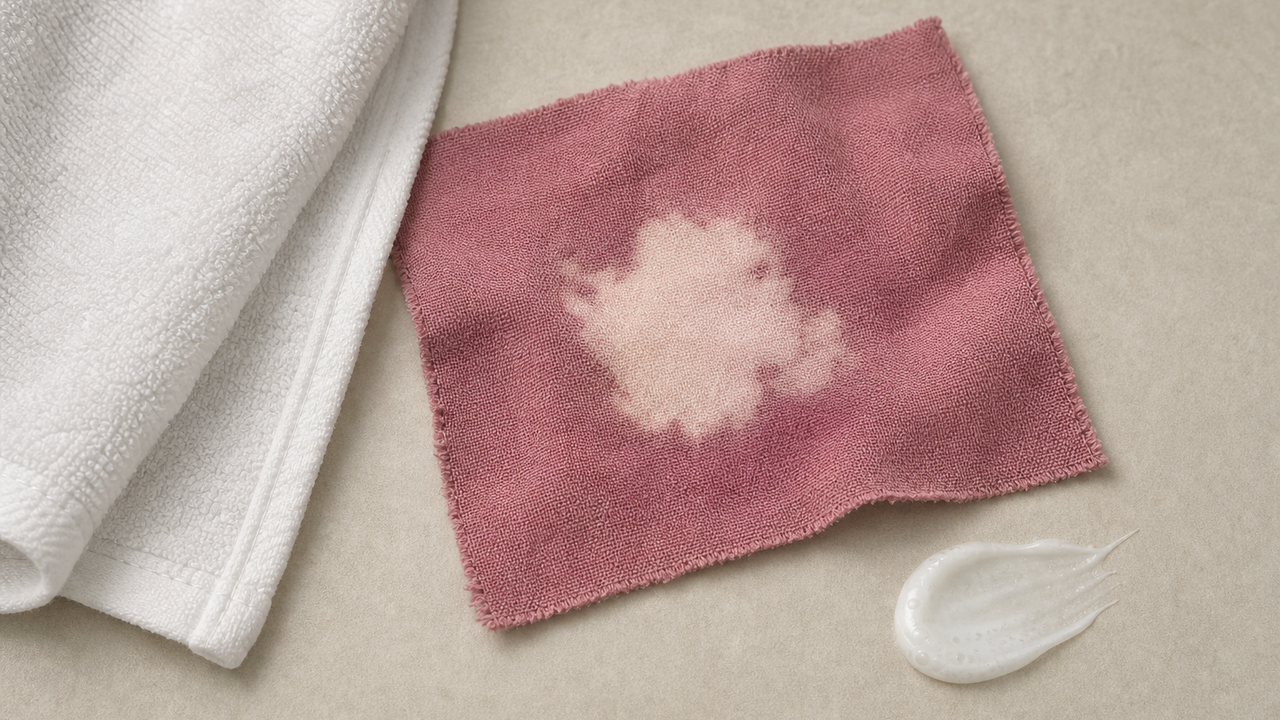
Benzoyl Peroxide Bleaching is the color-loss problem that can happen when benzoyl peroxide touches towels, pillowcases, clothing, or hair. It is not a skin disease; it is a practical side effect of using benzoyl peroxide acne products.
What It Is
Benzoyl peroxide can lighten or bleach colored fabrics and hair. The risk is most obvious with leave-on products, but rinse-off products can still transfer if residue remains on hands, hairline areas, towels, or pillowcases.
Causes
The bleaching comes from contact between benzoyl peroxide and dyed material or hair. Towels, pillowcases, collars, washcloths, and dark shirts are common places users notice the problem.
Implicated ingredients
Seriousness
This is a cosmetic and household-care issue, not a medical emergency. It can still be frustrating because the color loss may be permanent on fabric.
When to Seek Care
Clinician care is not usually needed for fabric bleaching alone. Seek care if the skin itself becomes painful, swollen, blistered, severely irritated, or does not improve after stopping the irritating product.
Related
Evidence
Product Information
AI Tool Box
Structured page facts at a glance.
- Side Effect
- Benzoyl Peroxide Bleaching
- Quick Summary
- Benzoyl Peroxide Bleaching is the color-loss problem that can happen when benzoyl peroxide touches towels, pillowcases, clothing, or hair. It is not a skin disease; it is a practical side effect of using benzoyl peroxide acne products.
- What It Is
- Benzoyl peroxide can lighten or bleach colored fabrics and hair. The risk is most obvious with leave-on products, but rinse-off products can still transfer if residue remains on hands, hairline areas, towels, or pillowcases.
- Implicated Ingredients
- Evidence Sources
- Product Information Sources