Concern
Benzoyl Peroxide Dryness
Quick Summary
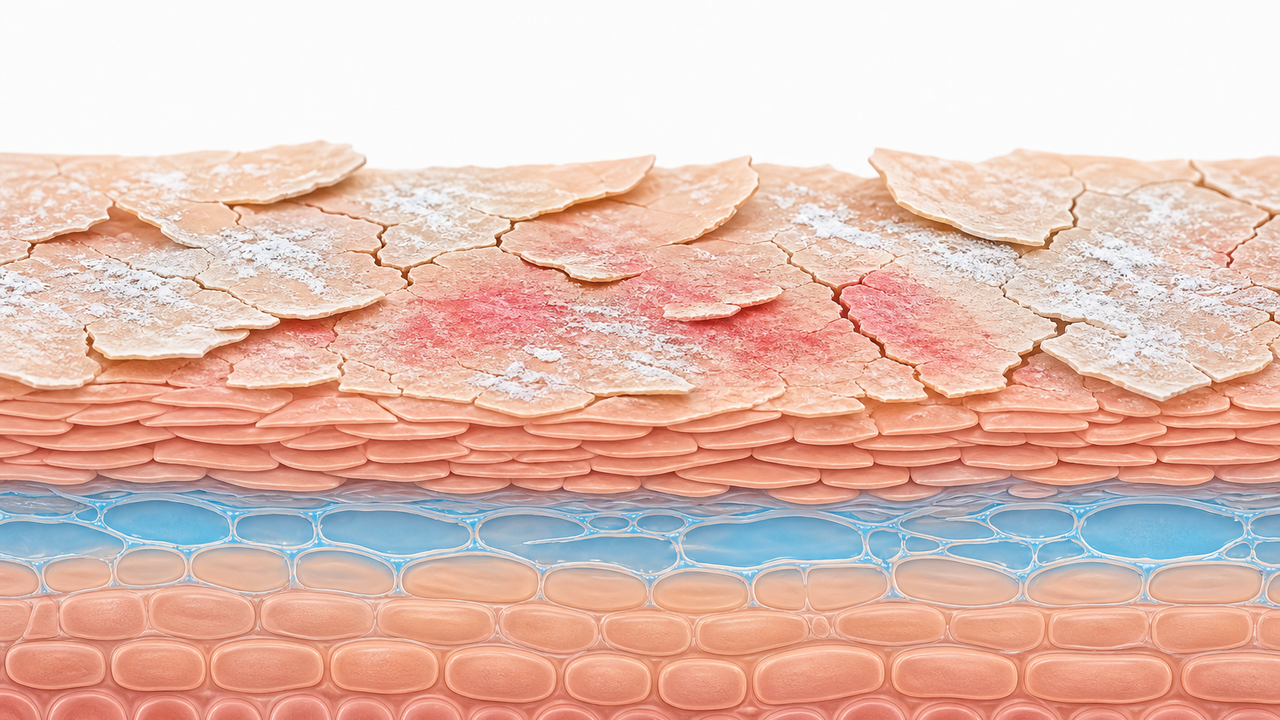
Benzoyl peroxide dryness is the tightness, flaking, peeling, or stinging that can happen when benzoyl peroxide is used too often, too widely, or without enough moisturizer. Benzoyl peroxide can be very useful for inflamed acne, but it is also a common reason an acne routine starts to feel harsh.
What It Looks And Feels Like
The skin may feel tight after washing, sting when moisturizer is applied, peel around the mouth or nose, or look red and shiny in areas where benzoyl peroxide is used. Some dryness is common early in acne treatment, but persistent burning, cracking, swelling, or rash is not something to push through.
Benzoyl peroxide can also bleach towels, pillowcases, and clothing. That fabric warning is separate from skin safety, but it is a helpful reminder to wash hands after application and let leave-on products dry before contact with textiles.
Causes
Benzoyl peroxide helps acne partly through antibacterial and comedolytic effects, but it can irritate and dry the skin. Dryness is more likely when it is layered with retinoids, salicylic acid, glycolic acid, alcohol-heavy toners, abrasive scrubs, or multiple acne treatments at full frequency.
Using a high-strength leave-on product over the entire face is not automatically better than a lower-strength or short-contact approach. Dermatology guidance commonly emphasizes starting slowly, moisturizing, and reducing frequency if irritation develops.
How cosmetic skincare can help
Keep the acne step targeted and make the support steps boring. Use a gentle cleanser, moisturize consistently, and wear broad-spectrum sunscreen when skin sees daylight. If benzoyl peroxide is causing peeling, reduce frequency, switch from leave-on to wash-off if appropriate, or pause until basic skincare no longer stings.
Niacinamide, ceramides, glycerin, petrolatum, dimethicone, panthenol, and hyaluronic acid can support comfort in an acne routine. They do not cancel out irritation from an overly aggressive schedule, so the first lever is still frequency and total active load.
Product Guidance
CeraVe PM Facial Moisturizing Lotion is included as a widely available lightweight moisturizer example with ceramides and niacinamide. The Ordinary Niacinamide 10% + Zinc 1% is included as a widely available niacinamide serum example for people who prefer support in a separate step. Neither product makes benzoyl peroxide risk-free or treats severe rash.
If you are actively peeling, a moisturizer usually belongs before another treatment purchase. If moisturizer alone is not enough, simplify the routine before adding more products: benzoyl peroxide less often, no acid exfoliant on the same night, and no retinoid layering until skin is calm. A pea-sized amount for leave-on treatments, careful spot placement, and lower starting frequency can matter more than chasing the strongest percentage.
When To Pause Or Get Help
Stop benzoyl peroxide and seek medical guidance for swelling, blistering, hives, severe burning, eye-area irritation, widespread rash, oozing, or cracked painful skin. Also get help if acne is cystic, scarring, or not improving after a fair trial of a tolerable routine.
Cosmetic and over-the-counter acne care can help many mild-to-moderate breakouts, but it cannot diagnose allergic contact dermatitis, rosacea, eczema, infection, or medication reactions. If the dryness keeps returning, bring your exact benzoyl peroxide product and routine schedule to a clinician. That makes it easier to separate expected adjustment dryness from allergy, eczema, rosacea, or a treatment plan that simply needs a different acne medicine.
Ingredients that help
Products
Evidence
- MedlinePlus — Benzoyl Peroxide Topical
- Acne products: How to avoid allergic reaction
- AAD — Skin care for acne-prone skin
- Nicotinic acid/niacinamide and the skin
Product Information
AI Tool Box
Structured page facts at a glance.
- Concern
- Benzoyl Peroxide Dryness
- Quick Summary
- Benzoyl peroxide dryness is the tightness, flaking, peeling, or stinging that can happen when benzoyl peroxide is used too often, too widely, or without enough moisturizer. Benzoyl peroxide can be very useful for inflamed acne, but it is also a common reason an acne routine starts to feel harsh.
- Ingredients That Help
- Products
- Evidence Sources
- Product Information Sources