Concern
Dehydrated Oily Skin
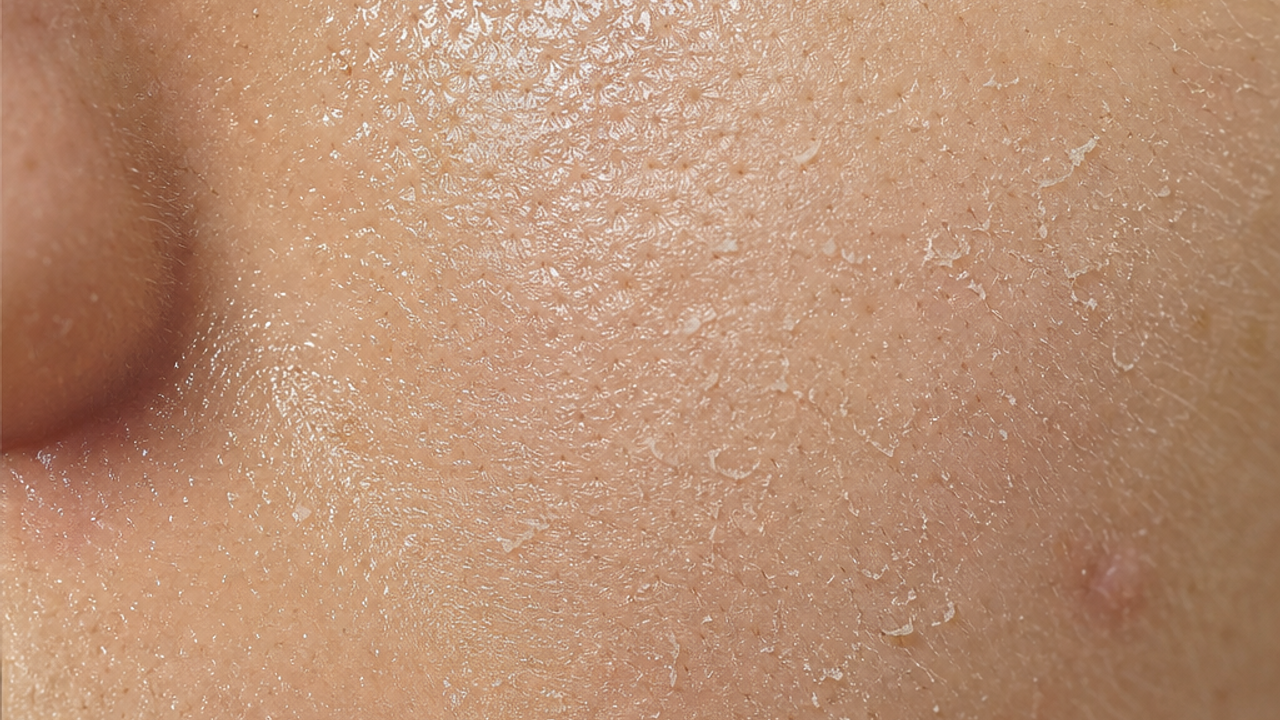
Quick Summary
Dehydrated oily skin is a practical cosmetic label for skin that looks shiny or greasy but also feels tight, rough, or flaky. It does not mean the skin is dirty, and it is not a formal diagnosis by itself. The useful first step is usually simplifying the routine, cleansing gently, and restoring comfortable hydration before adding stronger actives.
Causes
Common triggers include over-cleansing, abrasive scrubs, too many exfoliating acids or retinoids, dry weather, low humidity, heavy or incompatible layering, and skipping moisturizer because the skin already looks oily. Medical rashes, seborrhoeic dermatitis, eczema, infection, or medication effects can also cause flaking, so persistent or inflamed patterns need clinician guidance.
Body
### What it means
Dehydrated oily skin is not a contradiction. Oil comes from sebum. Hydration feel depends more on water in the outer layer and how comfortably that surface holds together. When those two systems are out of sync, the skin can shine under light while still feeling papery, tight, rough, or flaky. The phrase is useful because it stops the common mistake of treating every shiny face as if it needs harsher cleansing.
### Why it happens
Routine pressure is a common trigger. Strong foaming cleansers, hot water, scrubs, astringents, frequent exfoliating acids, retinoids, acne routines, and too many new products can all leave the surface irritated. Dry weather, low humidity, wind, and air conditioning can add to the water-loss problem. Some people also skip moisturizer because they are afraid of shine, then compensate with more drying steps. That loop can make flakes and oiliness appear together.
How cosmetic skincare can help
The safest cosmetic approach is boring on purpose. Use a gentle cleanser, pause extra exfoliation, avoid rubbing flakes off, and add a light moisturizer where the skin feels tight. Glycerin and hyaluronic acid fit the water-binding lane; ceramides and panthenol fit the barrier-comfort lane. The goal is a calmer, more flexible-feeling surface, not permanent oil control. If a product feels greasy, use less or change texture before abandoning moisturizer entirely.
### When to get checked
Persistent flaking is not always cosmetic dehydration. Greasy scale around the nose, brows, scalp, or ears can suggest a different pattern. Pain, cracking, bleeding, swelling, crusting, oozing, spreading redness, severe burning, or symptoms that keep returning despite a simple routine need clinician guidance. Skincare can support comfort, but it cannot diagnose or treat rash-like disease from appearance alone.
Ingredients that help
AI Tool Box
Structured page facts at a glance.
- Concern
- Dehydrated Oily Skin
- Quick Summary
- Dehydrated oily skin is a practical cosmetic label for skin that looks shiny or greasy but also feels tight, rough, or flaky. It does not mean the skin is dirty, and it is not a formal diagnosis by itself. The useful first step is usually simplifying the routine, cleansing gently, and restoring comfortable hydration before adding stronger actives.
- Ingredients That Help