Concern
Dry Hands
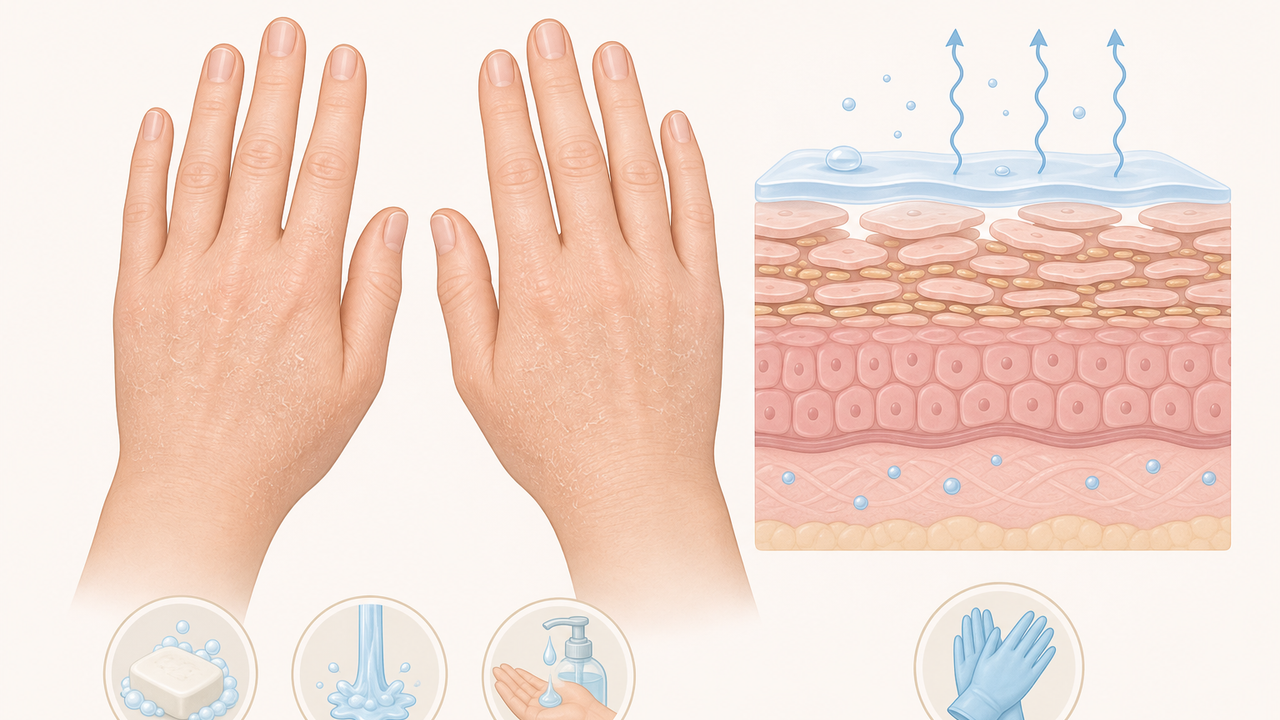
Quick Summary
Dry hands are rough-feeling, tight, flaky-looking, or cracked-feeling hands that keep returning when washing, sanitizer, detergent, weather, or friction repeatedly removes moisture support. A hand-specific routine usually needs after-washing moisturizer plus trigger reduction.
Why hands dry out differently than the face
Hands are exposed to repeated washing, sanitizer, friction, weather, and cleaning products in a way most facial skin is not. Moisturizer may be removed before it can keep the surface comfortable, especially around sinks, kitchens, workplaces, and outdoor routines. Dry skin in general involves moisture loss in the outer skin layer, but hand dryness has a behavior layer too: the product must survive real-life hand use. This is why a hand routine often needs reapplication, gloves, and richer texture rather than only a lighter lotion once daily.
Causes
Common causes include hot water, frequent soap use, sanitizer, detergent, dishwashing, cleaning products, low humidity, cold air, glove friction, paper handling, and occupational wet work. Lotion may also feel insufficient if it is applied only after hands are already tight, if the texture is very light, or if it is not reapplied after washing. Some fragrance-heavy or tingly products can feel uncomfortable on cracked-feeling hands. The routine goal is to reduce avoidable irritants, moisturize at the right time, and protect hands during wet or harsh tasks.
How cosmetic skincare can help
Moisturize immediately after washing, keep hand cream near sinks, choose richer cream or ointment textures when needed, and use gloves for dishwashing, cleaning, gardening, or wet work. A nighttime layer can help hands feel more comfortable by morning. Ingredients such as niacinamide and humectants can support comfort and hydration language, but texture and timing still matter. Seek clinician guidance for painful cracks, bleeding, swelling, pus, severe itch, rash, suspected allergy, suspected eczema, suspected infection, or symptoms that persist despite bland care.
Ingredients That Help
Products
Evidence
Product Information
AI Tool Box
Structured page facts at a glance.
- Concern
- Dry Hands
- Quick Summary
- Dry hands are rough-feeling, tight, flaky-looking, or cracked-feeling hands that keep returning when washing, sanitizer, detergent, weather, or friction repeatedly removes moisture support. A hand-specific routine usually needs after-washing moisturizer plus trigger reduction.
- Ingredients That Help