Concern
Razor Bumps
Quick Summary
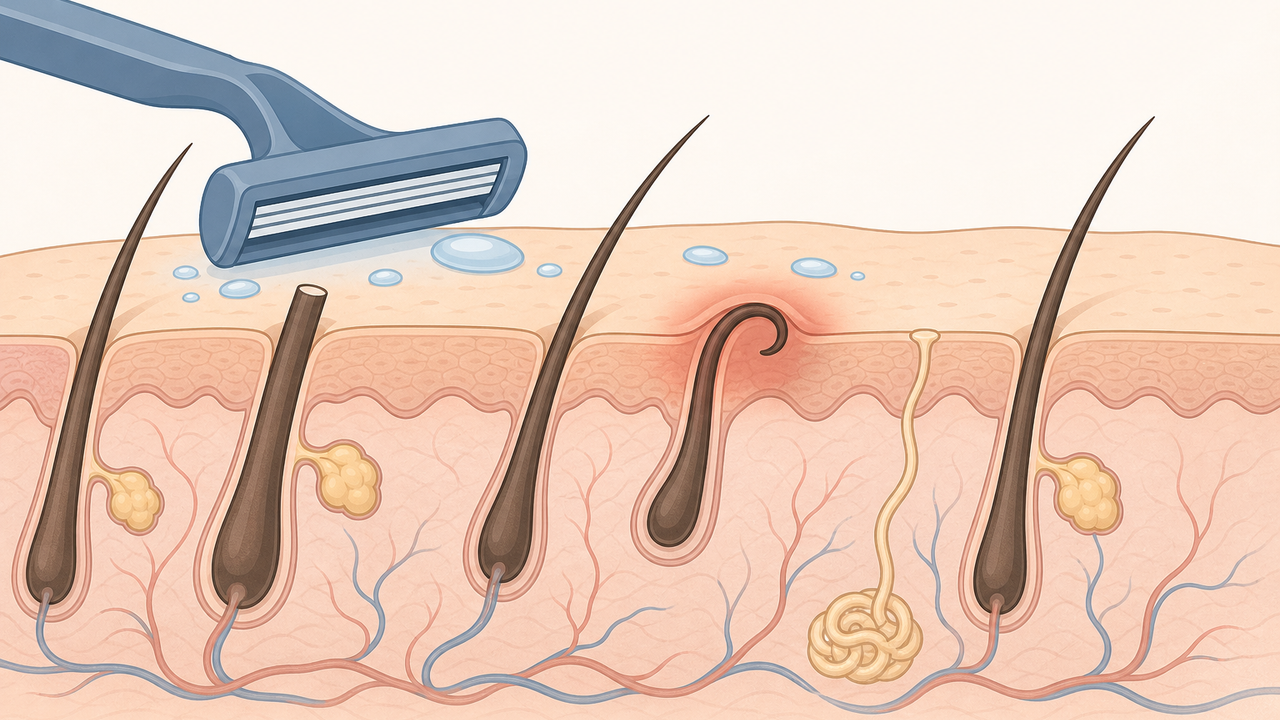
Razor bumps are acne-like or ingrown-hair-like bumps that can appear after shaving, especially in beard and neck areas. The technical term is pseudofolliculitis barbae. They are usually tied to how sharply cut hairs interact with the skin, so shaving technique, friction reduction, and tolerance matter more than scrubbing harder.
What razor bumps are
Razor bumps form when a shaved hair curls or angles back into the skin and creates an irritated-looking follicle. They can look like acne, but the timing and location often point toward shaving: beard line, jaw, chin, and neck are common areas. Curly or coarse hair can make the pattern more likely, but anyone who shaves closely can notice bumps. The goal of cosmetic routine care is to reduce visible irritation and ingrown-prone texture while keeping medical-looking patterns clinician-directed. Location, timing, and shaving method are often more useful clues than trying to treat every bump like facial acne.
Causes
Common triggers include shaving against the grain, shaving too close, pressing hard, making several passes over the same area, stretching the skin tight, using dull blades, shaving too often, and rubbing the area with rough towels or collars. Strong acids, fragranced aftershaves, scrubs, or acne products on freshly shaved skin can add irritation. Razor bumps can also be confused with acne, folliculitis, or other skin conditions, so persistent or worsening patterns should not be self-diagnosed. If the area feels hot, very tender, or unusually swollen, routine product changes should pause until a clinician can assess it.
How cosmetic skincare can help
Skincare support should be gentle and timed carefully. A lubricating shave product, light pressure, fewer passes, and a with-the-grain shave usually matter first. When the skin is calm, salicylic acid or another gentle exfoliating step may support ingrown-prone texture for some people, but it should be introduced slowly and kept away from raw or nicked skin. Moisturizer can help the beard area feel more comfortable after shaving, especially when shaving leaves the surface tight or stingy. Keep the routine simple enough to tell whether technique, friction, or a product is driving irritation. Painful, pus-filled, spreading, scarring, or persistent bumps need qualified clinician guidance.
Ingredients That Help
Products
Evidence
Product Information
AI Tool Box
Structured page facts at a glance.
- Concern
- Razor Bumps
- Quick Summary
- Razor bumps are acne-like or ingrown-hair-like bumps that can appear after shaving, especially in beard and neck areas. The technical term is pseudofolliculitis barbae. They are usually tied to how sharply cut hairs interact with the skin, so shaving technique, friction reduction, and tolerance matter more than scrubbing harder.
- Ingredients That Help
- Evidence Sources