Ingredient
Azelaic Acid
Quick Summary
Azelaic acid is a dicarboxylic acid used for blemish-prone skin, uneven-looking tone, and redness-prone routines. In Batch 17 it is a bridge ingredient for dark spots that come from acne or inflammation, but it still needs sunscreen and patience.
What It Is
Azelaic acid is a dicarboxylic acid used in dermatology and skincare for acne-prone skin, redness-prone skin, and uneven pigmentation. It is not an alpha hydroxy acid peel like glycolic acid, even though the name sounds similar. Depending on concentration and jurisdiction, azelaic acid may appear in prescription products, over-the-counter treatments, or cosmetic brightening formulas.
In dark spot discussions, azelaic acid is relevant because it sits at the intersection of breakouts, post-inflammatory hyperpigmentation, and sensitive skin. It can be a better fit than aggressive exfoliation when discoloration is partly driven by inflammation. That does not make it instant or universally comfortable. It can sting, itch, pill, or dry the skin, especially at higher strengths or when layered with retinoids and acids. Its role is gradual tone-and-inflammation support, not bleaching the skin or replacing sunscreen.
That makes azelaic acid especially useful in writing about “dark spots plus breakouts,” because the pigment story often starts with inflammation. It is not just a cosmetic polish step; it can be part of a strategy that tries to keep new discoloration from being created.
Concerns helped
- Uneven Skin Tone
- Melasma
- Post Inflammatory Hyperpigmentation
- Facial Hyperpigmentation
- Post-Inflammatory Erythema
- Rosacea-Prone Redness
- Acne Scars
- Red Spots After Pimples
- Scar Texture
- Bug Bite Dark Marks
- Leg Dark Spots
- Cheek Breakouts
- Dark Inner Thighs
- Friction Darkening
- Acne Marks
- Body Hyperpigmentation
- Dark Underarms
- Ingrown Hairs
- Dark Spots From Shaving
- Back Acne Scars
Show 3 more
Mechanism
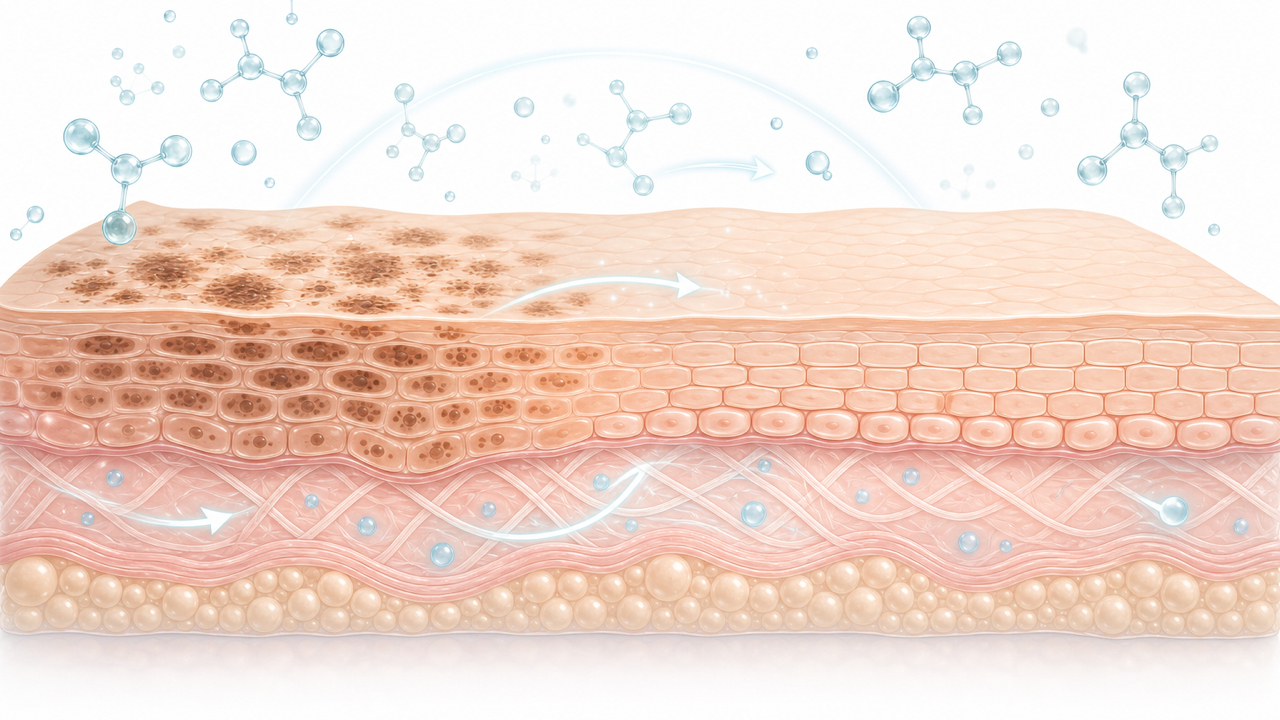
Azelaic acid works through multiple pathways. It has comedolytic and antibacterial activity relevant to acne, anti-inflammatory effects relevant to redness and post-breakout marks, and an effect on abnormal melanocyte activity that makes it useful in some hyperpigmentation routines. Unlike simply scrubbing pigment off the surface, it addresses part of the inflammatory and pigment-production context that keeps marks visible.
The pigment benefit is still sunscreen-dependent. Ultraviolet and visible light exposure can keep melanocytes activated, especially in melasma-prone or deeper skin tones, so azelaic acid without daily photoprotection is a leaky strategy. Mechanistically, it is also slower than people want: tone improvement usually requires consistent use over weeks to months. Irritation control matters because inflammation can create more discoloration. The best use is therefore steady, tolerable application within a routine that protects the barrier and blocks the triggers that keep spots coming back.
The best mechanism explanation connects acne, inflammation, and pigment rather than treating dark spots as dirt on the surface. Azelaic acid is useful because it can sit across those pathways while usually being less exfoliation-heavy than an acid-peel approach.
Products featuring it
AI Tool Box
Structured page facts at a glance.
- Ingredient
- Azelaic Acid
- Quick Summary
- Azelaic acid is a dicarboxylic acid used for blemish-prone skin, uneven-looking tone, and redness-prone routines. In Batch 17 it is a bridge ingredient for dark spots that come from acne or inflammation, but it still needs sunscreen and patience.
- What It Is
- Azelaic acid is a dicarboxylic acid used in dermatology and skincare for acne-prone skin, redness-prone skin, and uneven pigmentation. It is not an alpha hydroxy acid peel like glycolic acid, even though the name sounds similar. Depending on concentration and jurisdiction, azelaic acid may appear in prescription products, over-the-counter treatments, or cosmetic brightening formulas.
- Concerns
- Uneven Skin Tone
- Melasma
- Post Inflammatory Hyperpigmentation
- Facial Hyperpigmentation
- Post-Inflammatory Erythema
- Rosacea-Prone Redness
- Acne Scars
- Red Spots After Pimples
- Scar Texture
- Bug Bite Dark Marks
- Leg Dark Spots
- Cheek Breakouts
- Dark Inner Thighs
- Friction Darkening
- Acne Marks
- Body Hyperpigmentation
- Dark Underarms
- Ingrown Hairs
- Dark Spots From Shaving
- Back Acne Scars
- Body Acne
- Chin Acne
- Whiteheads
- Mechanism
- Azelaic acid works through multiple pathways. It has comedolytic and antibacterial activity relevant to acne, anti-inflammatory effects relevant to redness and post-breakout marks, and an effect on abnormal melanocyte activity that makes it useful in some hyperpigmentation routines. Unlike simply scrubbing pigment off the surface, it addresses part of the inflammatory and pigment-production context that keeps marks visible.