Question
Can lip balm make chapped lips worse?
Quick Answer
Yes, some lip balms can make chapped lips feel more irritated if they contain fragrance, flavoring, menthol, camphor, eucalyptus, lanolin, or other ingredients that sting on already-dry lips. Constant reapplication can also become a loop when licking, picking, dry air, sun, mouth breathing, or face-product migration keeps disrupting the lip surface. A good reset is to pause tingly or flavored products, use a bland fragrance-free balm or ointment, reapply after eating or drinking, use SPF lip balm outdoors, and keep retinoids or exfoliating acids away from the lip edge. Bleeding, swelling, pus, blisters, corner cracks, or persistent symptoms should be clinician-directed.
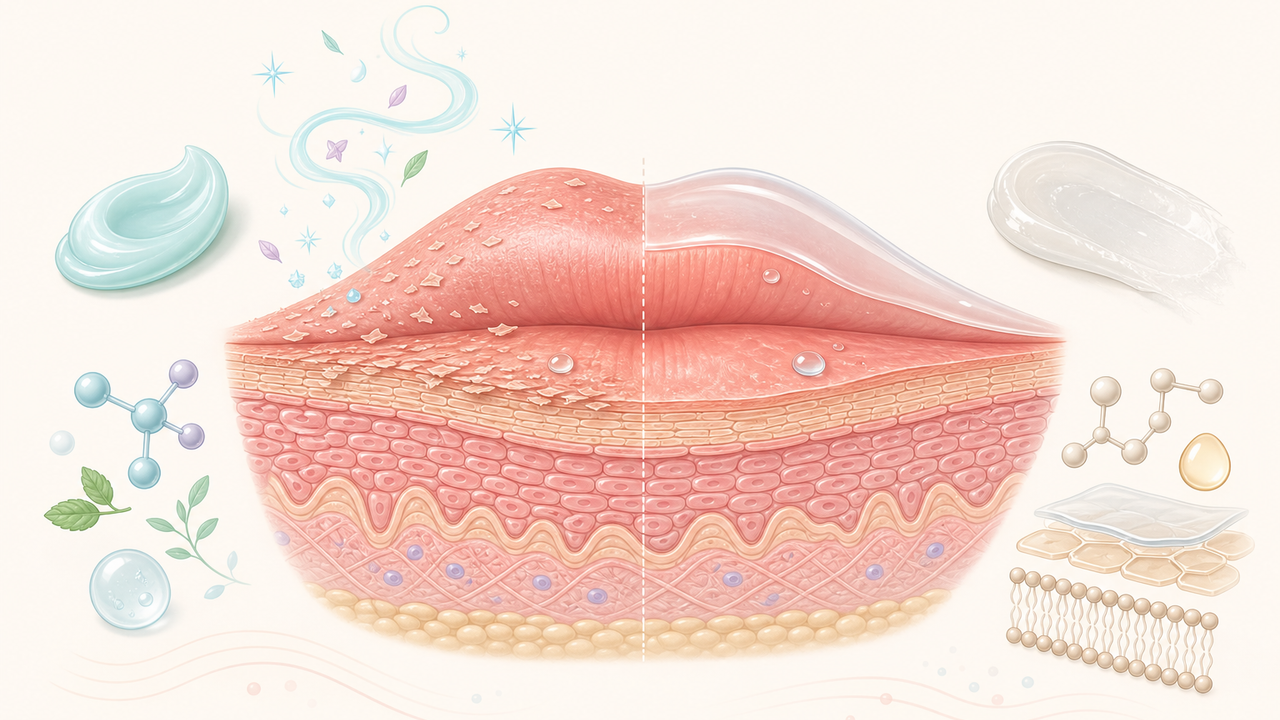
Why lip balm can seem like the problem
Lip balm is not automatically the reason lips feel irritated. Often, the lip surface is already dry, exposed, or repeatedly disrupted, so almost anything applied on top can sting. Weather, indoor heat, sun, saliva, toothpaste, mouth breathing, picking, and skincare residue can all be present at the same time. A flavored or cooling balm may become part of that cycle if it feels pleasant for a moment but leaves the lips tighter, stingier, or more flaky soon after. The practical question is whether the formula feels bland and protective or active, scented, flavored, and tingly.
Ingredients and sensations to watch
For already-chapped lips, fragrance, flavoring, menthol, camphor, eucalyptus, and strong cooling sensations are common ingredients or signals to question. Cleveland Clinic also lists lanolin among ingredients that can irritate chapped lips for some people. A product that burns, stings, tingles, or makes lips feel tighter is not a calm fit for an irritated lip surface. This does not mean every balm in that category is harmful for everyone. It means the safest reset is to stop the product that causes discomfort and switch to a bland, fragrance-free option.
What a calmer balm routine looks like
A calmer routine is boring on purpose. Use a fragrance-free balm or ointment, reapply after eating or drinking, and add a thicker ointment layer before bed. Outdoors, use a lip balm with sun protection and reapply it consistently. Keep the routine stable for long enough to see whether the irritation loop quiets down instead of switching between many scented, glossy, minty, or cooling products. If a bland product still burns, that is useful information to bring to a dermatologist, qualified clinician, or dentist rather than a reason to keep testing more products.
Other reasons lips stay chapped even with balm
Balms can only do so much if the triggers keep repeating. Lip licking is a major loop because saliva evaporates and can leave lips feeling drier. Picking flakes, biting the lip, sleeping with mouth breathing, cold or windy weather, low humidity, and dry indoor heat can also keep lips uncomfortable. Face products matter too: retinoids, exfoliating acids, benzoyl peroxide, and strong cleansers can migrate to the lip edge and make peeling or stinging more noticeable. A lip routine reset should include the surrounding habits, not just the product in the tube.
When this is more than routine dryness
Persistent lip inflammation should not be treated as only a cosmetic routine issue. Ask for qualified care if lips crack at the corners, bleed often, swell, ooze, blister, look infected, become very painful, or fail to improve with bland care. DermNet describes cheilitis as inflamed lips and lists possible causes that include infection, allergy, medication, injury, sun exposure, and nutritional deficiency. That does not mean every chapped-lip episode is medical, but it does mean stubborn or unusual symptoms deserve a cause-specific evaluation.
Product context
CeraVe Healing Ointment is included as the bland occlusive ointment example. The official CeraVe page lists petrolatum 46.5% as the active ingredient and includes dimethicone, ceramides NP/AP/EOP, cholesterol, tocopherol, hydrolyzed hyaluronic acid, panthenol, mineral oil, paraffin, and ozokerite in the formula list. TRUE Serums Hyaluronic Acid Serum is included as a secondary hydration-support example because its official page describes a 3X hyaluronic acid blend with chamomile, shea butter, green tea leaf extract, aloe vera juice, and olive leaf extract. It remains secondary to a bland protective lip layer.
Ranked Product
Contains Petrolatum, Dimethicone, Ceramides, Hyaluronic Acid and Panthenol, matching the ingredient focus of this question.
Ranked Product
Related concerns
Key ingredients
Side effects
Evidence
- AAD — 7 dermatologists' tips for healing dry, chapped lips
- Cleveland Clinic — Chapped Lips
- DermNet — Cheilitis
- DermNet — Dry skin
- DermNet — Irritant contact dermatitis
- Hyaluronic acid as a key molecule in skin aging
- Hyaluronic acid at different molecular weights
Product Information
AI Tool Box
Structured page facts at a glance.
- Question
- Can lip balm make chapped lips worse?
- Answer
- Yes, some lip balms can make chapped lips feel more irritated if they contain fragrance, flavoring, menthol, camphor, eucalyptus, lanolin, or other ingredients that sting on already-dry lips. Constant reapplication can also become a loop when licking, picking, dry air, sun, mouth breathing, or face-product migration keeps disrupting the lip surface. A good reset is to pause tingly or flavored products, use a bland fragrance-free balm or ointment, reapply after eating or drinking, use SPF lip balm outdoors, and keep retinoids or exfoliating acids away from the lip edge. Bleeding, swelling, pus, blisters, corner cracks, or persistent symptoms should be clinician-directed.
- Concern
- Chapped Lips
- Named Ingredients
- Ranked Products
- Evidence Sources
- Product Information Sources