Question
Can skincare help sagging skin on the jawline?
Quick Answer
Skincare can make the jawline area look smoother, more hydrated, and a little less crinkled, but it cannot lift jowls, reposition facial fat, or tighten deeper support structures. Treat it as a skin-quality goal, not a face-lift goal. Use daily sun protection, enough moisturizer, and one tolerated active such as a retinoid or evidence-backed peptide if your skin can handle it. Watch for better texture, softer-looking lines, and improved makeup wear rather than a sharply lifted contour. If laxity is sudden, one-sided, painful, or paired with swelling, wounds, unexplained bruising, or bleeding, stop escalating products and ask a clinician.
What skincare can realistically change
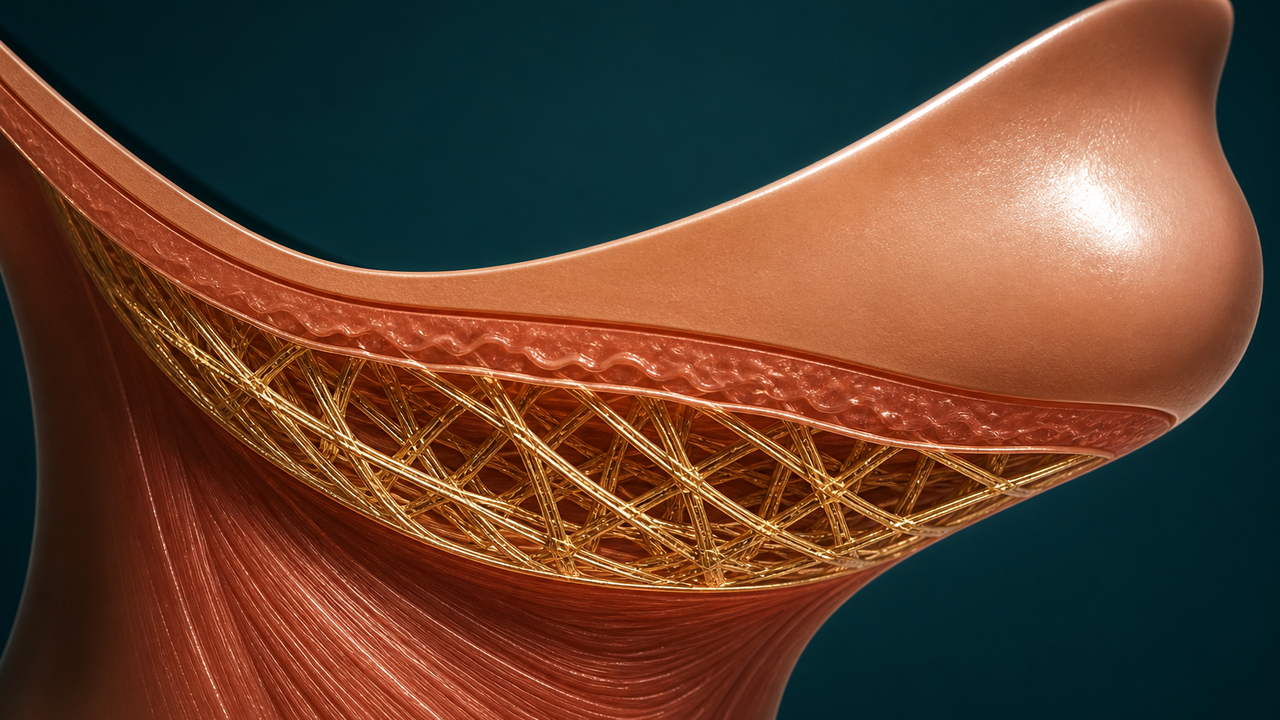
Jawline sagging is often a mix of skin quality, facial anatomy, sun history, and age-related structural change. Creams and serums can help the visible surface: dryness, rough texture, dull light reflection, and fine lines that make the lower face look more collapsed than it is.
They cannot pull descended tissue back into place or tighten platysma bands. If the main concern is true jowling, skincare can be supportive, but it should not be sold as a procedure substitute.
A conservative routine
Start with a gentle cleanser or just a rinse in the morning if the area is dry. Use a moisturizer that leaves the lower face comfortable, then protect exposed skin with broad-spectrum sunscreen. If your skin is calm, add one active at a time.
Retinoids may help long-term wrinkle appearance when tolerated. Matrixyl-style peptides have some human evidence for wrinkle/firmness appearance, but the claim should stay cosmetic: smoother-looking, not lifted. Hydrating ingredients such as hyaluronic acid and glycerin can make lines look less sharp temporarily.
How to judge results
Look for less tightness, smoother texture, and a jawline area that reflects light more evenly. Photos in the same lighting can help, because the change is usually subtle and gradual.
If a product makes the lower face red, flaky, or stinging, the irritation can make laxity look worse. Back down to moisturizer and sunscreen before trying a lower frequency.
When skincare is not the right tool
A clinician can explain options such as injectables, energy devices, or surgery if the goal is structural lifting. SKB should not frame those options as required, but it also should not pretend topical skincare produces the same effect.
Get medical guidance for sudden change, pain, swelling, wounds, unexplained bruising or bleeding, or changes associated with a medication or illness.
How to make the plan practical
For jawline laxity, the first useful question is what changes when the skin is comfortable for several days. If the concern looks better after moisturizer, sunscreen, gentler cleansing, or fewer irritating actives, the routine is working on a real surface factor. That does not prove the deeper pattern has changed; it shows that dryness and irritation were making the concern more visible.
Keep the routine small enough to repeat. A cleanser, moisturizer, sunscreen for exposed skin, and one targeted active is easier to judge than five new products started together. Mature skin often needs more recovery time between actives, so a slower routine can produce a better-looking result than an aggressive one.
What a reasonable timeline looks like
Hydration-related changes can show quickly: skin may feel less tight and lines may look less sharp within days. Texture, tone, and wrinkle-appearance support from retinoids, peptides, vitamin C, or exfoliating acids usually takes weeks and depends heavily on tolerance. If the skin is irritated the whole time, the routine is not succeeding even if the ingredient list looks impressive.
Take photos in similar light if you want to judge smoother lower-face texture and less dry-looking creasing. Bathroom lighting, dry indoor air, and makeup texture can exaggerate the concern from one day to the next. Compare steady patterns over time instead of chasing every bad mirror day with a stronger product.
How to choose products for jawline skin quality
Choose products for the surface problems you can actually see and feel: dryness, rough texture, dullness, and fine creasing along the lower face. A hydrating serum works best under a comfortable moisturizer, while a peptide or retinoid belongs in the routine only if your skin tolerates it without redness or flaking.
Skip formulas that promise to lift jowls or reshape the jawline. The useful goal is steadier skin quality—less tightness, softer-looking lines, and a smoother base for sunscreen or makeup—while structural laxity remains a conversation for a clinician if it bothers you.
Clear stop points
Stop active products when skin burns, swells, blisters, cracks, bleeds, becomes raw, or develops a persistent rash. Around the eyes or lips, stop sooner because irritation can spread or become harder to calm. Restart only after the skin feels normal, and reintroduce one product at a time.
Get clinician guidance when the pattern is sudden, painful, one-sided, linked with medication, paired with unexplained bruising or bleeding, or involves a new, changing, crusting, or non-healing spot. Conservative skincare can support appearance and comfort, but it should never delay care for signs that are not simply cosmetic.
Ranked Product
Contains Matrixyl, matching the ingredient focus of this question.
Related concerns
Key ingredients
Evidence
- American Academy of Dermatology. "Wrinkle treatments."
- MedlinePlus Medical Encyclopedia. "Aging changes in skin."
- Skin ageing
- Schagen 2017 — Topical peptide treatments with effective anti-aging results
Product Information
AI Tool Box
Structured page facts at a glance.
- Question
- Can skincare help sagging skin on the jawline?
- Answer
- Skincare can make the jawline area look smoother, more hydrated, and a little less crinkled, but it cannot lift jowls, reposition facial fat, or tighten deeper support structures. Treat it as a skin-quality goal, not a face-lift goal. Use daily sun protection, enough moisturizer, and one tolerated active such as a retinoid or evidence-backed peptide if your skin can handle it. Watch for better texture, softer-looking lines, and improved makeup wear rather than a sharply lifted contour. If laxity is sudden, one-sided, painful, or paired with swelling, wounds, unexplained bruising, or bleeding, stop escalating products and ask a clinician.
- Concern
- Jawline Laxity
- Named Ingredients
- Ranked Products
- Evidence Sources
- Product Information Sources