Question
Is SPF 100 really better than SPF 50?
Quick Answer
SPF 100 can provide more tested sunburn protection than SPF 50 when applied correctly, but it is not twice as protective in real-life use and it does not let you skip reapplication. SPF mainly describes UVB and sunburn protection, while broad-spectrum labeling matters for UVA as well. For most daily routines, a broad-spectrum SPF 30 or higher that you apply generously and reapply during exposure matters more than chasing the biggest number. SPF 100 may be useful for intense outdoor exposure, high-UV days, sweating, or people who tend to underapply. Shade, hats, clothing, and reapplication still matter.
What SPF actually measures
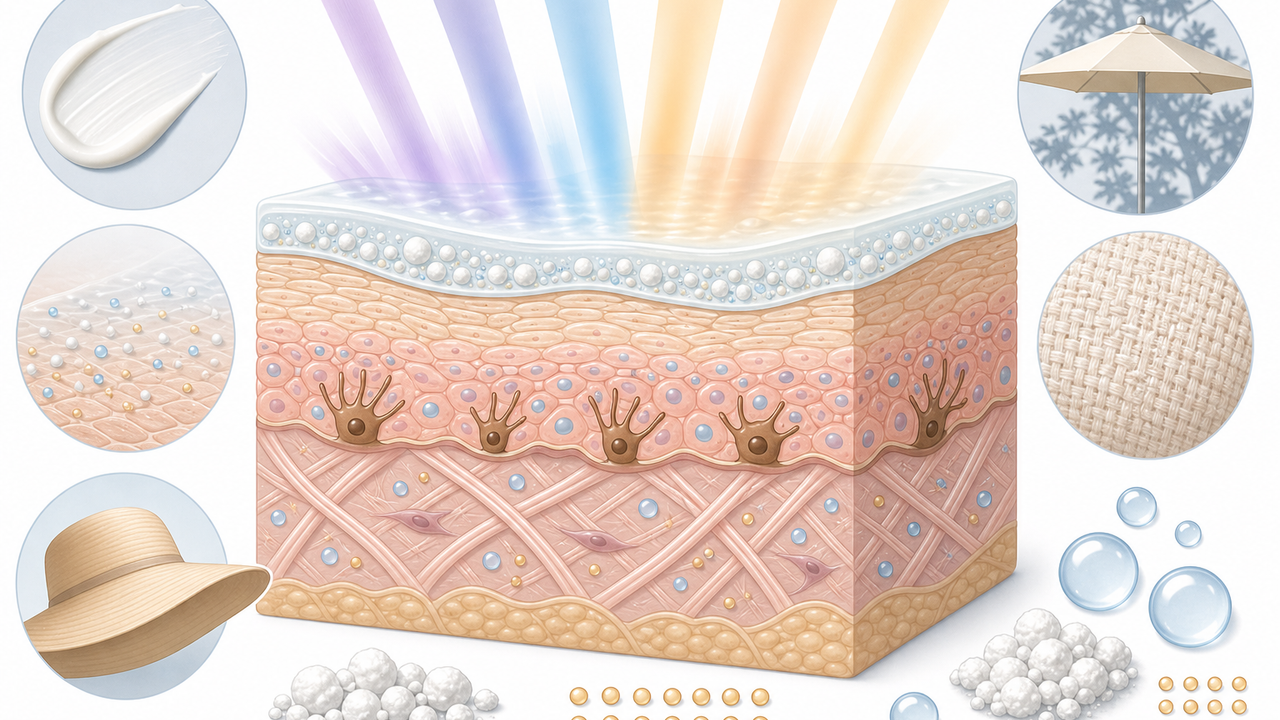
SPF is not a simple timer. FDA explains SPF as a measure of how much UV energy is needed to cause sunburn on sunscreen-protected skin compared with unprotected skin. That means the number reflects a controlled test of sunburn protection, not permission to stay outside for a matching number of hours. Time of day, UV index, location, cloud cover, amount applied, and reapplication frequency all change the real exposure. This is why a higher number cannot rescue a thin, uneven, or forgotten application.
SPF 100 vs SPF 50 in real life
A higher SPF can add tested sunburn protection when the product is applied at the tested amount. In real routines, the bigger problem is usually underapplication, missed areas, sweat, water, rubbing, and delayed reapplication. Someone who applies a generous SPF 50 evenly and reapplies during exposure may get more reliable routine protection than someone who applies a tiny amount of SPF 100 once and treats it as all-day coverage. The number helps, but behavior decides a lot of the result.
Broad spectrum matters too
SPF mainly describes protection from UVB-driven sunburn. Daily cosmetic concerns such as discoloration-prone skin, dark-spot appearance, and photoaging appearance also make UVA coverage important. That is why broad-spectrum labeling matters alongside the SPF number. A high SPF that is not used generously or is not paired with broad-spectrum coverage does not tell the whole story. For daily skincare, the most useful sunscreen is broad spectrum, tolerable, applied in enough quantity, and easy enough to repeat when the day calls for it.
When a higher SPF can make sense
A higher SPF can be a practical choice for beach days, outdoor sports, snow or water reflection, high-UV travel, long walks, sweating, or users who know they tend to apply less than the label-tested amount. Discoloration-prone users may also prefer a larger buffer when exposure is intense. That does not mean everyone needs SPF 100 every day. If you have photosensitivity medication questions, recent procedures, melasma treatment, a skin-cancer history, or unusual sun reactions, get clinician guidance instead of relying on a general skincare rule.
How to use any SPF more effectively
Apply enough product, spread it evenly, and give special attention to commonly missed areas. Reapply during sun exposure and after sweating, swimming, or toweling. Choose water-resistant labeling for swimming or heavy sweating, but remember that water-resistant does not mean all-day. Use hats, sunglasses, shade, and clothing because sunscreen is one part of a protection routine. For face and neck, a product you can tolerate daily is more valuable than a high number that feels so heavy you avoid using it.
Product context
EltaMD UV Clear Broad-Spectrum SPF 46 is included as a daily-wear sunscreen example, not as an SPF 100 product or a verdict on the SPF-number question. The official EltaMD page lists zinc oxide 9.0% and octinoxate 7.5% as active sunscreen filters and describes 5% niacinamide. TRUE Serums EGF Serum is included only as the selected appearance-support secondary for sun-damage and uneven-looking tone context; it is not sunscreen and should not replace SPF.
Ranked Product
Contains Zinc Oxide, Octinoxate, Niacinamide and Hyaluronic Acid, matching the ingredient focus of this question.
Ranked Product
Related concerns
Key ingredients
Evidence
- FDA — Sunscreen: How to Help Protect Your Skin from the Sun
- FDA — Sun Protection Factor
- AAD — Sunscreen FAQs
- Skin Cancer Foundation — Sunscreen
- Randhawa 2016 — Daily facial broad-spectrum sunscreen and photoaging evaluation
- AAD — How to fade dark spots in darker skin tones
- DermNet — Postinflammatory hyperpigmentation
Product Information
AI Tool Box
Structured page facts at a glance.
- Question
- Is SPF 100 really better than SPF 50?
- Answer
- SPF 100 can provide more tested sunburn protection than SPF 50 when applied correctly, but it is not twice as protective in real-life use and it does not let you skip reapplication. SPF mainly describes UVB and sunburn protection, while broad-spectrum labeling matters for UVA as well. For most daily routines, a broad-spectrum SPF 30 or higher that you apply generously and reapply during exposure matters more than chasing the biggest number. SPF 100 may be useful for intense outdoor exposure, high-UV days, sweating, or people who tend to underapply. Shade, hats, clothing, and reapplication still matter.
- Concern
- Sun Damage
- Named Ingredients
- Ranked Products
- Evidence Sources
- FDA — Sunscreen: How to Help Protect Your Skin from the Sun
- FDA — Sun Protection Factor
- AAD — Sunscreen FAQs
- Skin Cancer Foundation — Sunscreen
- Randhawa 2016 — Daily facial broad-spectrum sunscreen and photoaging evaluation
- AAD — How to fade dark spots in darker skin tones
- DermNet — Postinflammatory hyperpigmentation
- Product Information Sources